Lunchball
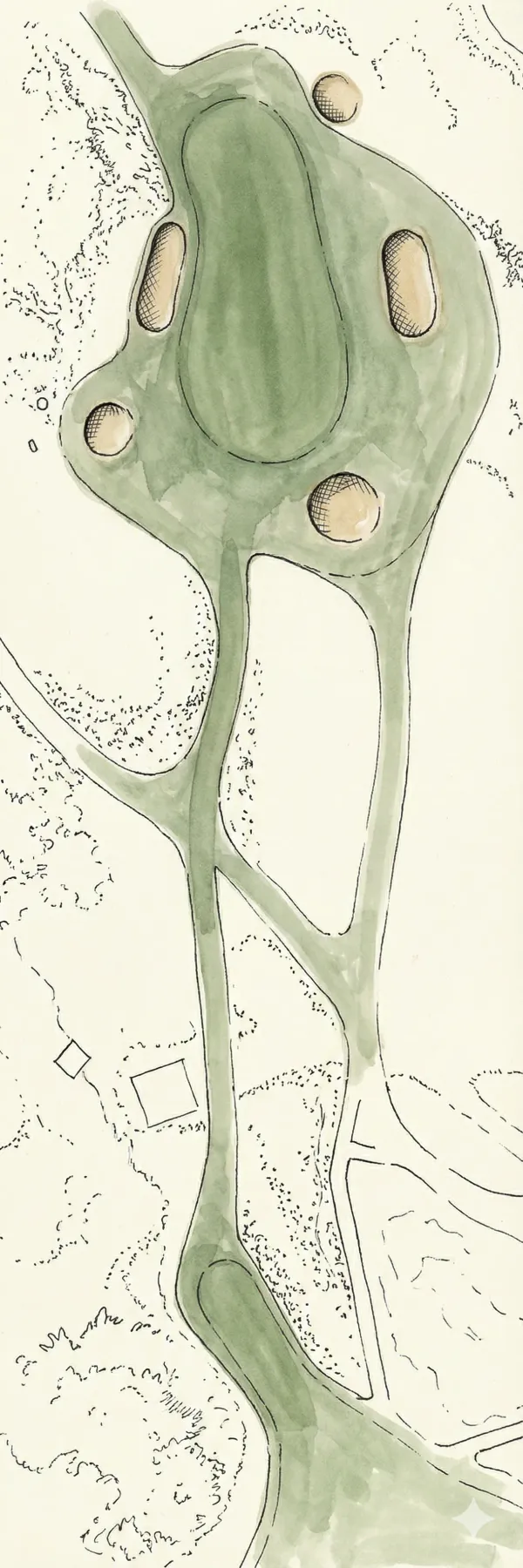
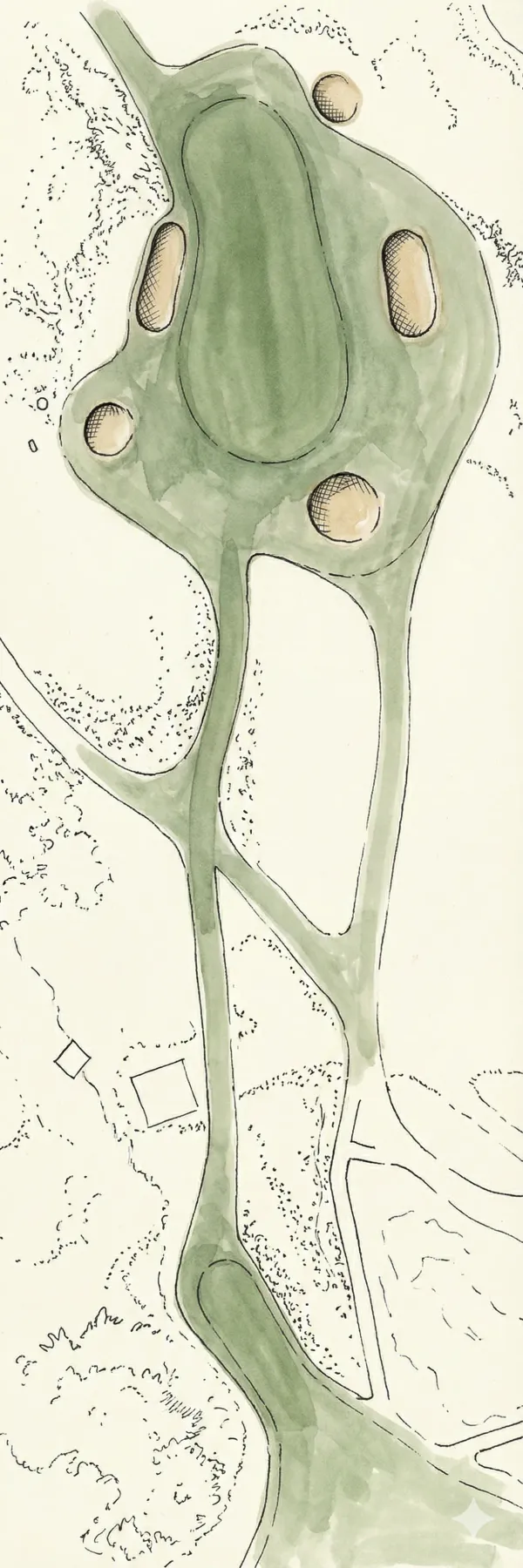
Troon presents a study in dichotomy. The routing is a traditional out-and-back loop that baits the player on the front nine, offering reachable par fives and flat lies often aided by the prevailing wind. It is a false comfort. The turn back home is a march into the teeth of the north-westerly gale, where the gorse tightens its grip and the fairways narrow to slivers of refuge. The architecture here is not defined by dramatic elevation, but by the subtle camber of the fairways and the penal nature of the bunkering. The sand pits are steep, revetted graves that demand a wedge and a prayer, rejecting any notion of a heroic recovery.
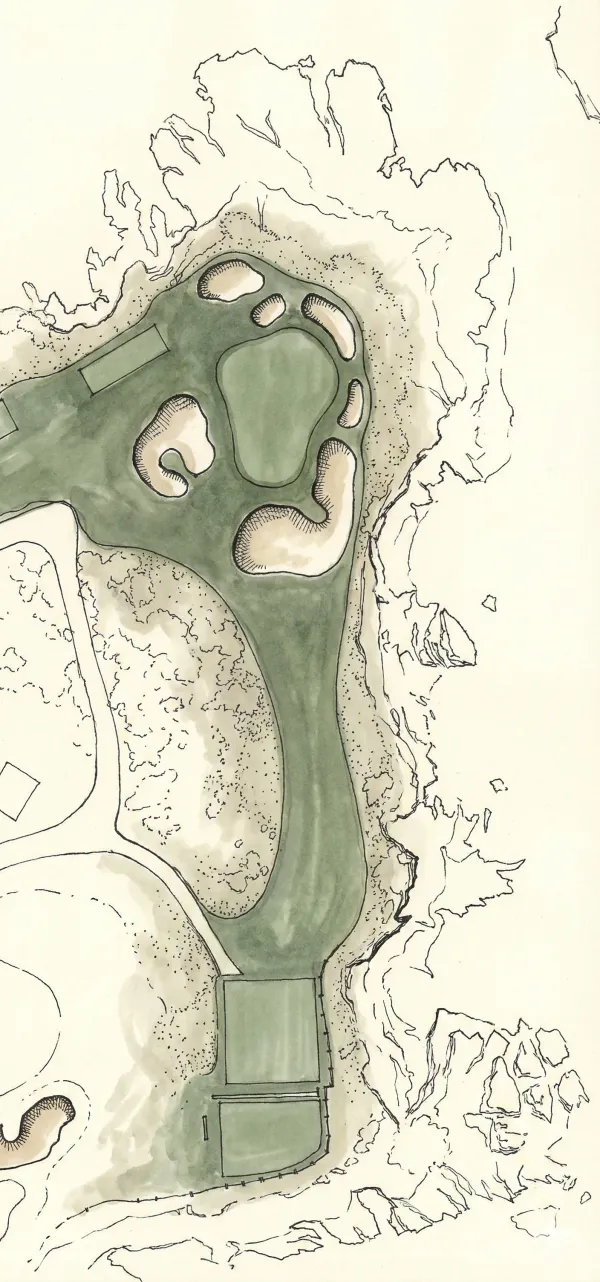
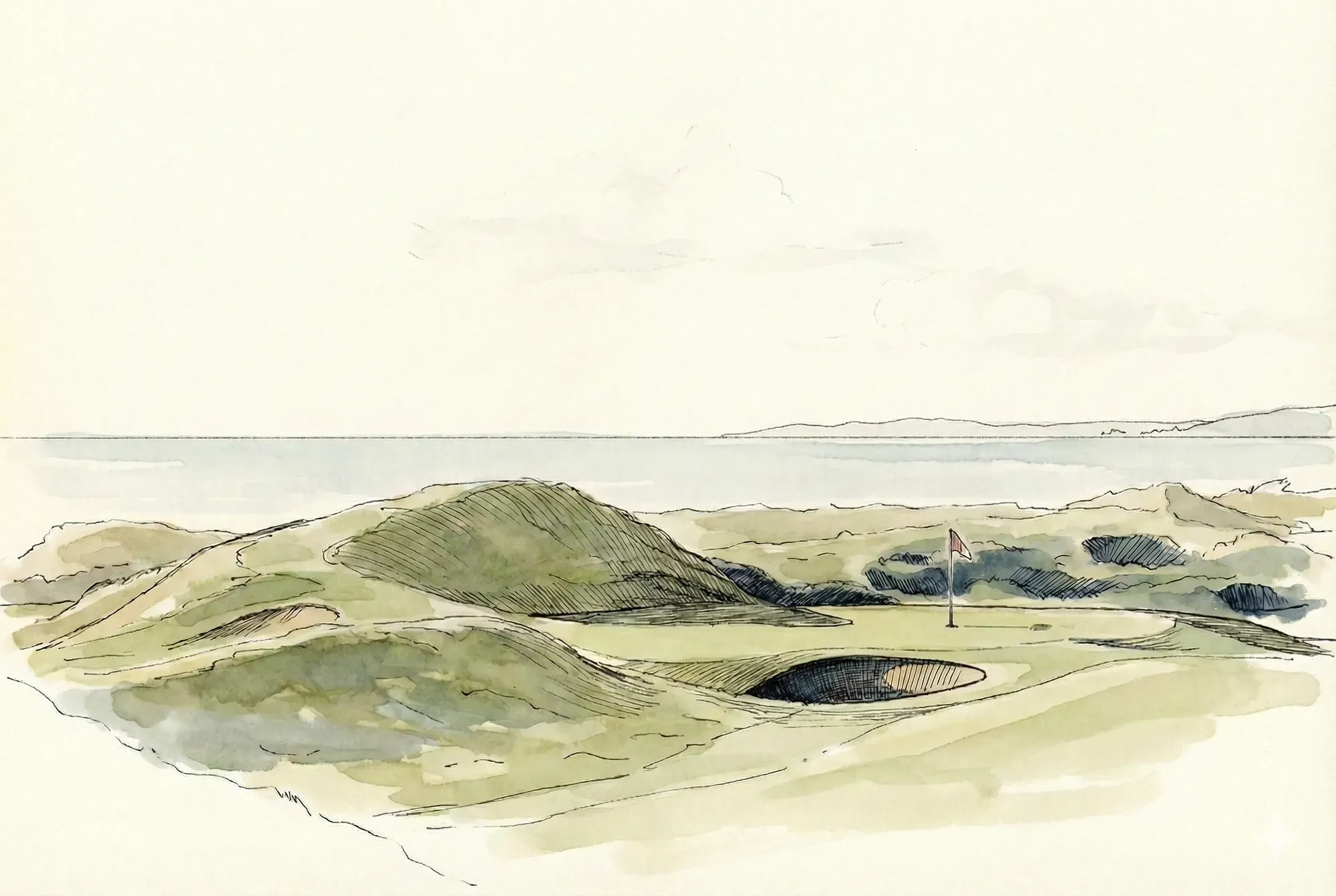
The course’s character is significantly shaped by the 8th, the ‘Postage Stamp.’ It is an architectural anomaly—a hole so short one could nearly toss the ball onto the surface, yet so heavily defended it has ruined professional careers. The green is a narrow shelf, a coffin lid clinging to the side of a dune, surrounded by five bunkers that act as sheer-walled prisons. Here, the ground game is rendered moot; the shot requires a precise aerial assault into the wind. It stands as the ultimate rebuttal to the modern obsession with length, proving that terror can be manufactured in 123 yards.