 Lunchball
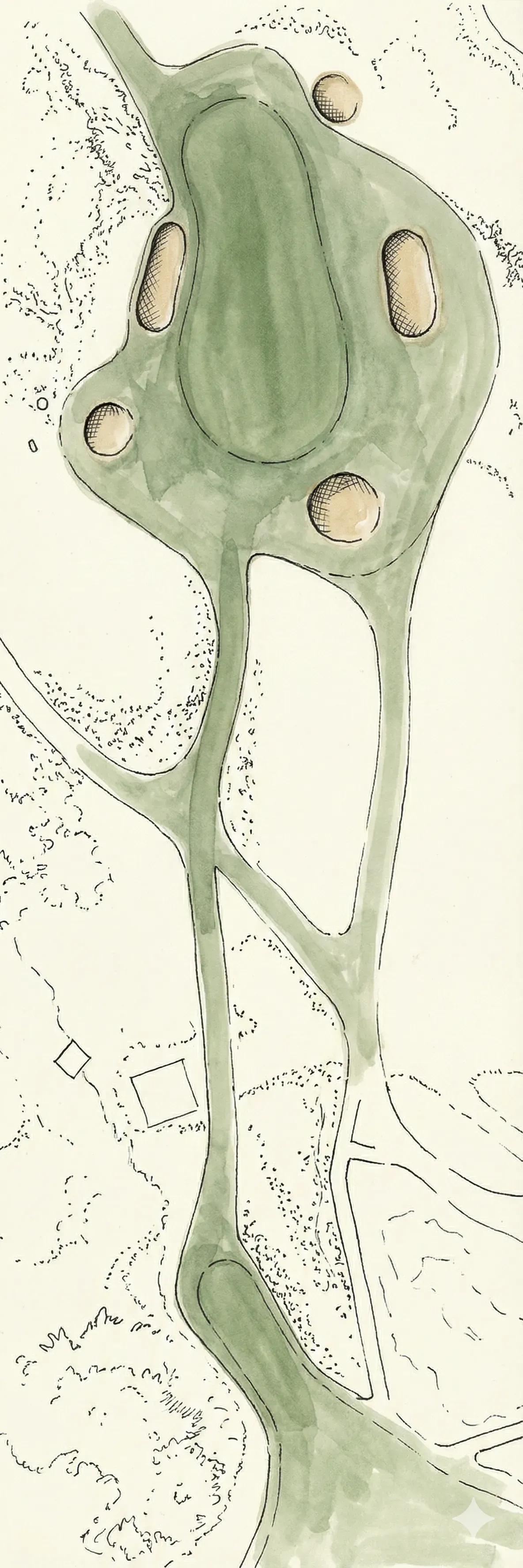
A mere flick of the wrists sends the ball aloft, yet the psychological weight of the eighth at Troon is crushing. The green is a narrow shelf clinging to the dunes, barely wider than a hallway and falling away sharply on all sides. Five bunkers stand sentinel, deep and revetted with sod, including the infamous Coffin bunker to the left. The architecture here relies on verticality and claustrophobia; to miss the putting surface is not merely an error, it is often a sentence of multiple strokes spent hacking sideways from the sand.
William Park, writing in Golf Illustrated, once remarked that the pitching surface was of a size suitable for a ‘postage stamp.’ The moniker displaced the hole’s original name, ‘Ailsa,’ and the reputation was cemented. It is a place of extreme variance. Gene Sarazen famously aced the hole at age 71 during the 1973 Open, while German amateur Hermann Tissies once required fifteen strokes to escape the bunkers, a tragic opera played out in a singular hazard.
Standing on the elevated tee, the shot seems trivial. The yardage book offers a number that barely registers a full wedge. Yet, when the wind whips off the Firth of Clyde, the ball hangs in the grey sky, judged by the elements. To hit the green is a relief; to walk off with a three is a quiet victory against the capricious nature of links golf. The ego suggests a birdie is owed; the scorecard often reflects the penalty of hubris.
Hole Stats
- Par
- 3
- Yardage
- 123
- Architect
- Willie Fernie
- Template
- Short