Lunchball
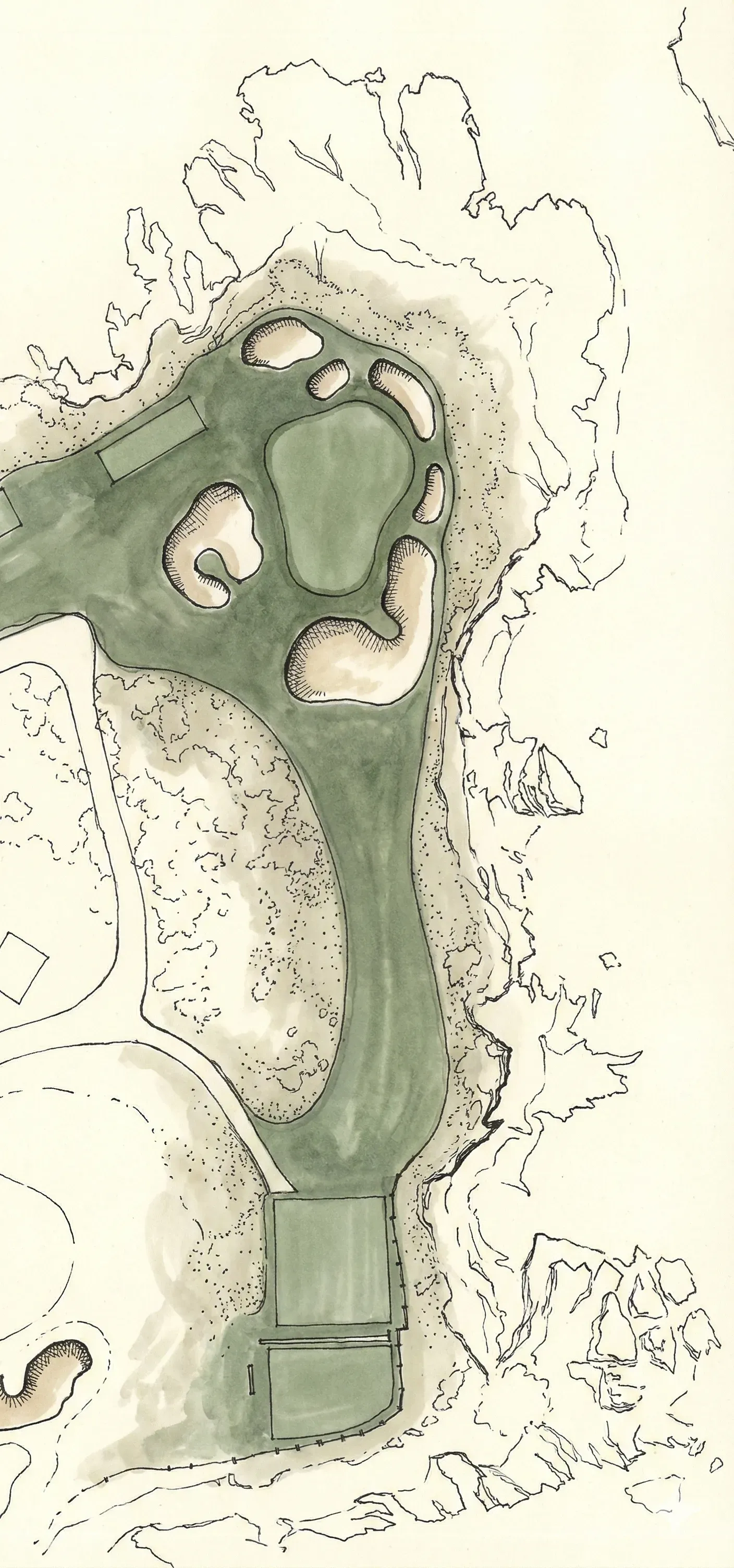
The scorecard claims a mere 106 yards, a figure that suggests a moment of respite. This is a lie. The seventh creates a paradox of scale: the Pacific Ocean stretches infinitely behind a putting surface no larger than a drawing room rug. The drop in elevation renders the trajectory vulnerable; the ball must be flighted low to pierce the gale, yet soft enough to hold a green surrounded by jagged coastline and sand. It is a wedge shot that demands the conviction of a driver.
Jack Neville and Douglas Grant routed this loop in 1919, realizing that length is the least interesting metric in golf. While the hole has witnessed moments of brilliance—such as Tom Kite’s chip-in during the gale of ‘92—it primarily serves as a graveyard for hubris. Even Sam Snead, arguably the finest striker of the ball in history, once famously distrusted the air enough to putt his tee shot down the hill rather than risk the unpredictable flight of a lofted iron.
One stands on the tee box surrounded by the noise of the surf, which conveniently drowns out the internal panic. The strategy suggests a simple knockdown wedge. The ego whispers that it is impossible to miss a target from this distance. Then the wind gusts, the hands tighten, and the ball finds the front right bunker. One marks a three—or a four—on the card, grateful the sea did not claim the ammunition, and walks quietly to the eighth.
Hole Stats
- Par
- 3
- Yardage
- 106
- Architect
- Jack Neville & Douglas Grant
- Template
- Short