Lunchball
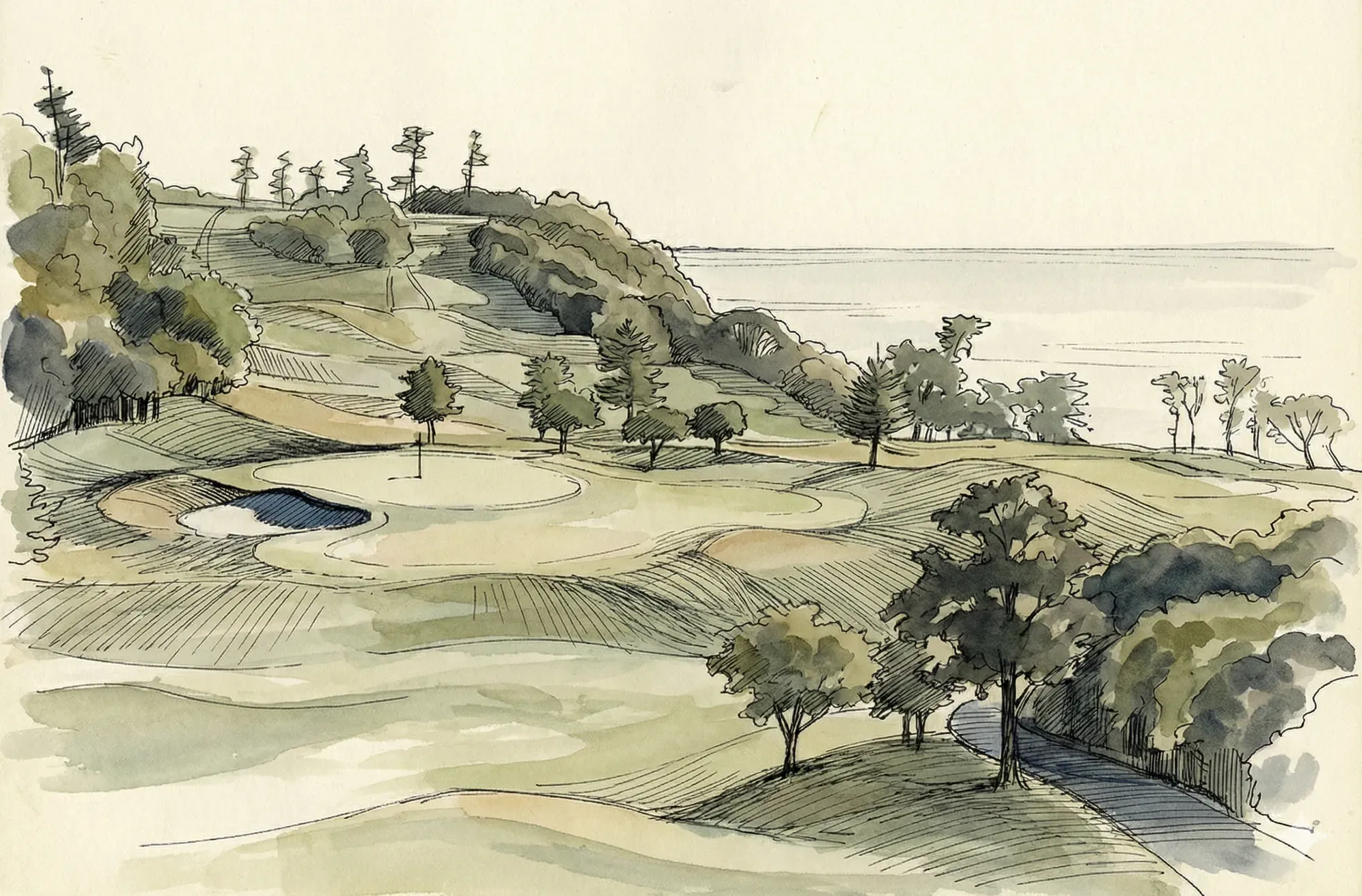
The earth at Kawana is restless. Perched on the jagged spine of the Izu Peninsula, the course does not sit on the land so much as cling to it. C.H. Alison arrived here in the 1930s and found a landscape of raw potential, utilizing the volcanic topography to create a route that feels both ancient and precarious. The wind comes off the Pacific cold and heavy, pressing against the ball and the player alike.
The defining feature of the Fuji Course is the scale of the bunkering. In Japan, they are simply called “Alison Bunkers”—deep, sprawling gashes in the earth that often sit well below the eyeline of the golfer standing on the fairway. They are not merely hazards; they are penalties of depth and geometry. The turf, a stiff, large-bladed Korai, presents a friction that Western golfers rarely encounter, where the grain of the grass dictates the roll more forcefully than the slope itself.
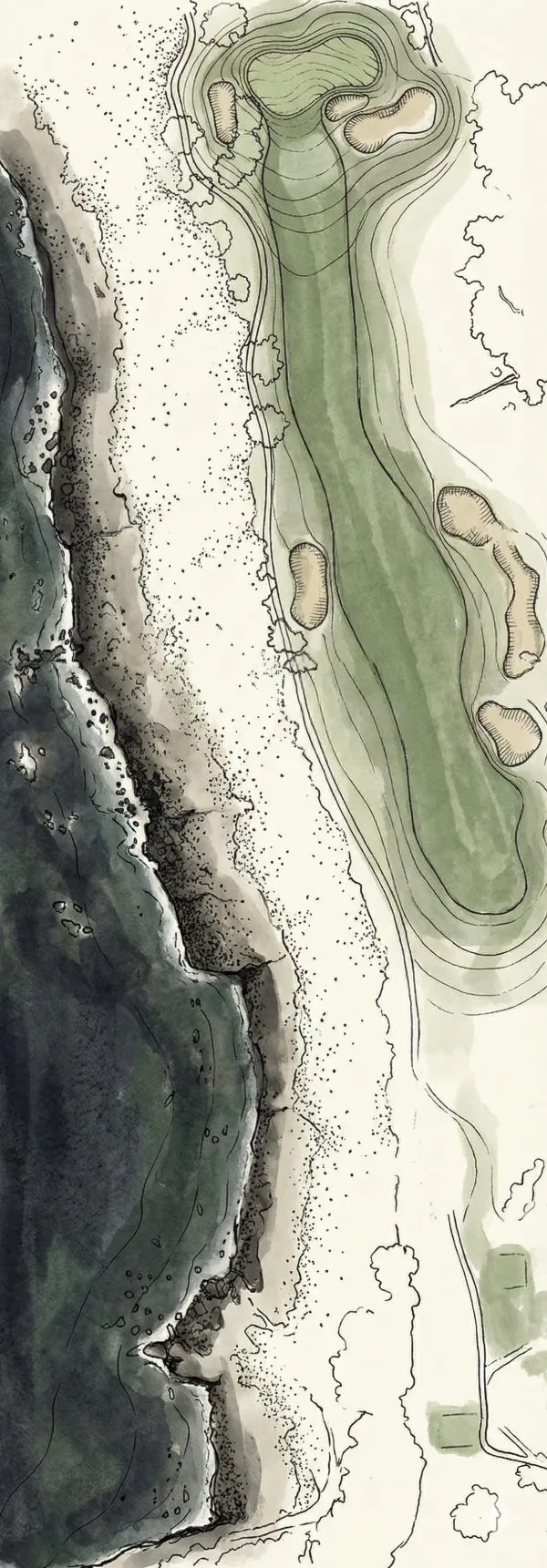
The round crescendos along the cliffs, where the architecture ceases to be about strategy and becomes a negotiation with vertigo. The fairways are lined with Oshima cherry trees and pines that frame the ocean, yet the beauty is deceptive. The ground pitches severely toward the sea, and any shot lacking conviction is rejected by the camber, sent tumbling down the lava rock toward the surf.