 Lunchball
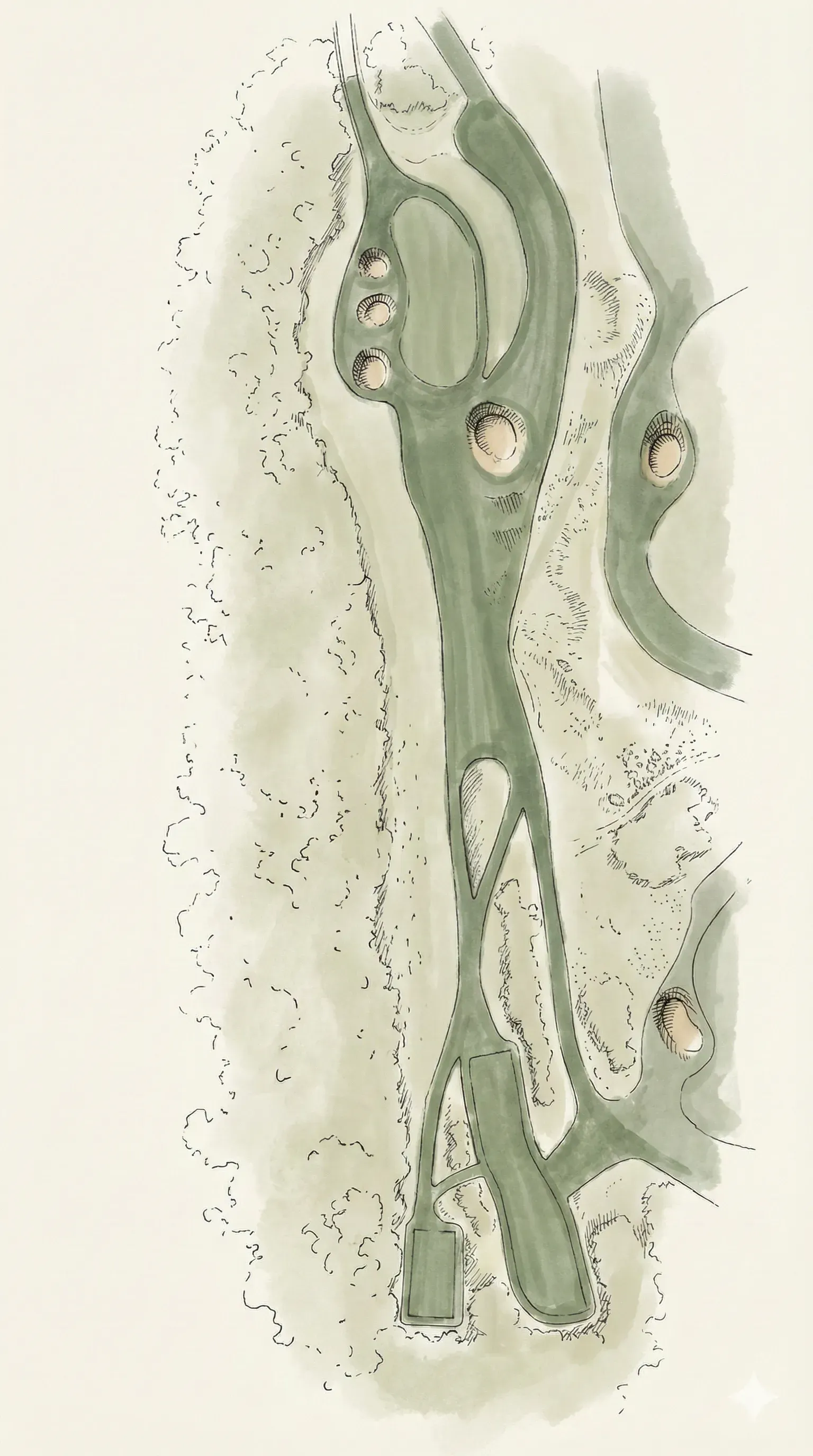
“Whinny Brae” presents a simple question with a complex answer. The green is a small plateau, a turtle’s back pushed up from the surrounding linksland and flanked by gorse. A severe ridge cuts the putting surface in two. The front tier offers a fleeting sense of security, but the back shelf is the true target, demanding a high shot that lands with the softness of a feather. Anything else—a fraction thin, a shade pulled—is repelled with prejudice into the hollows below.
This is the sort of green that Old Tom Morris stamped upon the Scottish coast. It is a work of defense built from the earth itself, long before bulldozers could manufacture drama. One can see the direct lineage to the countless crowned greens Donald Ross would later build across America. He learned the geometry here: that a hole need not be long to be difficult, it need only punish the slightest imperfection.
The walk from the tee is one of quiet prayer. The ball hangs against the gray sky, a small white speck whose fate is determined by a puff of wind from the Firth and the firmness of the turf. You watch it land, and you watch it roll. There is no faking it here. The ground reveals the quality of the strike without sentiment.
Hole Stats
- Par
- 3
- Yardage
- 161
- Architect
- Old Tom Morris
- Template
- Knoll