 Lunchball
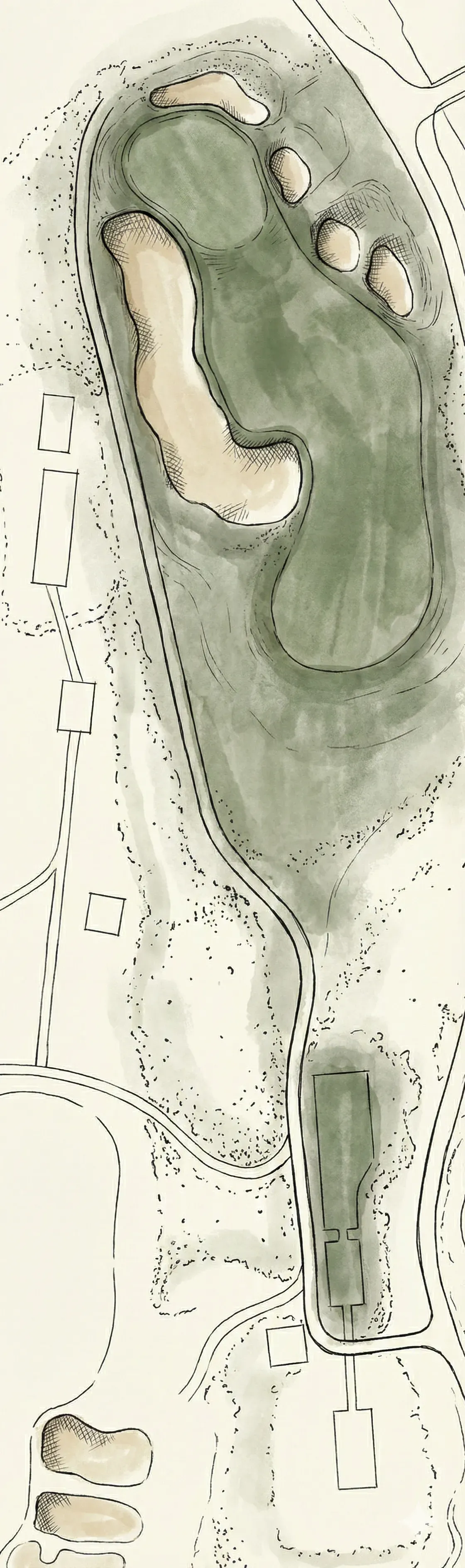
The scorecard claims a par of three; the geometry suggests a par of three-and-a-half. At nearly 300 yards from the championship plates, this hole does not ask for precision so much as it demands brute force tempered by respect. A long, sandy waste guards the left flank—a dusty purgatory for the hooked drive—while the green sits flat and unreceptive, offering little comfort to a ball arriving with the flat trajectory of a long iron or wood.
Henry Fownes drew this hole when the hickory shaft was the standard, yet his vision was strangely prophetic of the modern power game. In 2025, the 8th hole at Oakmont was set up as the longest par 3 in U.S. Open history at 301 yards for the final round., a relic that has only grown more formidable with time. The sheer scale of the ground forces the player to abandon the notion of loft. One plays simply to find the putting surface, or perhaps the front apron, and offer a quiet prayer of thanks that the bunkers were avoided.
Standing on the tee box feels less like a strategic puzzle and more like a physical confrontation. There is a specific absurdity to removing a headcover for a par three. The wind swirls through the Pennsylvania plateau, and the ego whispers to swing harder. The wise man ignores the whisper, accepts the run-up, and understands that a ‘three’ here is a victory stolen from the course.
Hole Stats
- Par
- 3
- Yardage
- 289
- Architect
- Henry Fownes