 Lunchball
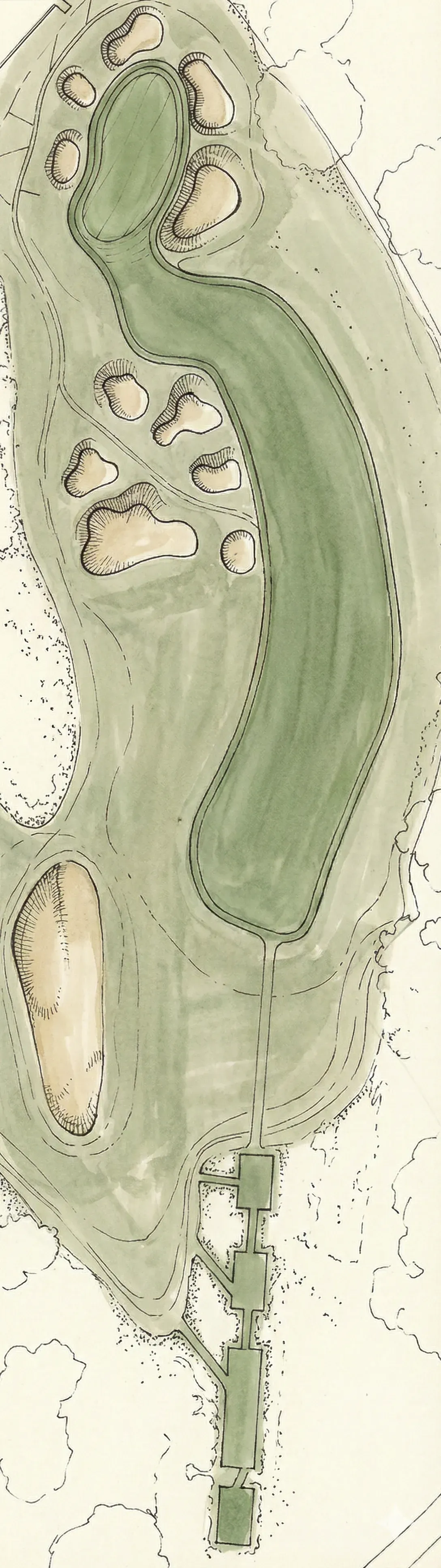
The scorecard reads 313 yards, a number that whispers false promises of a birdie. But Henry Fownes did not deal in charity. The hole is a study in vertical intimidation. The land heaves upward, dominating the view, while the namesake bunker—“Big Mouth”—sits fifty yards short of the green, ten feet deep and hungry. The safe play is a mid-iron to the left fairway pad, but the angle is awkward. The driver brings the sand directly into play. It is a question of trajectory versus gravity.
This is penal architecture in its purest industrial form. While recent work by Gil Hanse has restored the scale of the hazards, the spirit remains 1903 steel-town ruthless. The green itself is a subtle terror, firm and sloping back-to-front, demanding a spin that the rough simply will not provide. It was here that championships turned; the ground does not care for reputations, only for the strike.
The walk up the hill is one of the game’s great ruminations. If the drive is pure, there is hope. If the ball has found the Big Mouth, the player disappears from view, surfacing only to shovel sand while the gallery watches in sympathetic horror. We mark a five on the card, clean the wedge, and move to the 18th, bruised but educated.
Hole Stats
- Par
- 4
- Yardage
- 313
- Architect
- Henry Fownes