 Lunchball
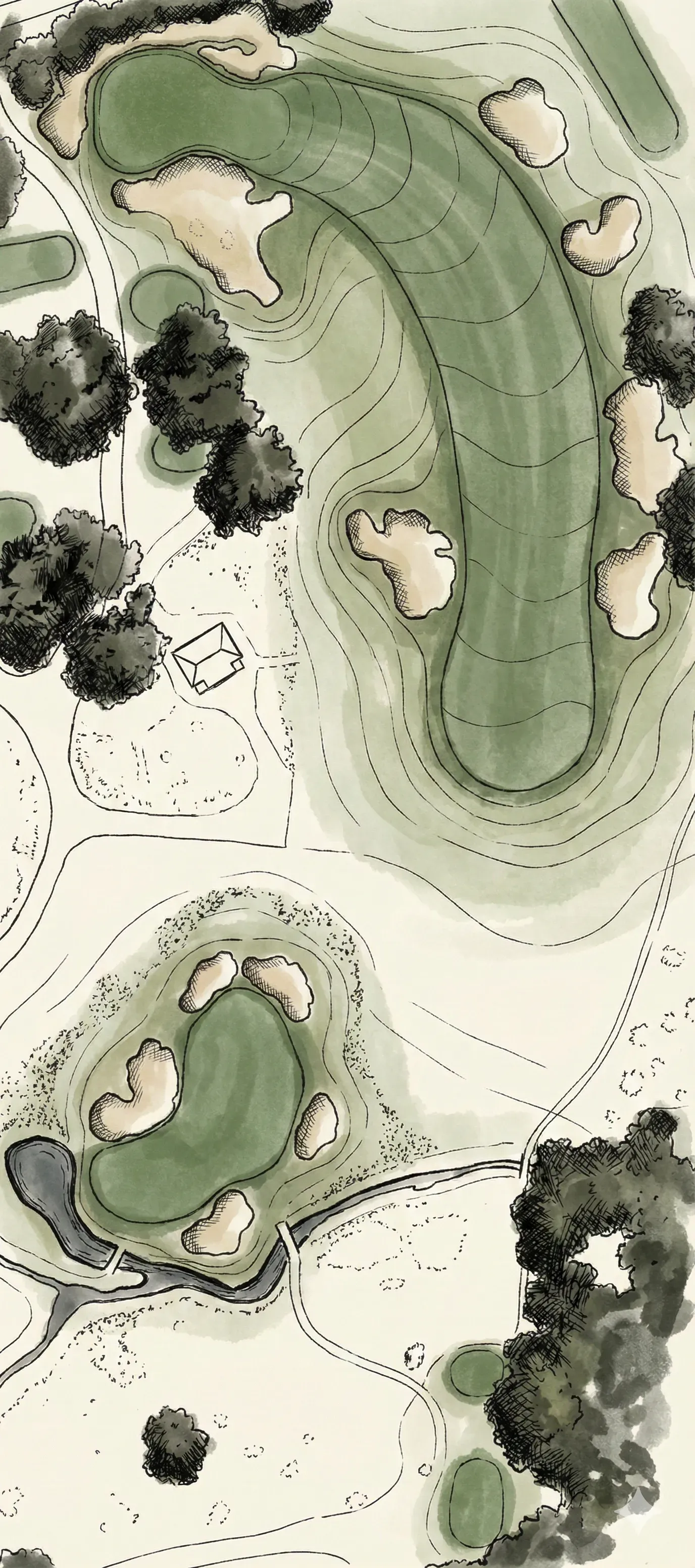
The tenth at Merion is a masterclass in deception, a hole that leans heavily on the psychological rather than the physical. At barely 300 yards, the fairway turns sharply left, a ribbon of turf strangled by deep fescue and the menacing presence of the Ardmore neighborhood out of bounds. The green is a postage stamp, pitched and canted, rejecting the sloppy wedge. The architecture presents a binary choice: the bold stroke with the driver that risks disaster for the sake of an eagle putt, or the disciplined iron that leaves a terrifyingly precise pitch to a surface that offers no comfort.
Hugh Wilson, a man who learned his craft by walking the great links of Britain, understood that length is the clumsiest form of defense. Here, he protects par with angles and uncertainty. The red wicker basket atop the pin—Merion’s distinct alternative to the flag—stands sentinel over a putting surface that has ruined more U.S. Open rounds than the monstrous closing mile. It is a hole where the scorecard yardage provokes arrogance, and the result often punishes it.
Standing on the tee, the air smells of cut grass and old money. The caddie hands you an iron, his eyes suggesting that the driver is a fool’s errand. You strike the ball, watching it curve against the Pennsylvania sky, hoping it holds the fairway shelf. To walk off with a three is to have stolen something from history; to make a five is to have been rightfully corrected by the ground.
Hole Stats
- Par
- 4
- Yardage
- 303
- Architect
- Hugh Wilson