 Lunchball
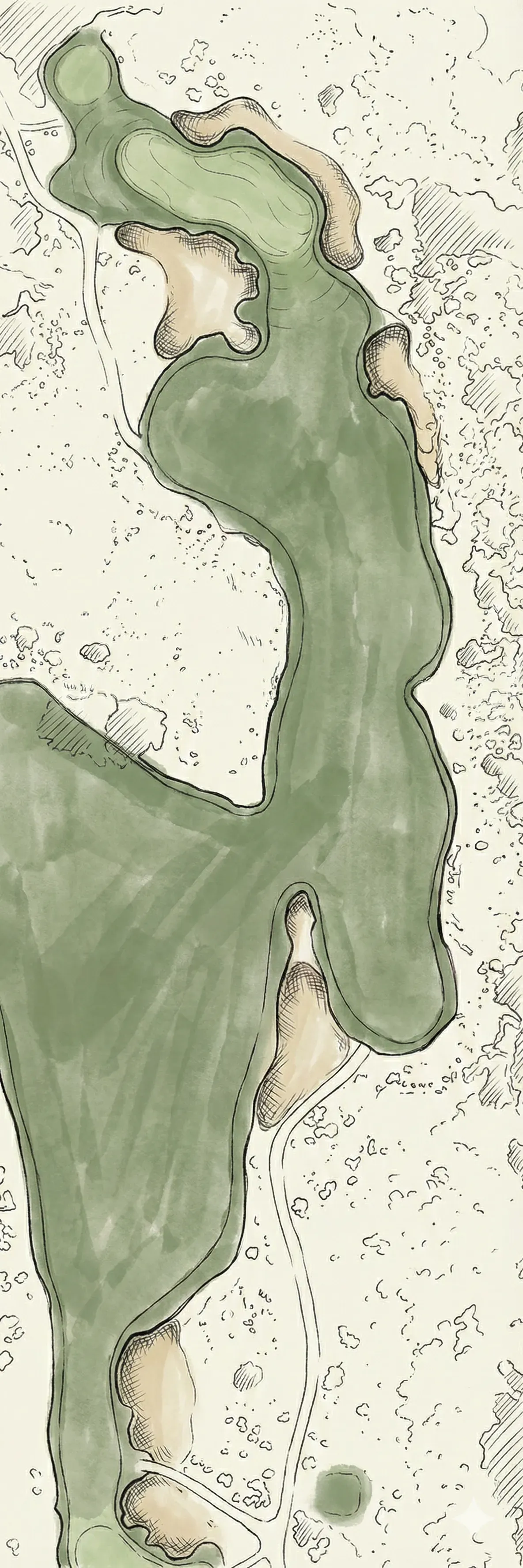
The ninth is a study in visual intimidation and the elasticity of par. A diagonal ridge of dunes creates a classic Cape-style decision: bite off the heavy vegetation for a short pitch, or bail out left to the fat of the fairway. MacKenzie and Hunter designed the green as a narrow, elevated shelf that rejects a clumsy approach. The safe drive leaves a terrifyingly precise wedge shot over a deep bunker, while the aggressive line, if successful, offers a simple tumbling release. The yardage implies a birdie, but the architecture often dictates a bogey.
Historically, this hole marks the transition from the sheltered forest to the violent exposure of the dunes. It is a collaborative triumph of the MacKenzie-Hunter partnership, proving that length is irrelevant to the quality of the test. The ground game is paramount here; the contours of the fairway feed the ball toward trouble as readily as they assist the well-struck shot. It serves as the gateway to the legendary coastal stretch, demanding focus just as the mind begins to wander toward the ocean views ahead.
Walking off the tee, the air changes. The scent of pine resin gives way to salt spray and damp sand. The silence of the woods is broken by the distant crash of the Pacific. It is a lonely, beautiful walk up a fairway that feels ancient and unsettled. The wind usually helps here, pushing the golfer toward the green, but also pushing the ball toward the waste areas that frame the hole like a jagged picture frame.
Hole Stats
- Par
- 4
- Yardage
- 289
- Architect
- Alister MacKenzie
- Template
- Cape