 Lunchball
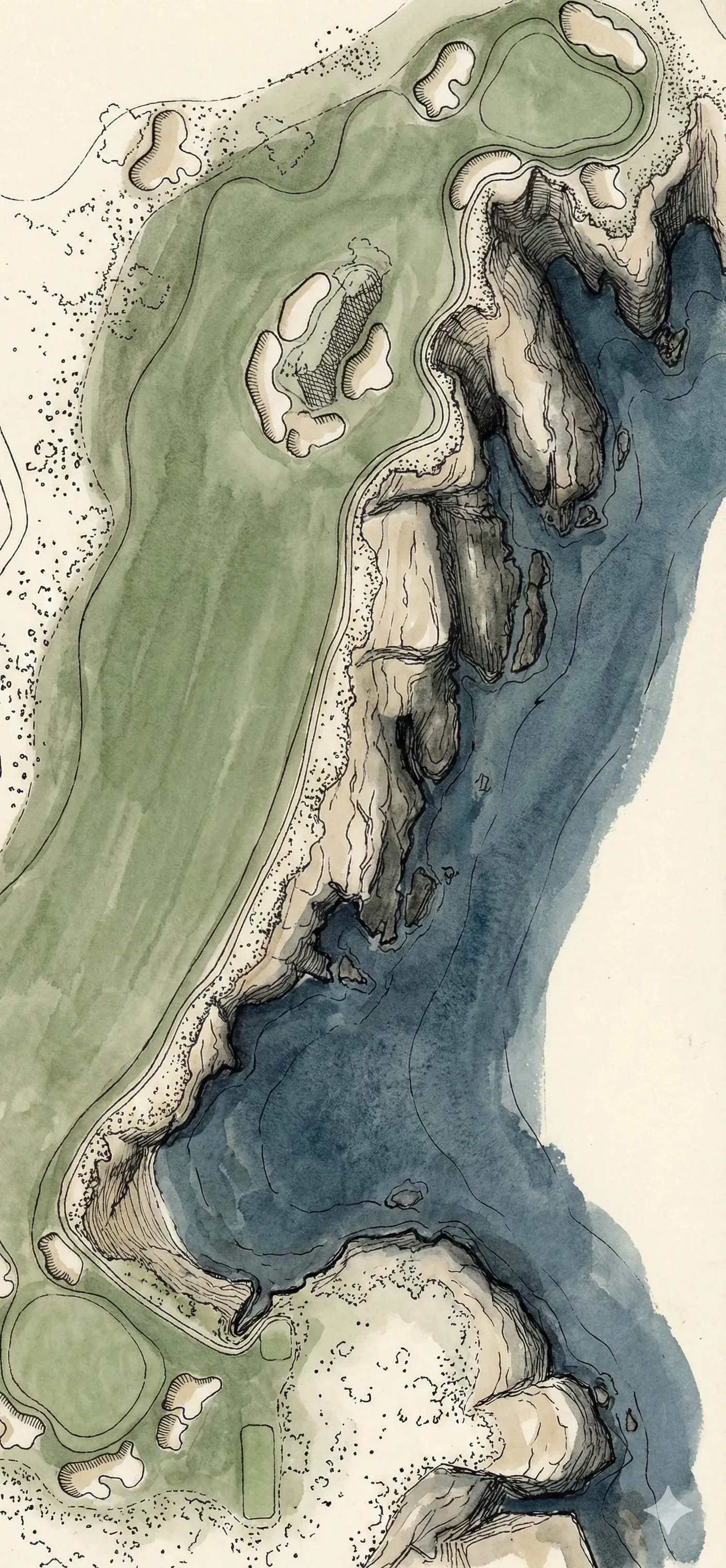
The seventeenth stands as the ultimate strategic counterpoint to the heroic sixteenth. It is a Cape hole of violent geography, demanding a drive across a jagged bight of the Pacific. The player must choose a line: bite off the ocean to leave a short pitch, or bail out left toward the Del Monte Forest. The central cluster of cypress trees, rooted stubbornly in the fairway, acts not merely as decoration but as a magnet for the tentative drive, forcing the player to commit fully to their chosen angle.
Historically, this hole cements MacKenzie’s belief that the coastline should dictate the golf, not the other way around. While the sixteenth gathers the headlines, the seventeenth requires the greater tactical mind. The green sits naturally in a hollow, guarded by bunkers that look as though they were wind-blown rather than dug. It is a hole that rewards the bold but punishes the reckless with a lost ball and a long walk.
The atmosphere here is thick with salt and finality. Standing on the tee, with the crash of the waves drowning out conversation, the ego suggests a line over the furthest rocks. The wind, usually pressing in from the ocean, suggests otherwise. By the time one reaches the green, the noise of the surf recedes slightly, replaced by the quiet realization that the round is nearly done.
Hole Stats
- Par
- 4
- Yardage
- 386
- Architect
- Alister MacKenzie
- Template
- Cape