 Lunchball
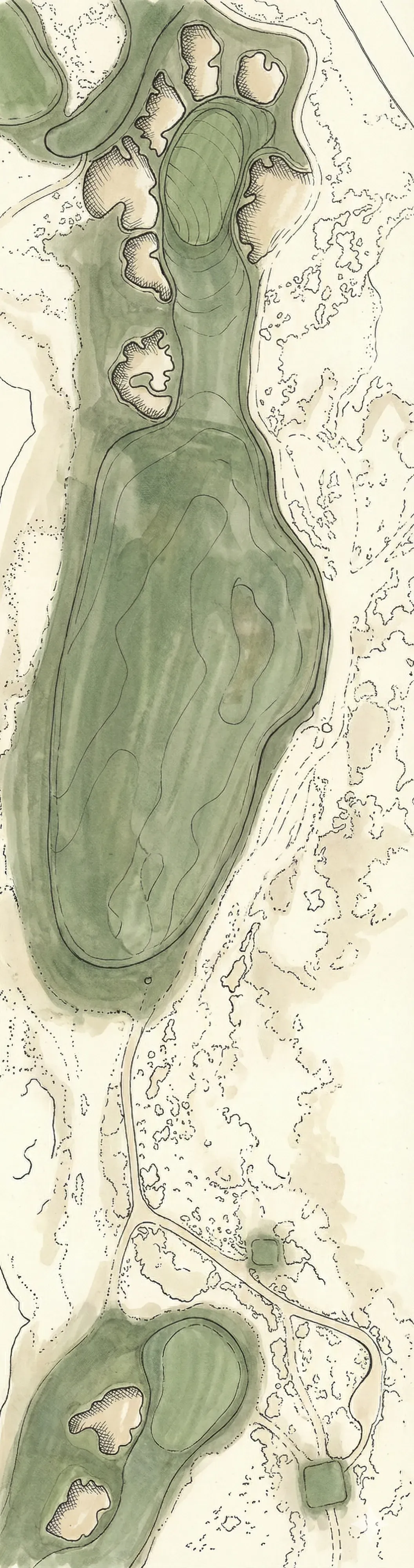
The thirteenth is a deceptive pause before the coastal storm. On the card, it is a drive and a pitch. In practice, it is a psychological knot. A massive, scrub-covered dune interrupts the fairway, obscuring the green and dictating the terms of engagement. To attack the flag, one must challenge this central hazard; to bail out left is to accept a blind, awkward angle into a green that runs away like spilled mercury. It is a masterclass in the ground game, requiring a specific spin and a nervous trust in the bounce.
While the cameras and the tourists fixate on the oceanic drama of the sixteenth, architecture students linger here. This hole represents the peak of the MacKenzie-Hunter collaboration—a rejection of penal golf in favor of strategic temptation. It is not about how far one can hit, but how much risk one is willing to stomach for a clear view. It remains one of the finest short par fours in existence, proof that length has no correlation with difficulty.
Standing on the tee, the ocean is audible but invisible, a low roar behind the cypress barrier. The air is still here, heavy with the scent of pine needles and salt. It is a quiet corner of the property, a place to light a match, check the wind, and realize that the scorecard’s “4” is a polite fiction unless the tee shot is struck with absolute conviction.
Hole Stats
- Par
- 4
- Yardage
- 347
- Architect
- Alister MacKenzie