 Lunchball
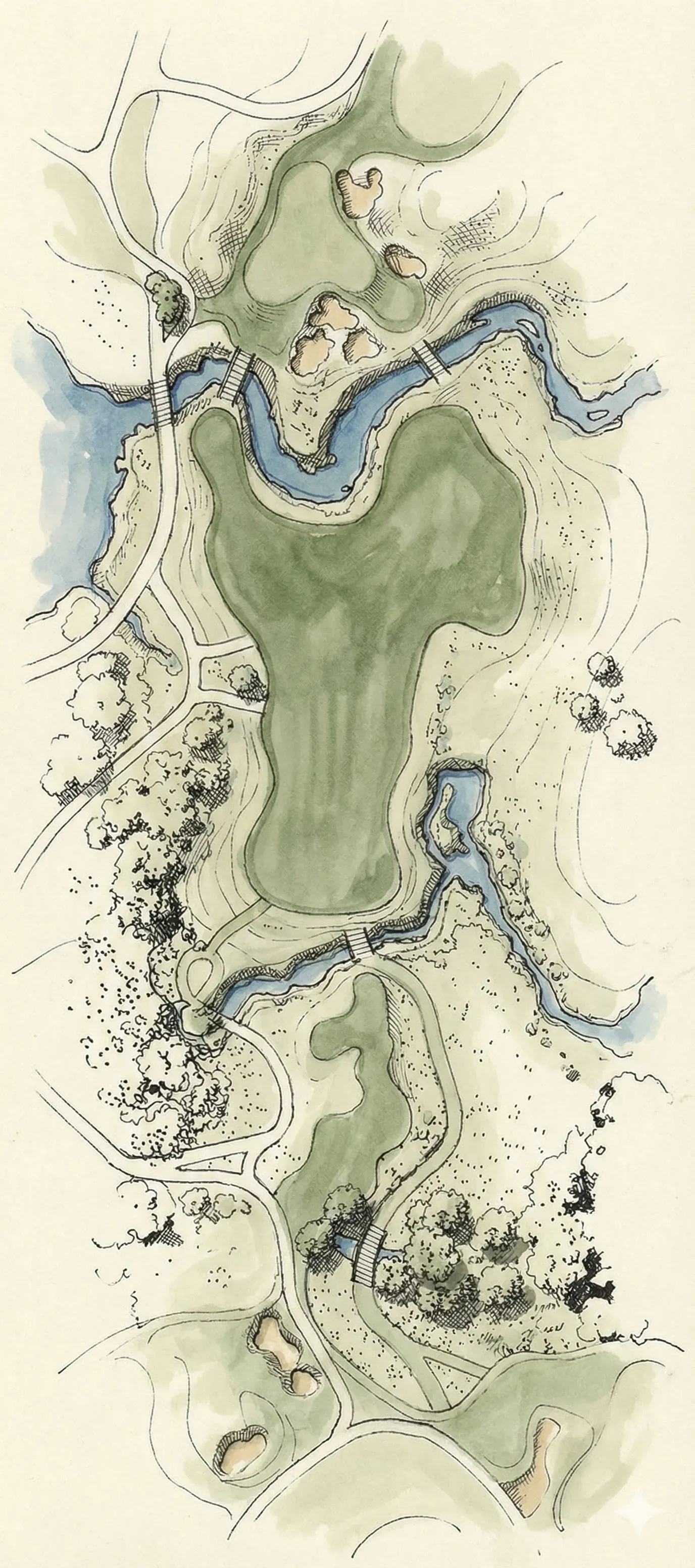
The tee shot presents a binary choice, split by a heaving central dune that rises like a spinal column in the fairway. To the left lies the coward’s route—wide and welcoming, but it leaves a blind approach up a steep embankment where depth perception goes to die. To the right, a narrow ribbon of turf sits high on the shelf. It requires a committed strike to hold the edge, but the reward is a clear view of the target. The green sits in a natural hollow, guarded not by dug-out sand, but by the land’s own rejection of a poorly struck ball.
Though opened in 2015, the ground feels ancient. Coore and Crenshaw moved little earth here, letting the natural dune structure dictate the routing. It is a testament to the “Second Golden Age,” proving that the best architecture is often discovered, not constructed. The wind off the Gulf of St. Lawrence serves as the uncredited third architect, turning the club selection into a negotiation rather than a calculation.
We walk off the green with the salt drying on our faces. The scorecard likely shows a bogey, the result of hubris off the tee and a refusal to accept the safe route left. The ocean churns below, indifferent to the slide in handicap. There is no comfort here, only the raw exposure of the cliffs and the realization that the round has only just begun.
Hole Stats
- Par
- 4
- Yardage
- 402
- Architect
- Coore & Crenshaw