 Lunchball
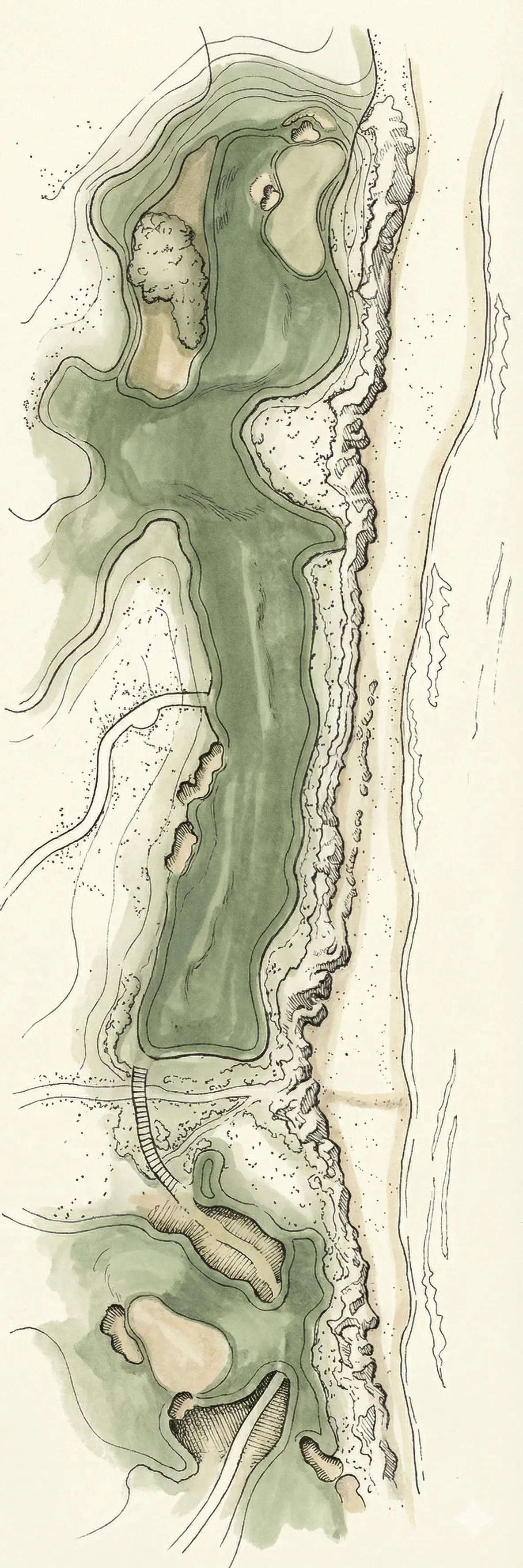
The final movement at Cabot Cliffs is a study in temptation and geometry. The fairway does not flow continuously; it fractures into distinct shelves separated by ravines that drop violently into the Gulf of St. Lawrence. The tee shot is a negotiation with the coastline. A conservative line to the left finds safety but leaves a blind, labored march to the green. The aggressive line—challenging the void to the right—offers a distinct advantage but demands a carry that accounts for the heavy, salt-laden air. It is a par five that can be solved with three prudent iron shots or ruined by a single moment of hubris.
Bill Coore and Ben Crenshaw did not so much build this hole as they revealed it from the bluffs. While the course is a product of this century, the eighteenth feels ancient, as if the erosion of the cliffs dictated the routing long before a bulldozer arrived. The architecture relies on the psychological pressure of the hazard rather than hidden tricks. The wind, usually quartering off the water, acts as the primary defender, turning a simple yardage into a complex physics equation.
Walking up the final approach, the clubhouse sits low and unobtrusive, secondary to the crashing waves below. The turf is tight fescue, brown and firm, demanding a putter or a low runner from off the green. The handshake on the eighteenth is accompanied by the sound of the surf, a reminder that while the scorecard is signed, the land remains indifferent to the result.
Hole Stats
- Par
- 5
- Yardage
- 532
- Architect
- Coore & Crenshaw