 Lunchball
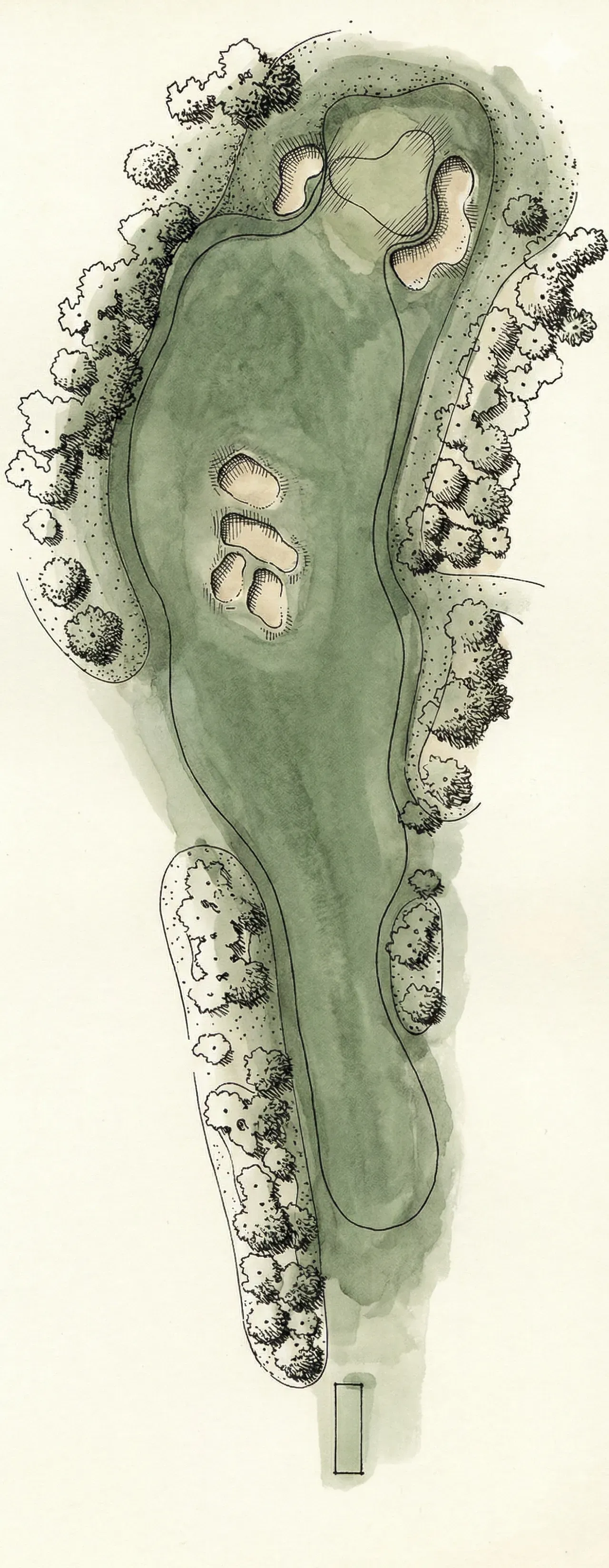
The third at Augusta is a study in deception, the shortest two-shotter on the property and perhaps the most confounding. The drive is less about distance and more about restraint, asking the player to flirt with the quartet of fairway bunkers on the left without tumbling into them. The architecture demands a specific angle; the green sits high and exposed, a narrow tongue of turf that falls away sharply to the left. The approach is a nervous pitch, requiring a contact so crisp it sounds like a snapping branch. Anything short is rejected by the steep false front; anything long finds a recovery that requires the hands of a surgeon.
Historically, this hole represents the essence of the MacKenzie-Jones philosophy: the ground game defense against the aerial assault. While the modern equipment allows players to fly the ball high, the firm contours of the putting surface remain the great equalizer. It is here that championships are rarely won, but quietly lost in the early hours of a Sunday, obscured by the pines before the cameras turn their gaze to the water below.
The vibe on the third tee is one of deceptive calm. The scorecard suggests a birdie is owed, but the land suggests otherwise. It is a hole that baits the ego. The sensible play is a layup and a wedge, yet the driver comes out of the bag too often, seduced by the short yardage. The walk to the green is usually silent, the player calculating the odds of getting up and down from the hollows, realizing too late that the course has not yet begun to show its teeth.
Hole Stats
- Par
- 4
- Yardage
- 350
- Architect
- Alister MacKenzie