 Lunchball
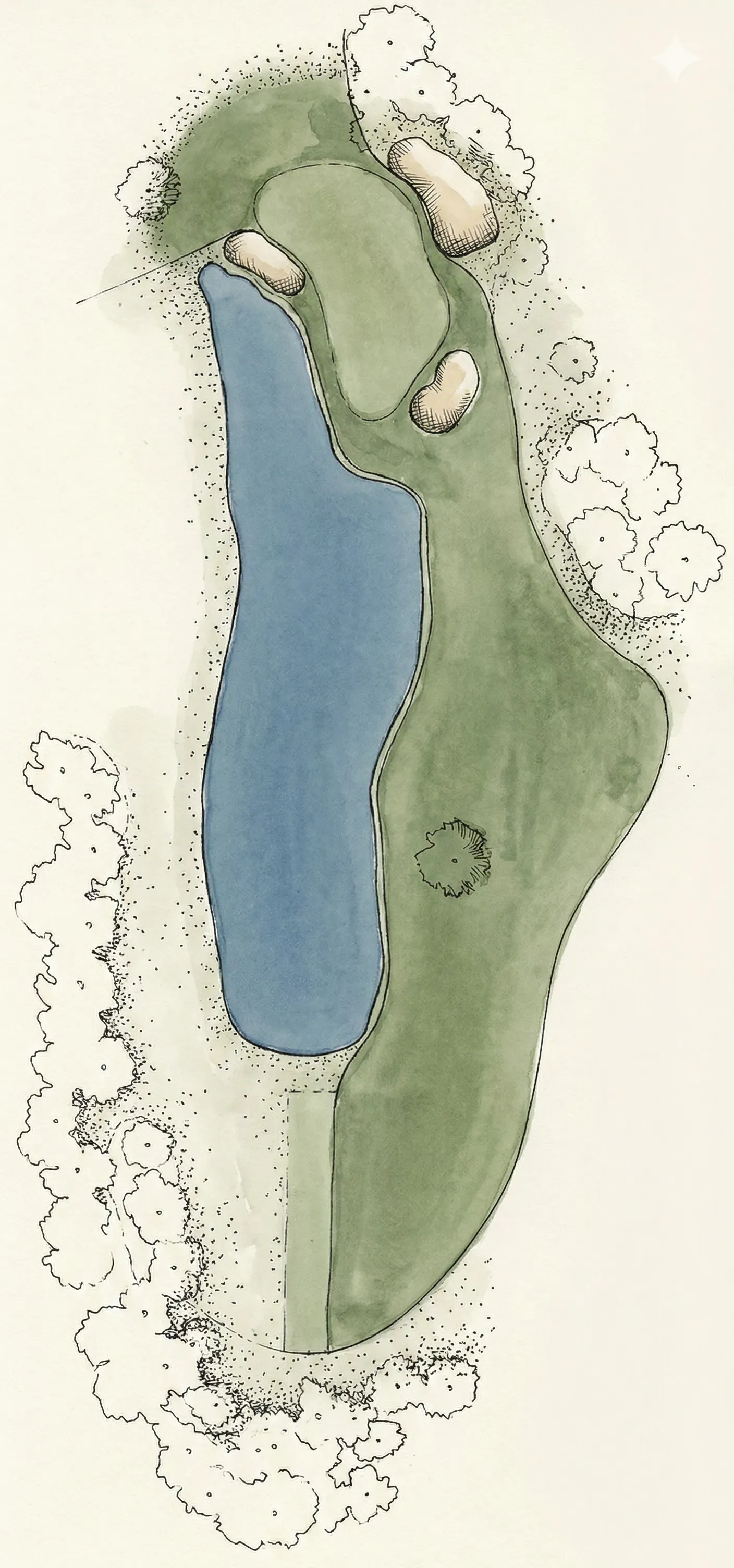
The hazard here is not merely the pond, but the violent geometry of the green itself. Physically, the task is a short iron across a mirror of dark liquid to a shelf cut into the hill. The putting surface acts as a sluice; a pronounced ridge runs through its spine, feeding the timid shot away from the hole and the bold shot toward the traditional Sunday pin location. To miss right is to find a bunker that leaves a recovery of impossible delicacy, forcing the player to stare back at the water and the reflection of their own impending error.
This corner of the property serves as the tournament’s theater of consequence. It was here that Nicklaus nearly holed his tee shot in ‘86, the roar rising from the valley before the ball even landed. It was here that Woods defied physics in 2005, the ball pausing on the lip as if waiting for permission to drop. The architecture allows for the dramatic because it demands precision; there is no bailout, only the water or the ridge.
The atmosphere on the 16th is heavy, smelling of crushed grass and the damp cool of the hollow. The patrons bank the sides like spectators in a Roman coliseum, their noise trapped by the pines. Standing on the tee, the wind swirls unpredictably, and the distance seems to fluctuate with the pulse. To walk off with a three is to survive; to walk off with a two is to have stolen something from the gods.
Hole Stats
- Par
- 3
- Yardage
- 170
- Architect
- Alister MacKenzie & Bobby Jones