 Lunchball
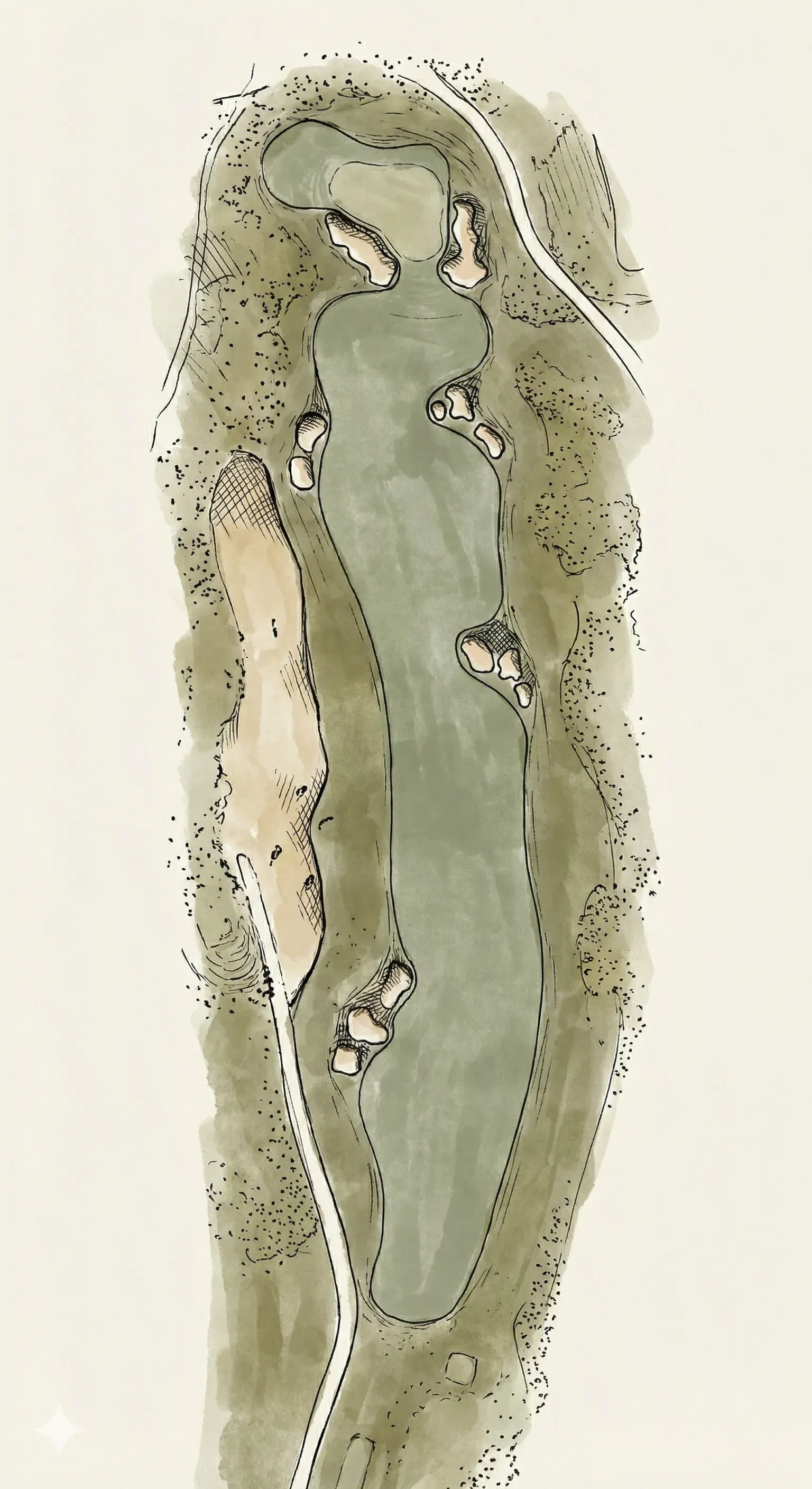
The sixteenth is a par five that demands a decision before the tee is even pegged. The drive must negotiate a corridor flanked by timber, but it is the second shot where the spirit of Donald Ross truly surfaces. A cluster of cross bunkers—jagged, flash-faced, and restored to their original violence—interrupts the fairway some 100 yards short of the green. They serve as a gatekeeper, forcing the player to choose between a blind, soaring assault on the green or a disciplined layup that leaves a terrifyingly precise wedge shot. The green itself sits slightly raised, repelling weak approaches into collection areas that turn pars into bogeys with indifferent efficiency.
For years, this hole suffered the indignity of tree encroachment and softened edges, a common fate for Golden Age designs in the late 20th century. The restoration by Gil Hanse did not simply tidy the edges; it excavated the aggression. By expanding the bunkers and widening the playing corridors, the architecture shifted from penal narrowness to strategic width. It is a reminder that the most difficult obstacles are often the ones we choose to challenge, rather than the ones we are forced to avoid.
There is a specific heaviness to the air at Aronimink late in the round. It is the atmosphere of a serious club, where the game is played quickly and the silence is dense. Standing in the fairway, staring at the jagged lip of a bunker with the clubhouse looming on the horizon, one feels the tension of the scorecard. It is not a place for lighthearted banter; it is a place for grim determination and the quiet appreciation of a well-struck iron.
Hole Stats
- Par
- 5
- Yardage
- 556
- Architect
- Donald Ross