Lunchball
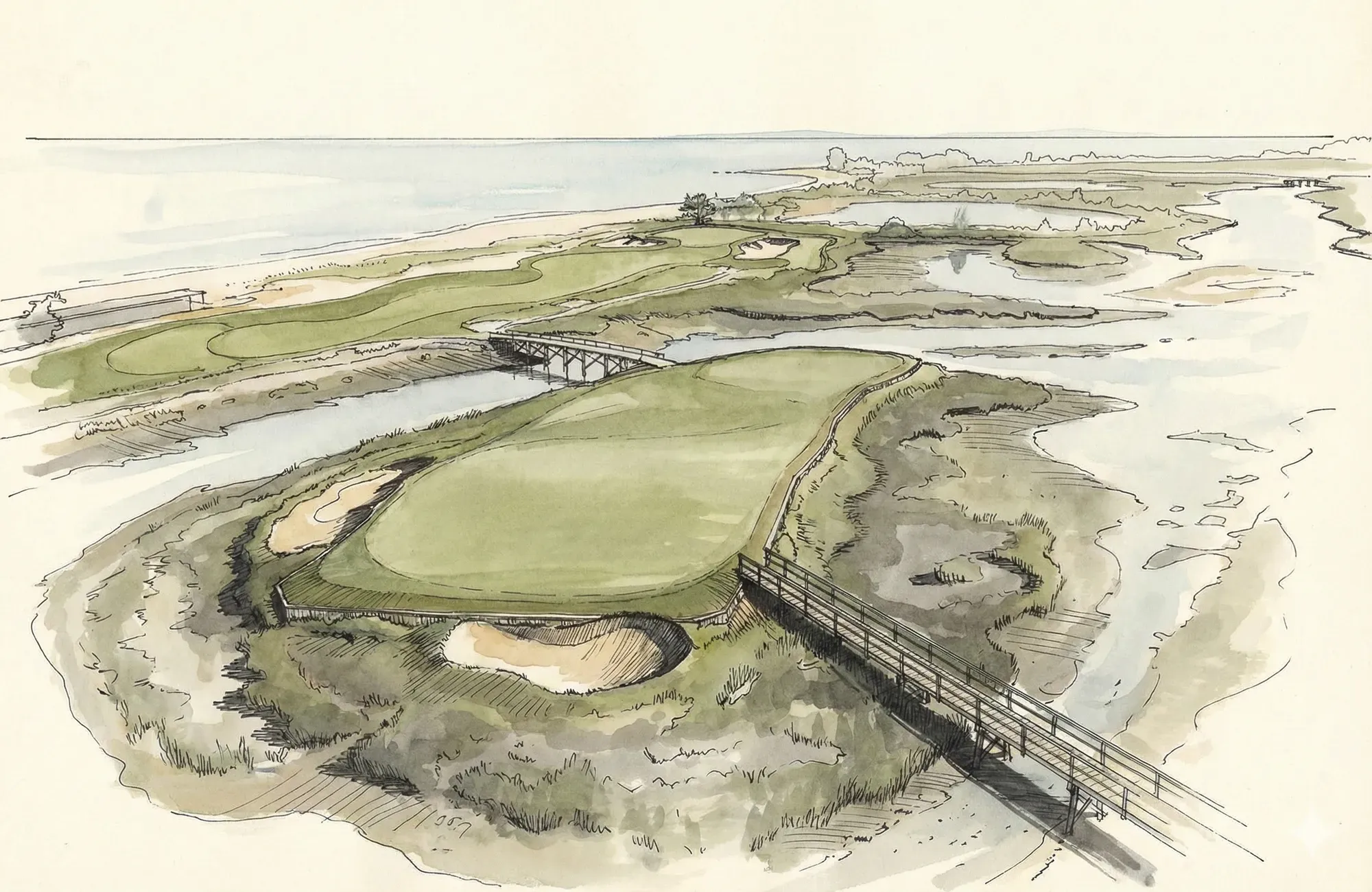
The land at Locust Valley sits uneasy between the hills and the Sound. It is a narrow corridor, an awkward puzzle handed to C.B. Macdonald and Seth Raynor in the roaring twenties. For decades, the trees encroached, suffocating the grand scale of the original geometries in a claustrophobic embrace. Gil Hanse has since taken a blade to the overgrowth. He peeled back the canopy to reveal the bones of the place—widening the corridors and allowing the wind, once blocked by timber, to reclaim its role as the primary defender of par.
The routing bifurcates the experience. The front nine navigates the inland swells, a preamble to the descent. But it is the turn homeward that defines the day. From the tenth, the ground falls away toward the salt water. Here lie the templates, exposed and raw. The Biarritz sits low; the Redan hovers above the marsh, a fortress against the tide. It is not a polite stretch of golf. The wind whips off the Sound, turning simple iron shots into distinct examinations of character.