Lunchball
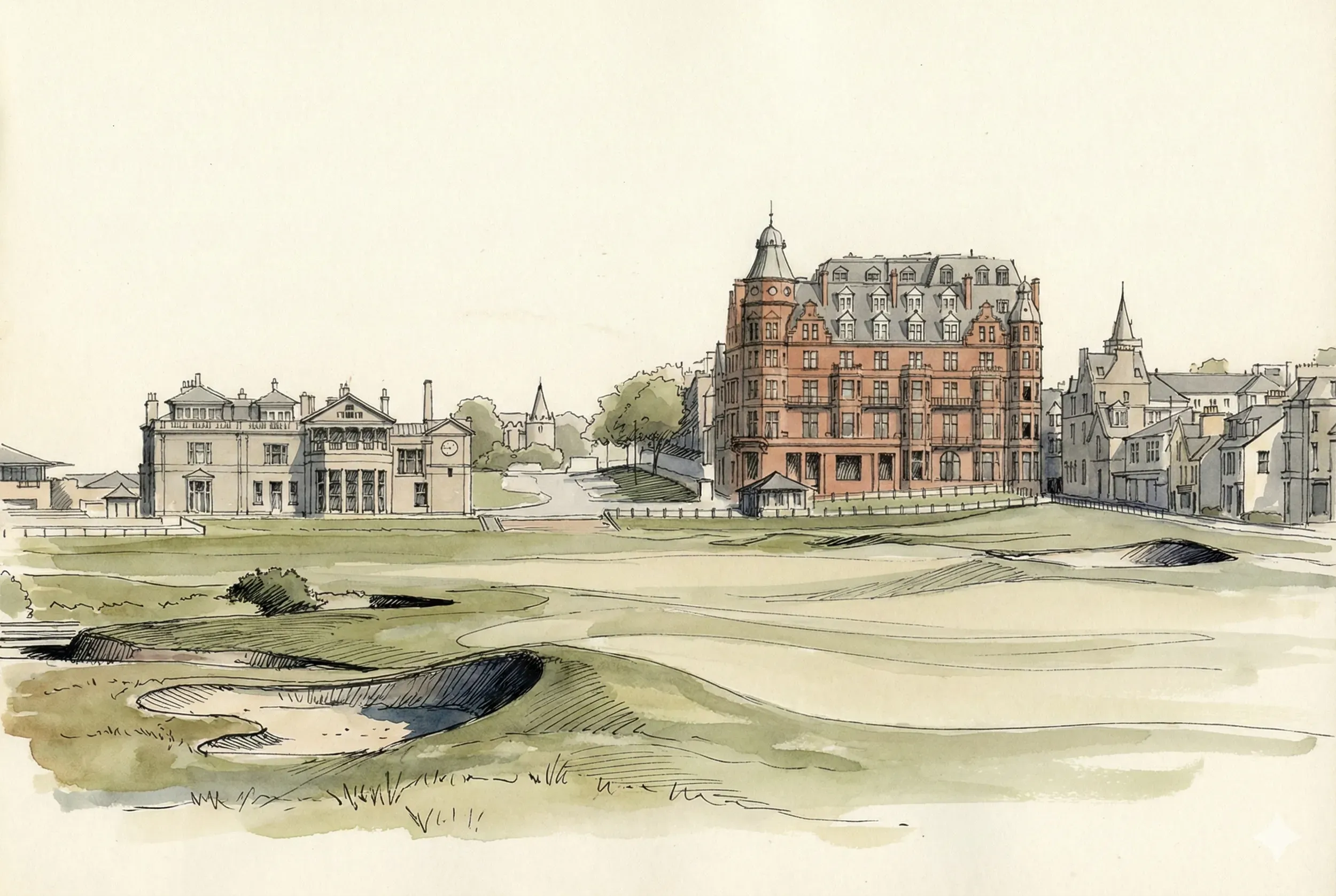
The ground at St Andrews was not built; it accumulated. To walk the Old Course is to walk upon turf that predates the very concept of golf architecture. It is uneven, sandy, and entirely indifferent to the modern game. We do not come here to see a design; we come to read the landscape.
The Strategic Argument
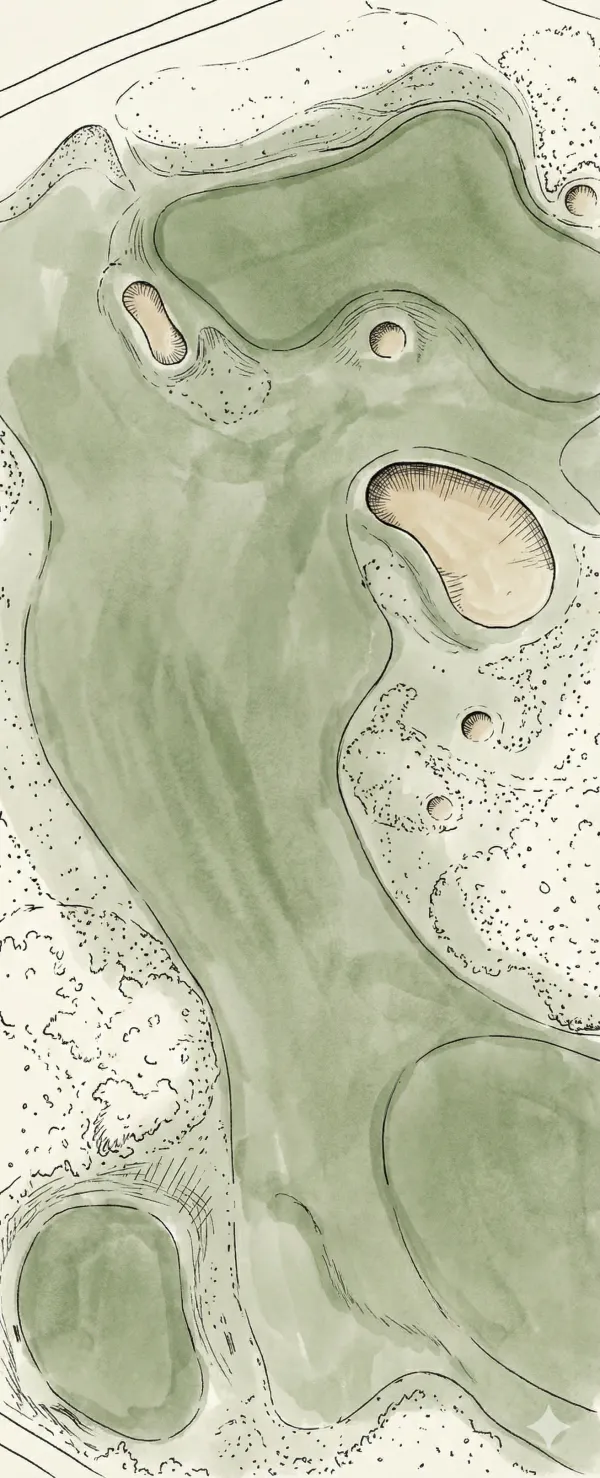
The course defends itself not with length, but with angles. The fairways offer acres of width—a deceptive comfort—yet the optimal line is narrow and fraught with ruin. The bunkers are not visual framing; they are deep, pot-bottomed pits often invisible from the tee. One must choose: take the safe route and face a near-impossible approach, or challenge the trouble to open the gate to the green.
The Loop
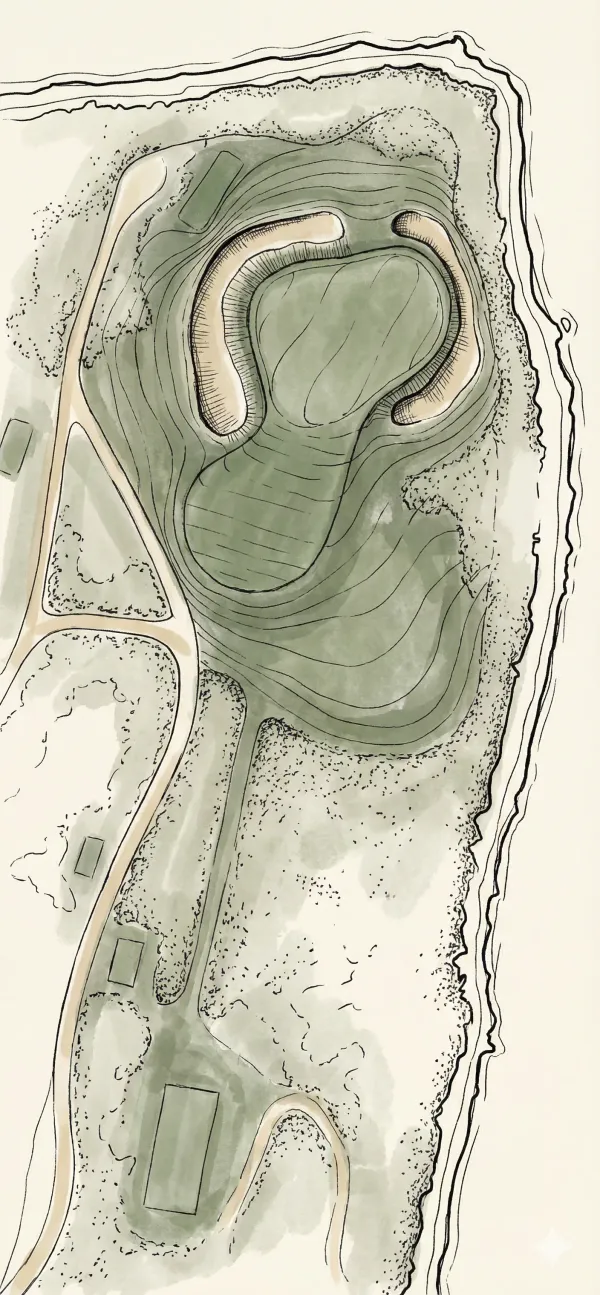
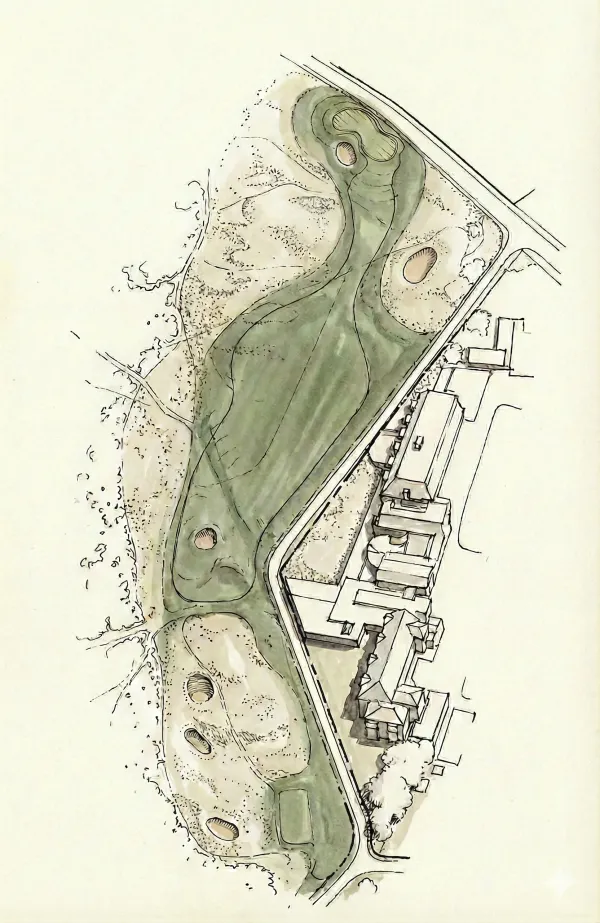
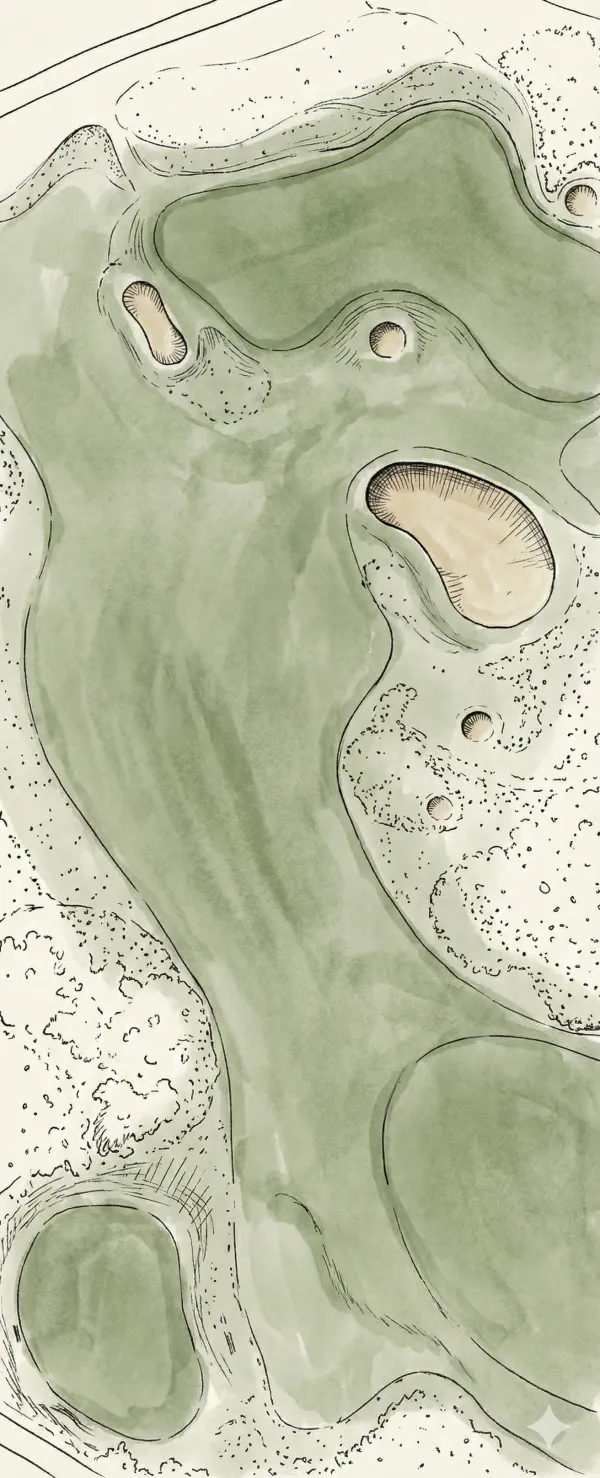
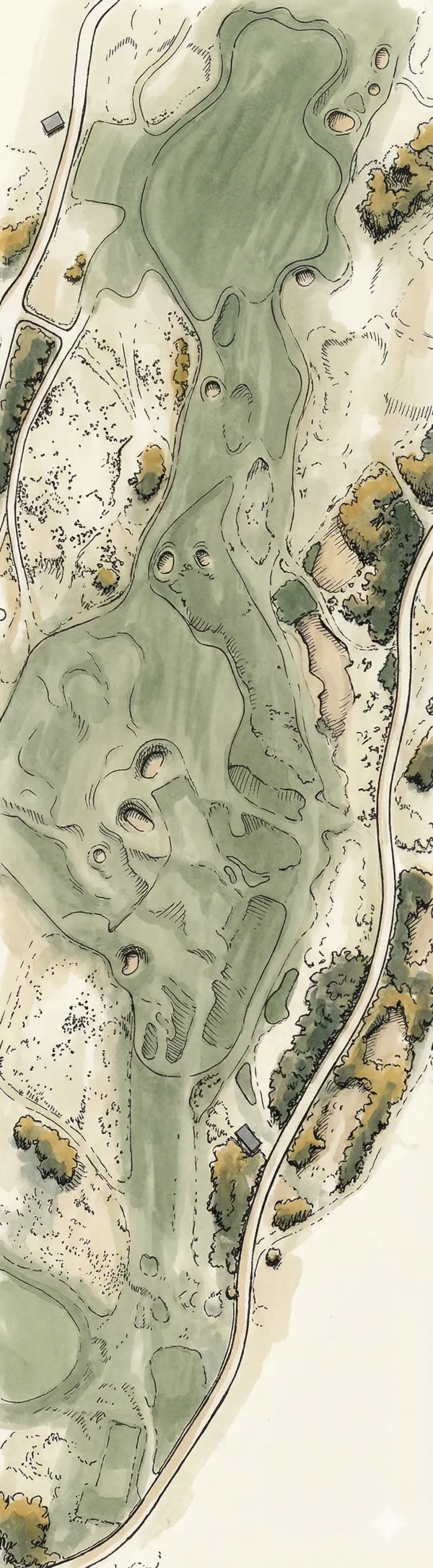
The routing is a singular spine, marching out to the grey waters of the Eden Estuary and returning to the grey stone of the town. Aside from the bookends, the putting surfaces are shared. These double greens are vast, undulating shelves where the only distinction between the outward and inward nines is the color of the flag—white going out, red coming home.
The Anchor
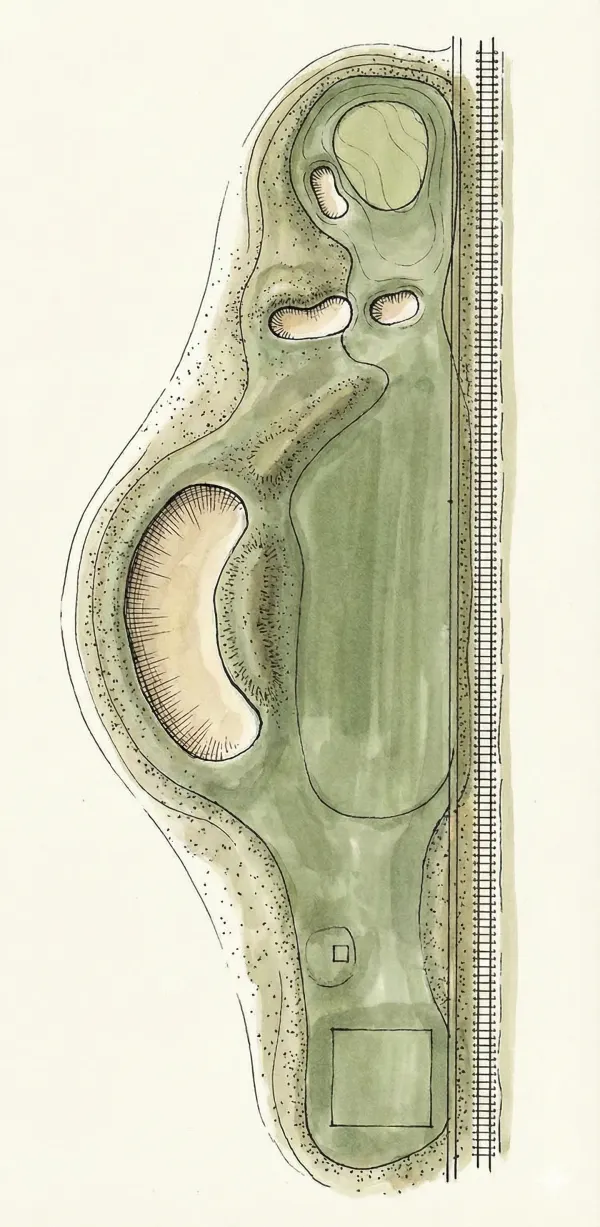
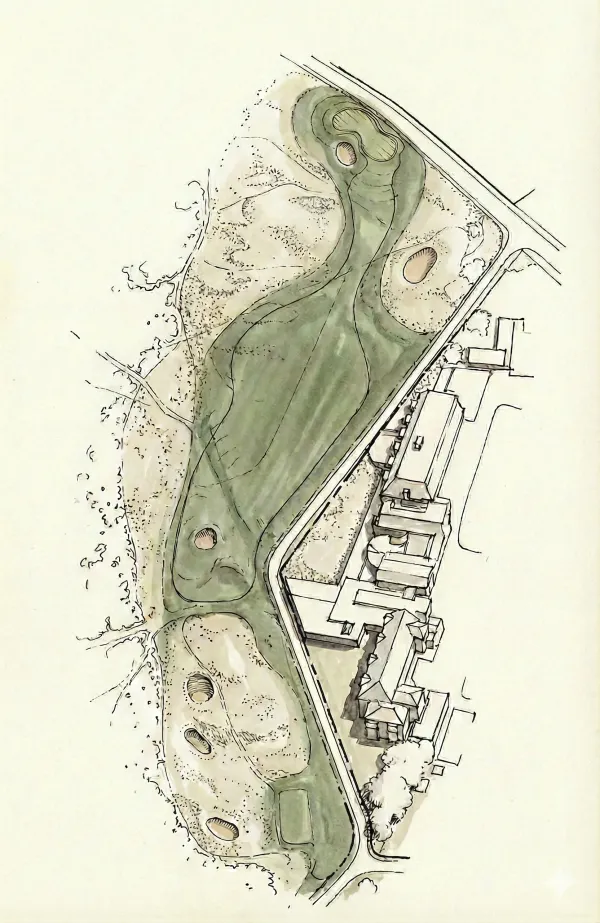
The 17th requires a blind drive over the black sheds of the hotel—a shot demanding faith over sight. The approach is severe: a long iron to a sliver of green, protected by a deep pit to the fore and a paved road to the rear. It is a hole where par feels like theft.
"The strategy of the golf course is the soul of the game. The spirit of golf is to dare a hazard, and by negotiating it reap a reward, while he who fears or declines the issue of the carry, has a longer or harder shot for his second; yet the player who avoids the unwise effort gains advantage over one who tries for more than in him lies, or who fails under the test."