Lunchball
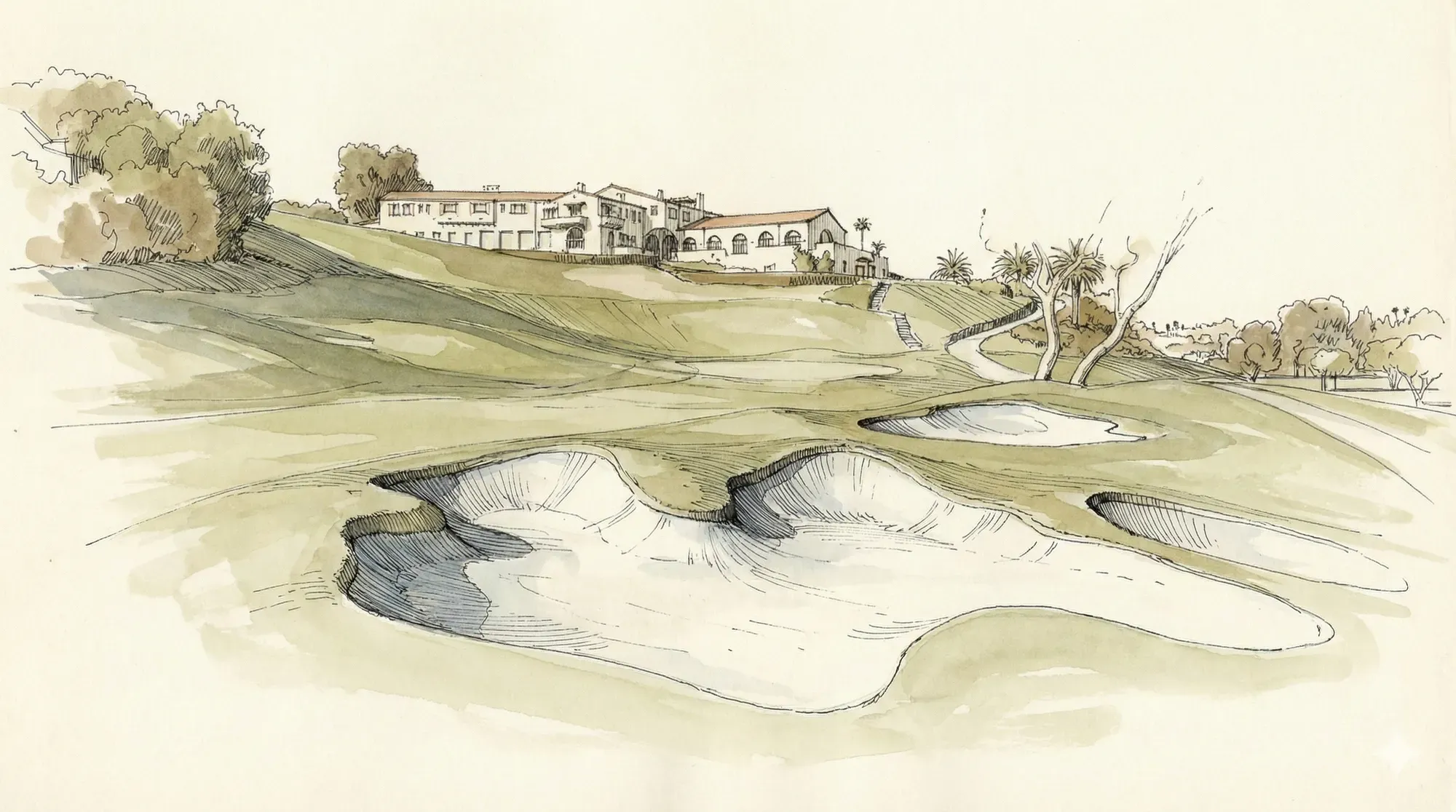
Riviera sits in the Santa Monica Canyon, a narrow corridor that seems entirely ill-suited for a golf course of this magnitude, yet George C. Thomas Jr. routed a layout that feels vast and unconquerable. The defining feature is the Kikuyu grass—a spongy, sticky turf that eliminates the ground game familiar to links enthusiasts. Here, the ball does not roll; it checks, grabs, and stops. This puts a premium on aerial precision and demands that the player strike the ball with conviction rather than hope.
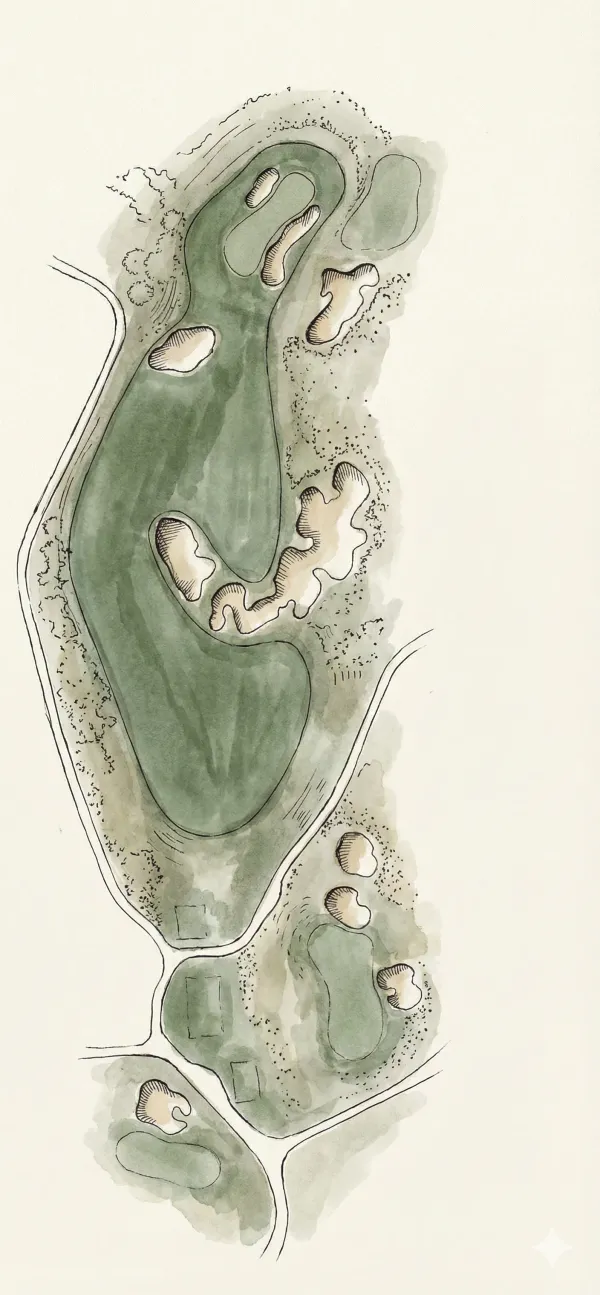
The architecture is a study in angles and deception. Thomas utilized the dry wash (barranca) not merely as a hazard, but as a directional guide, forcing play to the edges of the property. The course does not rely on water or excessive length to defend par, but rather on the strategic placement of bunkers and the subtle, maddening camber of the greens. It is a stoic test where the ego is constantly baited to take the direct line, while the scorecard rewards the patient, indirect approach.
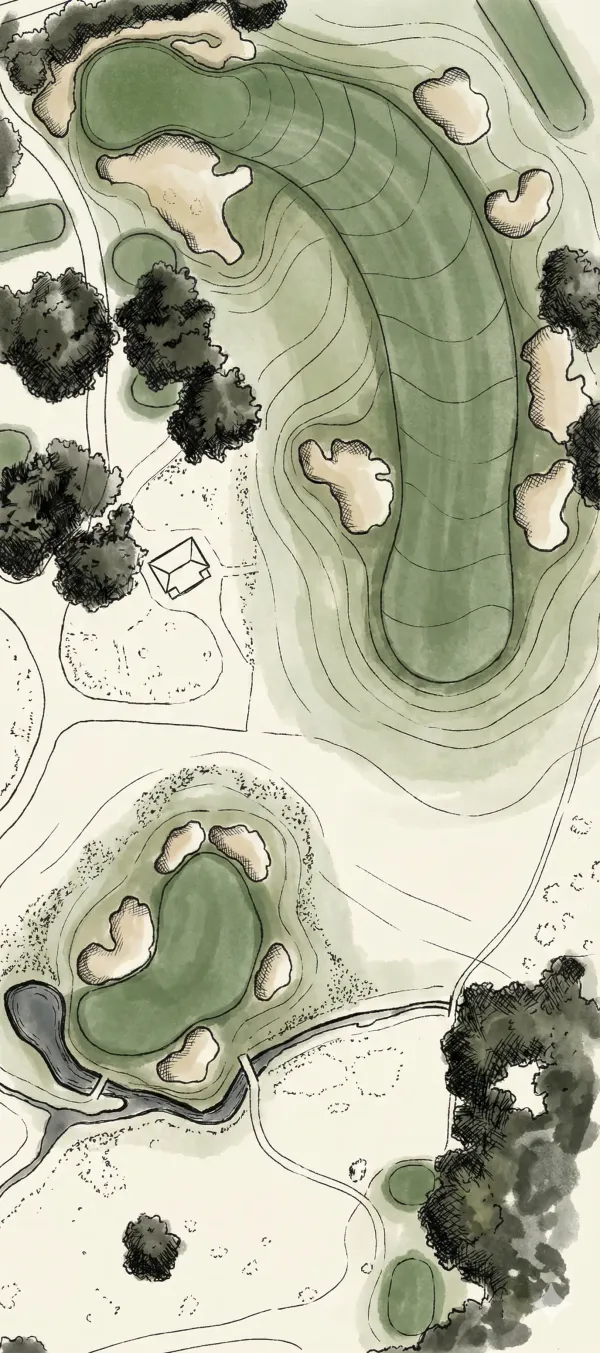
The 10th hole remains the spiritual center of the property. A short par 4 that requires a wood or even an iron off the tee for safety, it tempts the modern player to drive the green. The result is often a tragic comedy. The green is narrow, sloping violently, and guarded by bunkers that seem to possess a gravitational pull. It is evidence that in the Golden Age, difficulty was manufactured through geometry, not yardage.
"The strategy of the golf course is the soul of the game. The spirit of golf is to dare a hazard, and by negotiating it reap a reward, while he who fears or declines the issue of the carry, has a longer or harder shot for his second..."