Lunchball
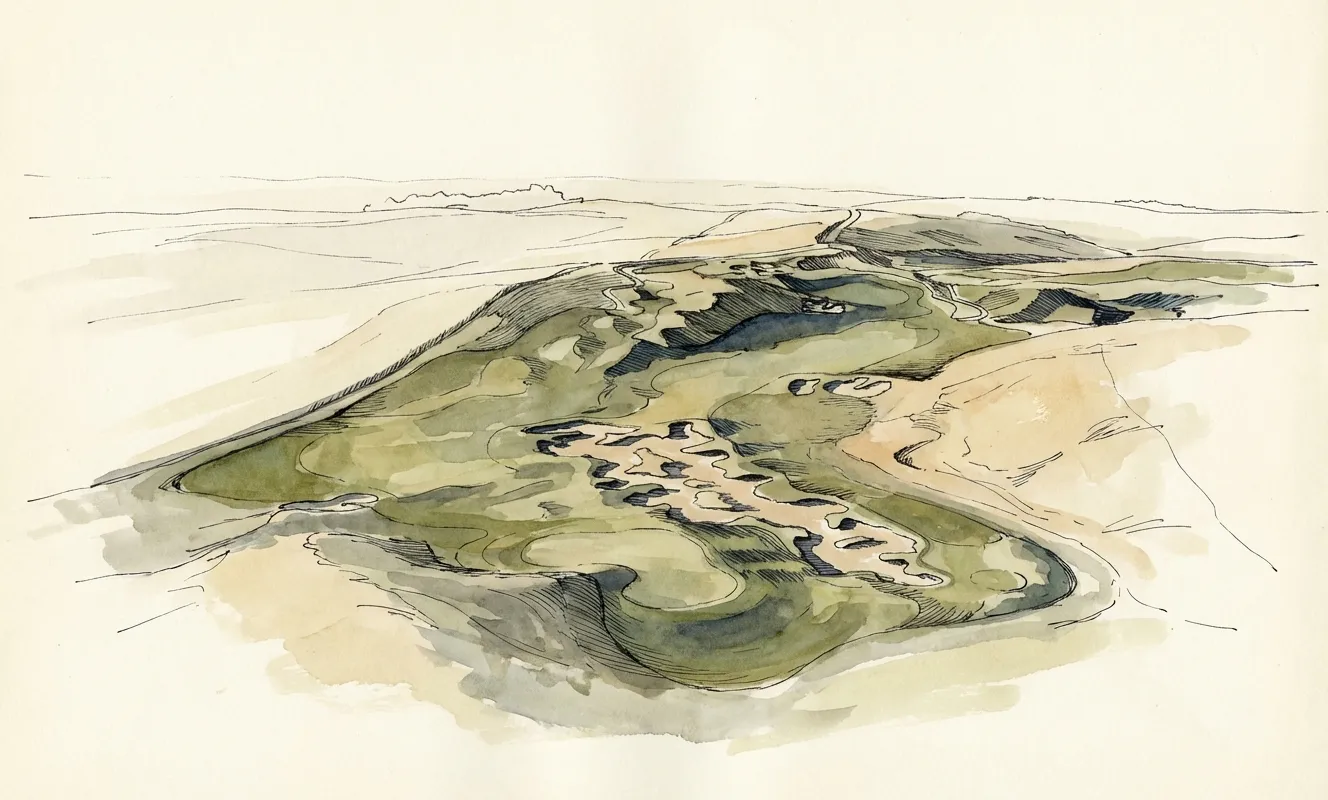
Landmand sits on the high Nebraska loess, a topography that rolls like a solidified ocean. To call it a golf course feels inadequate; it is an excavation. Rob Collins and Tad King did not merely route holes here; they moved earth until the landscape submitted to their vision. The scale is disorienting. The fairways are not corridors but vast plains, wide enough to accept the wildest slice, yet cunning enough to reject a drive struck without thought. The greens are not targets. They are micro-climates, measured in acres, rippling with contours that defy the modern urge for fairness.
It is a place of optical illusions and grand gestures. The width suggests safety, but the ground is the true defender. To find the proper angle into these flagsticks, one must flirt with the edges of disaster. The turf heaves and falls, creating shoulders and hollows that propel the ball in directions the eye cannot always predict. It is a brutal, joyous return to the ground game, played out on a stage where the horizon feels infinite and the golfer feels suitably small.