Lunchball
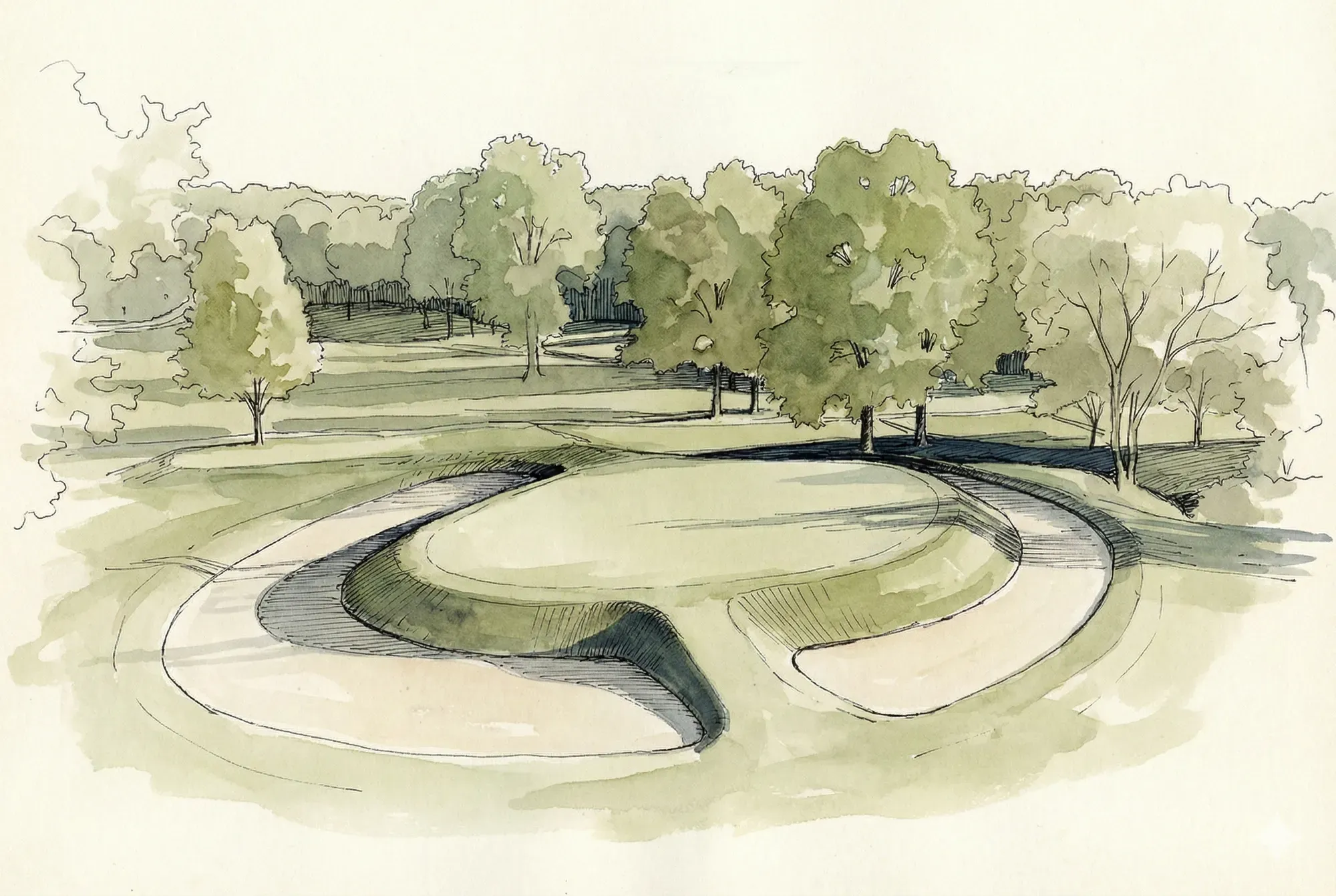
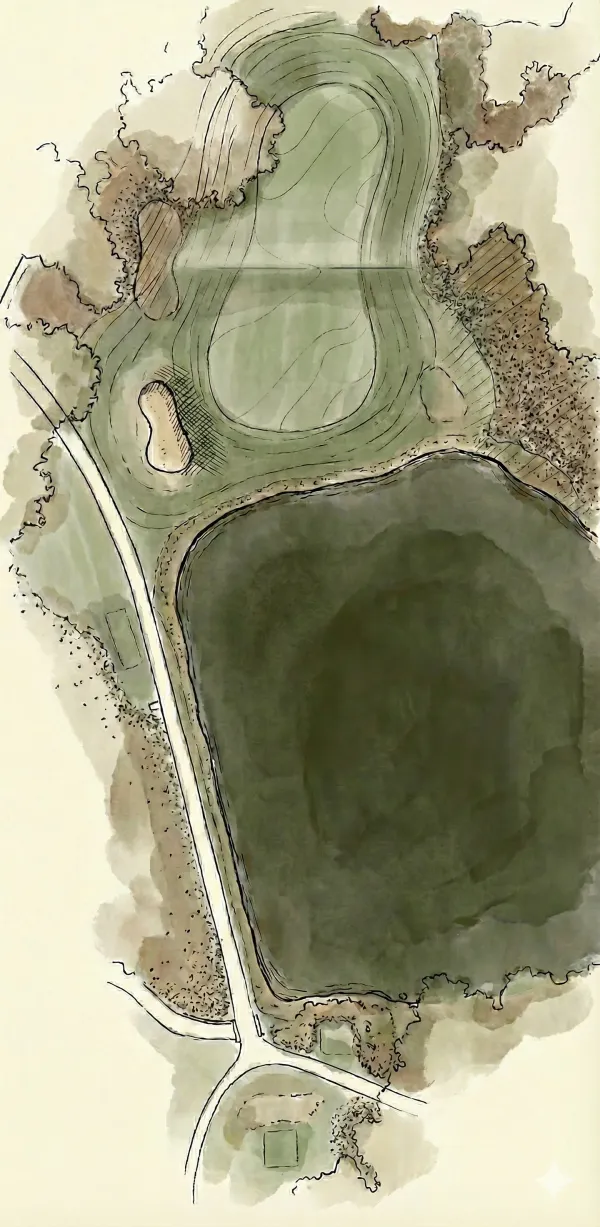
The topography of Western Pennsylvania typically demands heaving slopes and blind shots, yet here Raynor imposed his geometric will upon the valley with startling clarity. It is a peculiar juxtaposition: the lush, wooded hillsides of Pittsburgh framing the stark, angular engineering of the Long Island master. The course does not blend with nature so much as it asserts order over it. The recent restoration has peeled back decades of overgrowth, allowing the wind to once again move freely across the property and revealing the sharp, clean lines of the trench bunkers.
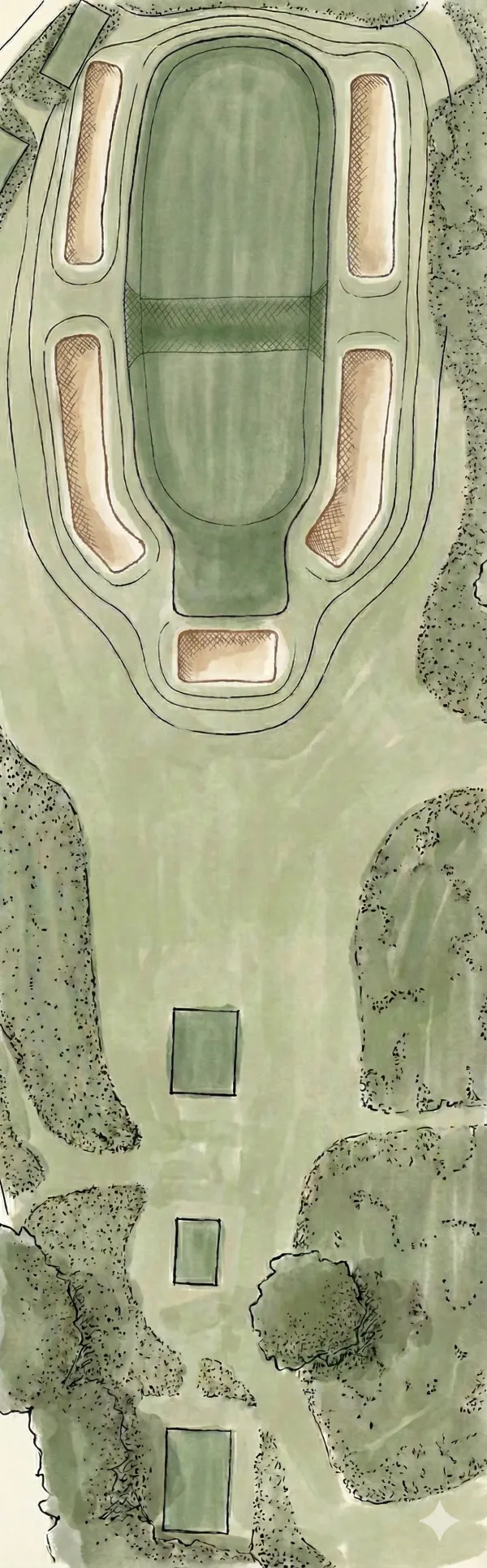
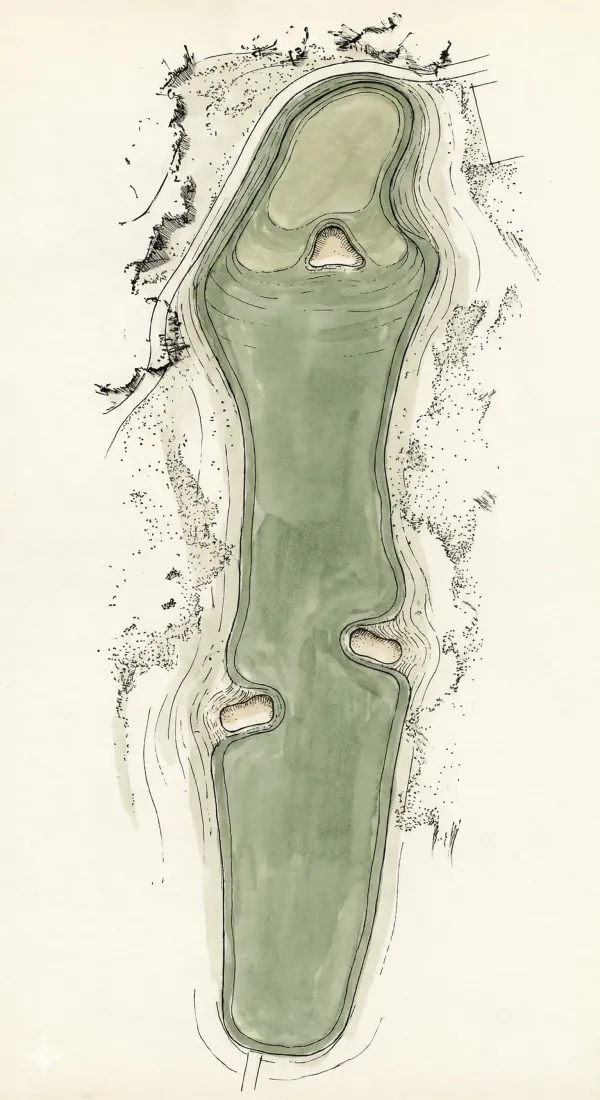
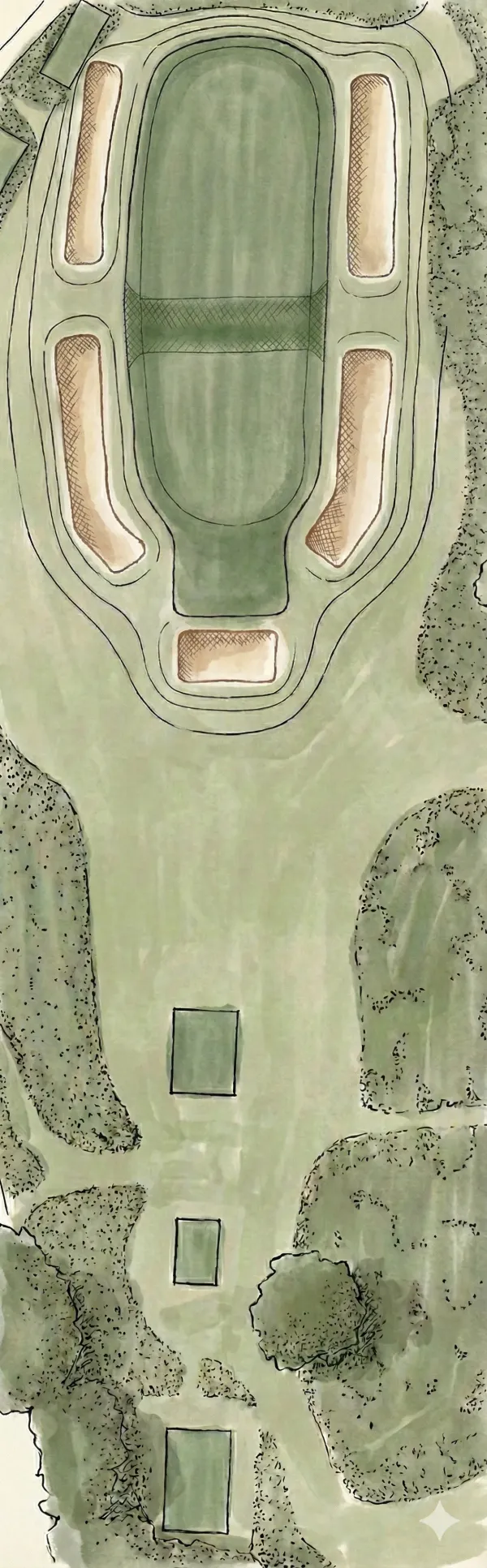
The routing acts as a museum of classical strategy, transplanting the great holes of the British Isles to the steel country. The bunkering is severe—steep grass faces and flat sand bottoms—guarding greens that sit upon rectangular pads like altars. To play here is to engage in a battle of angles, where the center of the fairway is rarely the prudent line. It is a course that demands a specific trajectory and a skepticism of the obvious.