 Lunchball
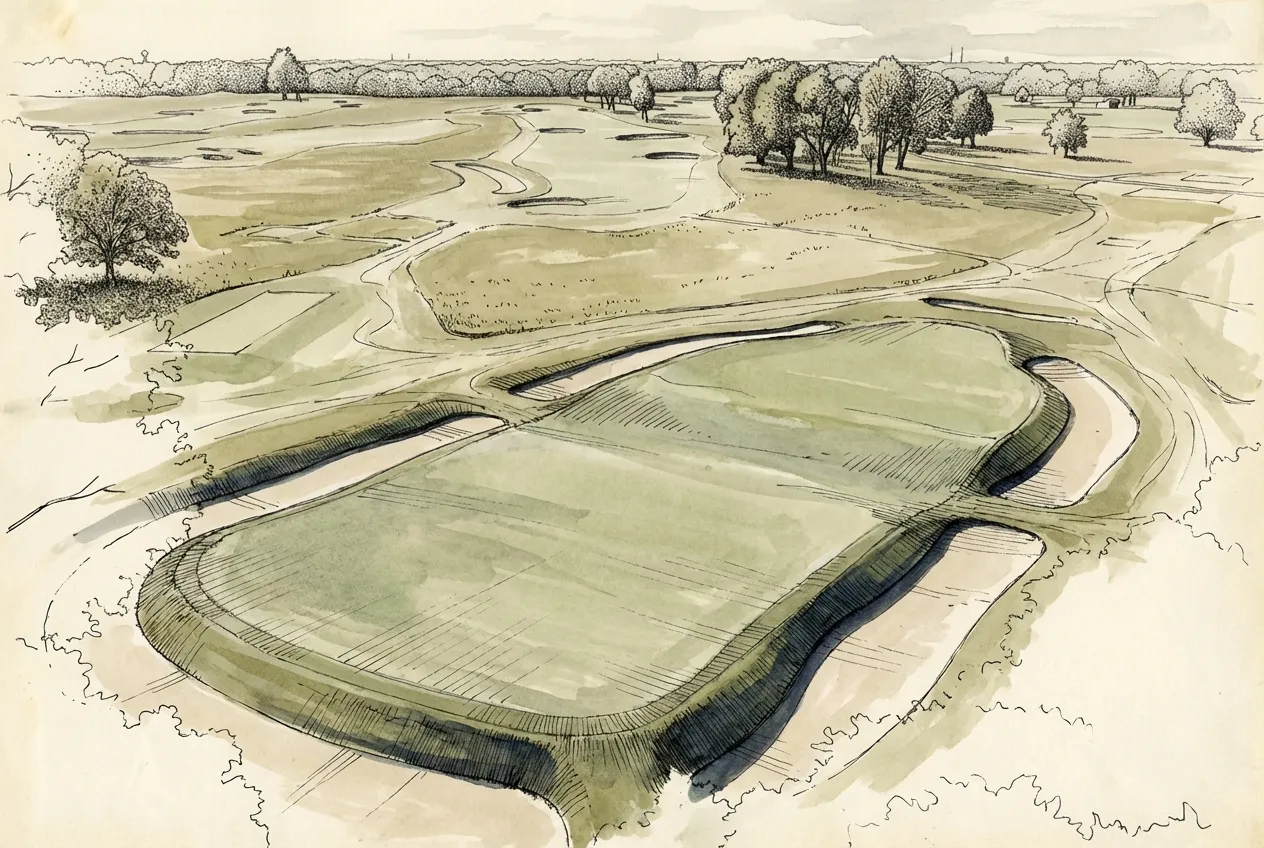
To step onto the grounds of Chicago Golf Club is to walk into the very womb of American golf architecture. Established in 1894 by the charmingly pompous C.B. Macdonald, this isn’t just a golf course; it is a museum of geometric functioning art. Unlike the flowing naturalism of later eras, CGC embraces the ‘rectangular’ aesthetic of early engineering. The berms are sharp, the bunkers look like flat-bottomed bathtubs carved with an X-Acto knife, and the templates are presented in their rawest, most unadulterated forms. It is the oldest 18-hole course in North America and remains the purest expression of the Macdonald-Raynor philosophy.
The vibe here is quiet reverence mixed with absolute terror around the greens. The famous ‘Raynor Prizing’—where fairways are raised like sacrificial altars—is evident, but it’s the severe angularity that gets the Lunchball seal of approval. Whether you are navigating the blind shot into the Punchbowl (12th) or trying to hold the green on the Redan (7th), you are playing geometry, not just geography. It is the strict, stern grandfather of every template course that followed, demanding precision over power.
Comparison: 7th (Redan)

7th (Redan)
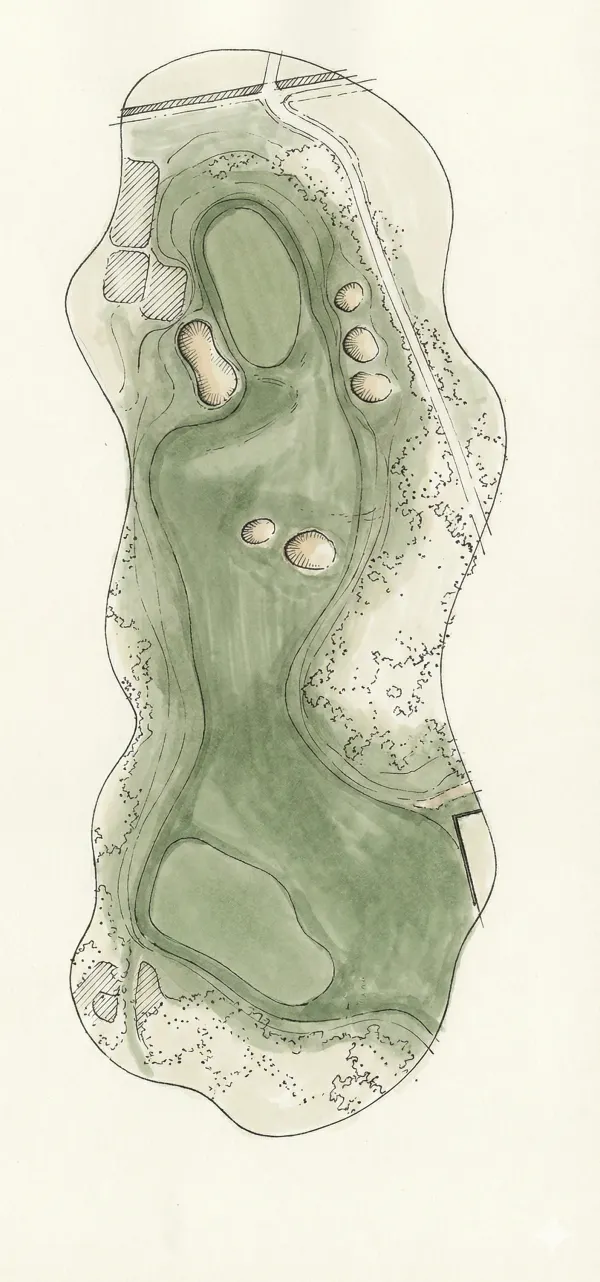
Redan
North Berwick (West Links)
Architectural Analysis
A perfect study in evolution. C.B. Macdonald fell in love with the 15th at North Berwick and brought it to Chicago. While the Scottish original relies on natural contours and quirks, Chicago's version is engineered and amplified—the angles are sharper and the penalty for missing is more absolute.