Lunchball
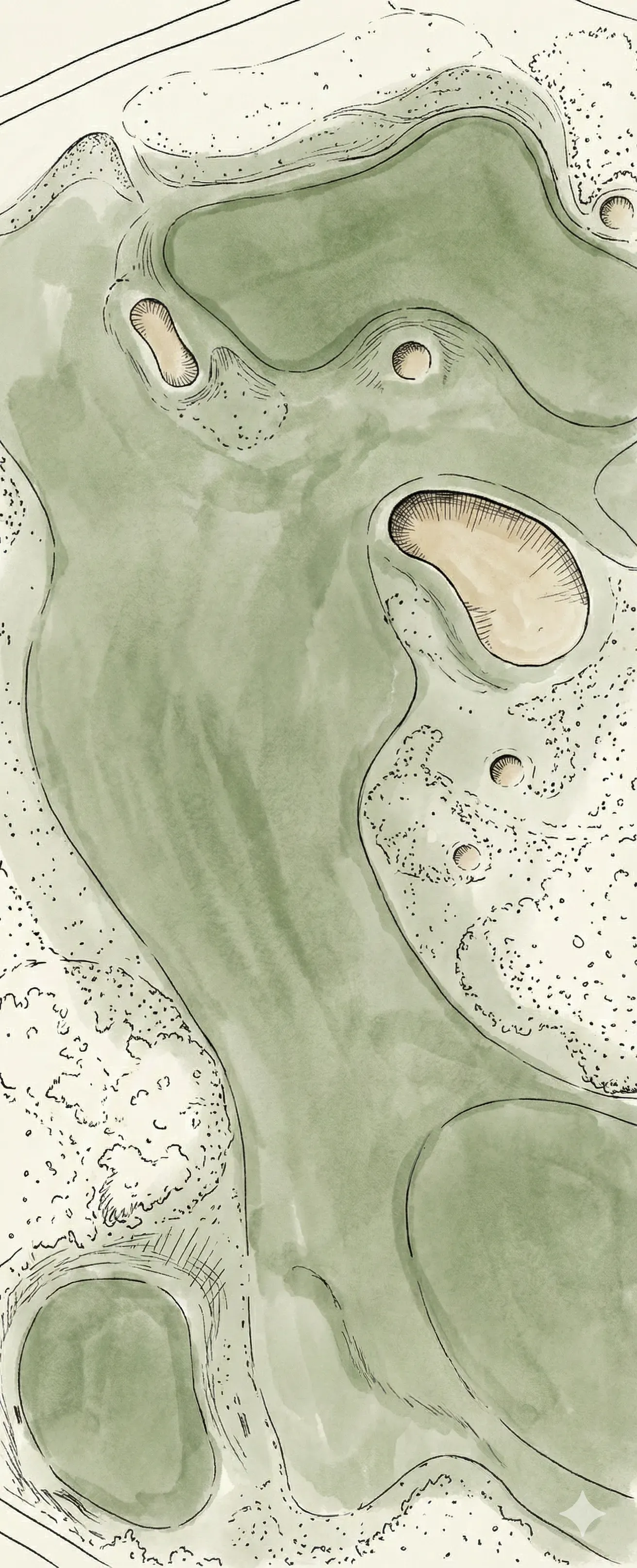
The River Eden waits behind the green, cold and indifferent to the scorecard. This is the eleventh at St. Andrews, the progenitive strain of the template C.B. Macdonald and Seth Raynor would later scatter across the American landscape. The architecture is hostile: the putting surface cants violently from back to front, a tilted shelf defended by the gaping mouth of the Strath bunker short and the vertical face of the Hill bunker to the left. To hold this surface requires a ball flight that pierces the crosswind yet lands soft enough to grip the firm turf—a contradiction of physics that defines the Golden Age.
It was here, in 1921, that Bobby Jones famously surrendered. The wind and the sand stripped the young master of his patience, leading him to tear his scorecard and retreat. The hole, ostensibly shaped by Allan Robertson but truly carved by centuries of gale and rain, possesses a feral quality that modern bulldozers fail to capture. Copies exist, but the original retains a severity that does not suffer fools.
The architectural command is simple: short is a tragedy, but long is a burial at sea. When the pin sits tucked behind the Strath, the ego suggests a high, floating dart. The ground suggests otherwise. The prudent play finds the fat of the green, accepting the two-putt par as a quiet victory. Should you find the bottom of the Strath, you are playing from a grave; extract the ball, accept the bogey with stoicism, and be thankful you did not follow Mr. Jones into the clubhouse early.
Hole Stats
- Par
- 3
- Yardage
- 174
- Architect
- Nature / Allan Robertson
- Template
- Eden