 Lunchball
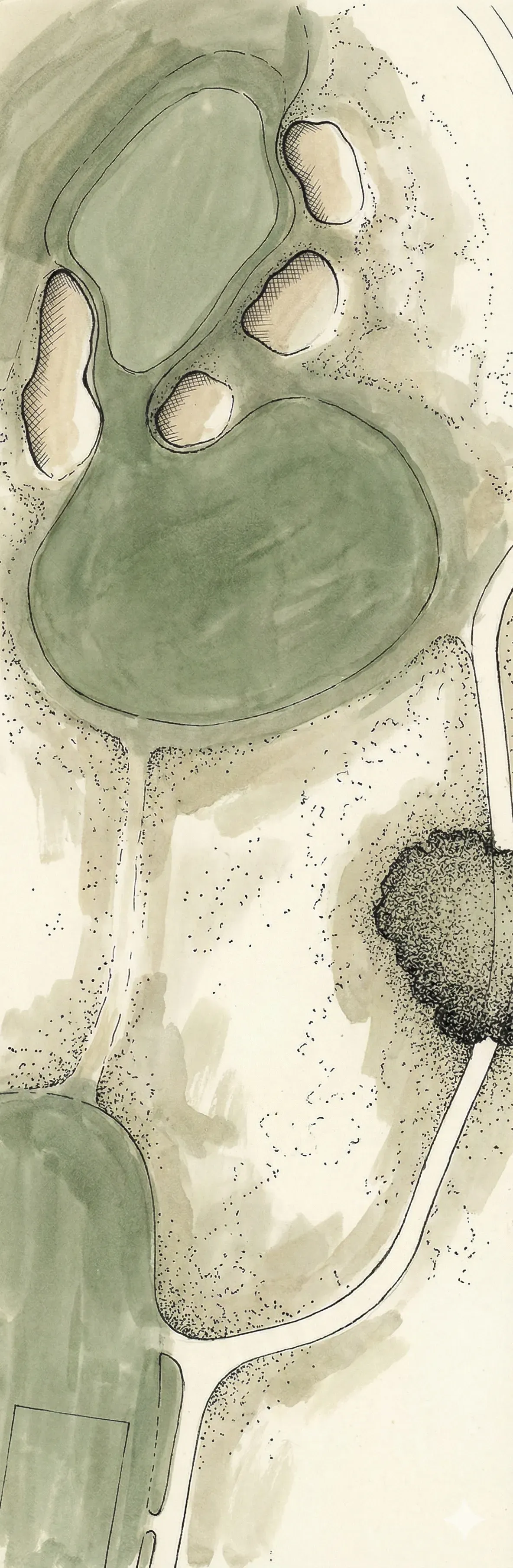
The yardage card offers a number—159—that is entirely deceitful. The target is an elevated knot of turf, guarded by bunkers that appear to have been scooped out by a giant hand. Flynn’s design here is a masterclass in visual intimidation; the green is semi-blind, perched on a ridge where the wind from the Peconic Bay serves as the primary hazard. A ball struck without conviction will be swallowed by the fescue or the sand; there is no bailout.
History remembers this hole not for its beauty, but for its cruelty. During the 2004 U.S. Open, the sun baked the surface into a hardwood floor, prompting the unprecedented sight of grounds crews watering the green between groups. It was a farce born of modern speed meeting ancient geometry. Flynn built a test of spin and trajectory, not a ramp for balls to roll off into oblivion.
Standing on the tee, the player feels exposed. There are no trees to gauge the gust, only the rustle of the tall grass. It is a moment of pure isolation. The shot requires a short iron and a long memory of past failures. You hit, you hold your breath, and you wait for the verdict of the bounce.
Hole Stats
- Par
- 3
- Yardage
- 159
- Architect
- William Flynn
- Template
- Short