 Lunchball
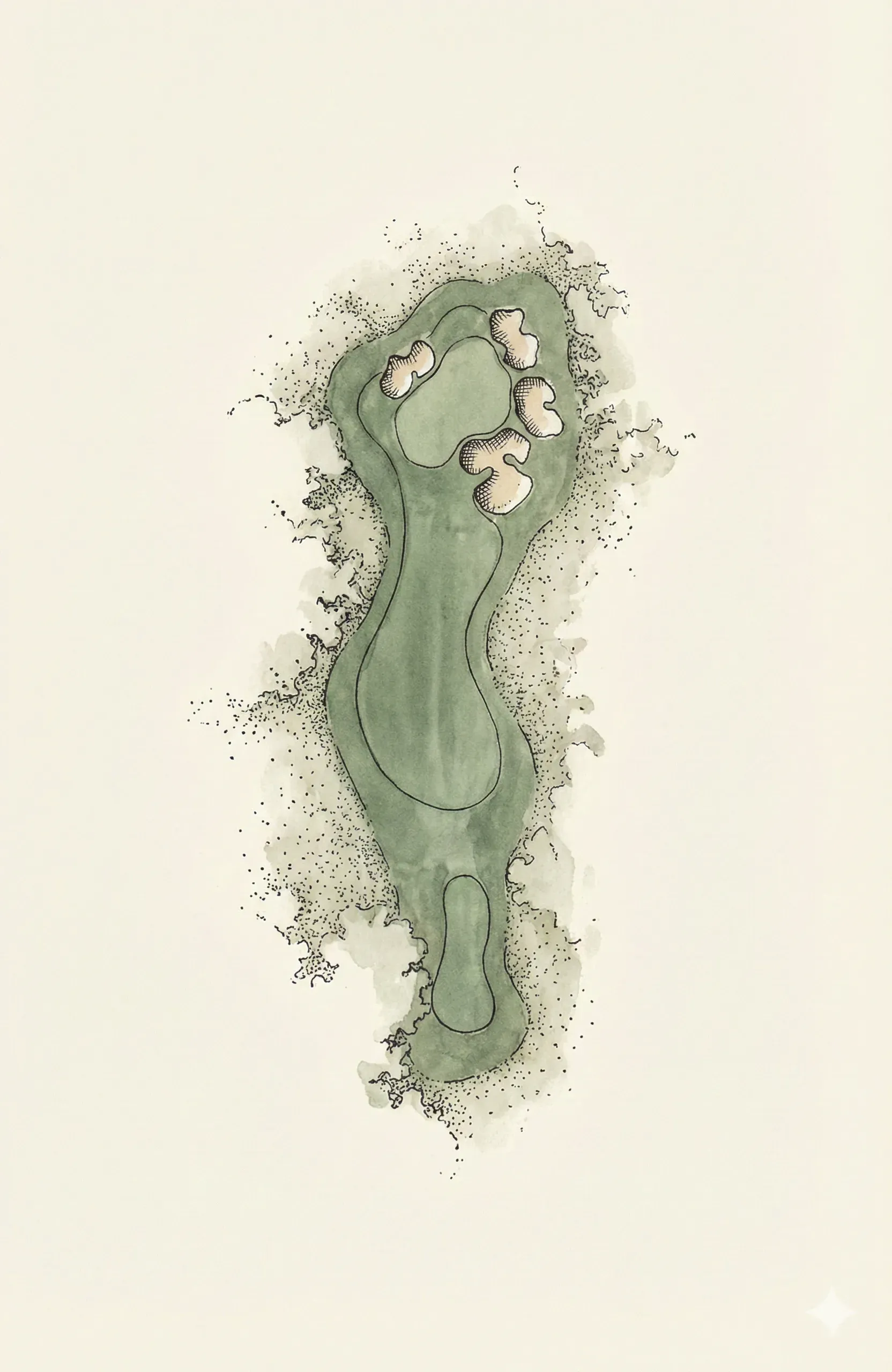
The ground falls away from the tee, presenting a small target ringed by sand. These are not merely bunkers; they are chasms, dug deep into the earth with sheer faces that stare back at the player. The green is a plateau, tilted subtly from back to front, and any shot that lands without sufficient spin or conviction is liable to be swept off the back edge. A short iron is all that is required, yet the wind, which moves through the native tea-trees, is a constant and unreliable counsel.
Dr. MacKenzie, during his whirlwind 1926 visit, laid out the routing and bunkering for this course on a canvas of rolling sand. The seventh is a pure distillation of his philosophy: that a hole need not be long to be great. It asks a simple question with a club most players favor, but provides a dozen wrong answers. The hole is a masterclass in scale, using the dramatic contours of the land and the artistry of the sand pits to create a sense of peril that belies its yardage.
One stands on the tee with a wedge or a nine-iron, a simple enough club. The thought is of birdie. The reality, after a gust of wind holds the ball for a moment too long, is an explosion from sand so fine it feels like powder. The scorecard might register a four or a five, a number that feels like a silent insult on such a short hole. That is the genius of the place. It offers hope, and then it reminds you of your limitations.
Hole Stats
- Par
- 3
- Yardage
- 162
- Architect
- Alister MacKenzie
- Template
- Short