 Lunchball
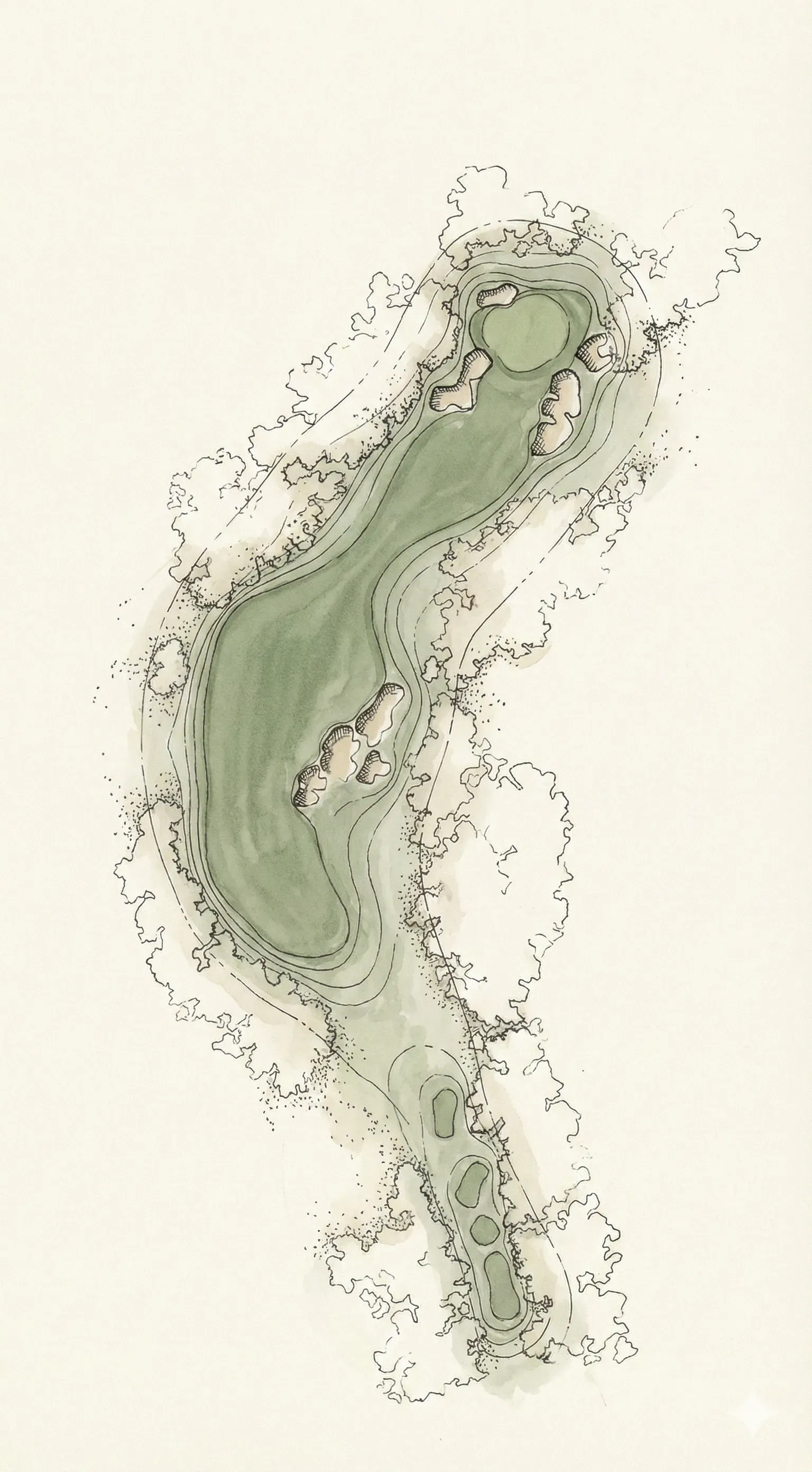
The sixth reveals its true nature only after the trap has snapped shut. To the uninitiated, the sharp dogleg right suggests a standard risk-reward proposition: carry the formidable diagonal of bunkers to shorten the hole. But MacKenzie, ever the camouflage artist, places the real defense at the end. The drive is merely the preamble; the green is the main event. It is a fortress built on a reverse slope, banking severely from front to back, running away from the player with a hostility that defies the visual softness of the surroundings.
While the green itself is expansive—Royal Melbourne does not deal in small targets—the firmness of the composite turf shrinks the effective landing area to the size of a saucer. A “perfect” approach flown to the pin will inevitably bounce and roll off the back, leaving a devilish recovery from short grass. The only way to hold this shelf is to land the ball well short, allowing the ground to accept the shot rather than the air. The concept of a “simple pitch” does not exist here; the slope rejects casual competence.
The strategy of the hole suggests a conservative iron to the left, opening up the angle at the cost of a blind approach. The ego, however, insists on the driver and the carry. It is a decision usually regretted mid-flight, as the ball drifts into the flashed face of a bunker, leaving the golfer to contemplate a double bogey in a patch of scrub that smells of tea tree and bad decisions.
Hole Stats
- Par
- 4
- Yardage
- 428
- Architect
- Alister MacKenzie