 Lunchball
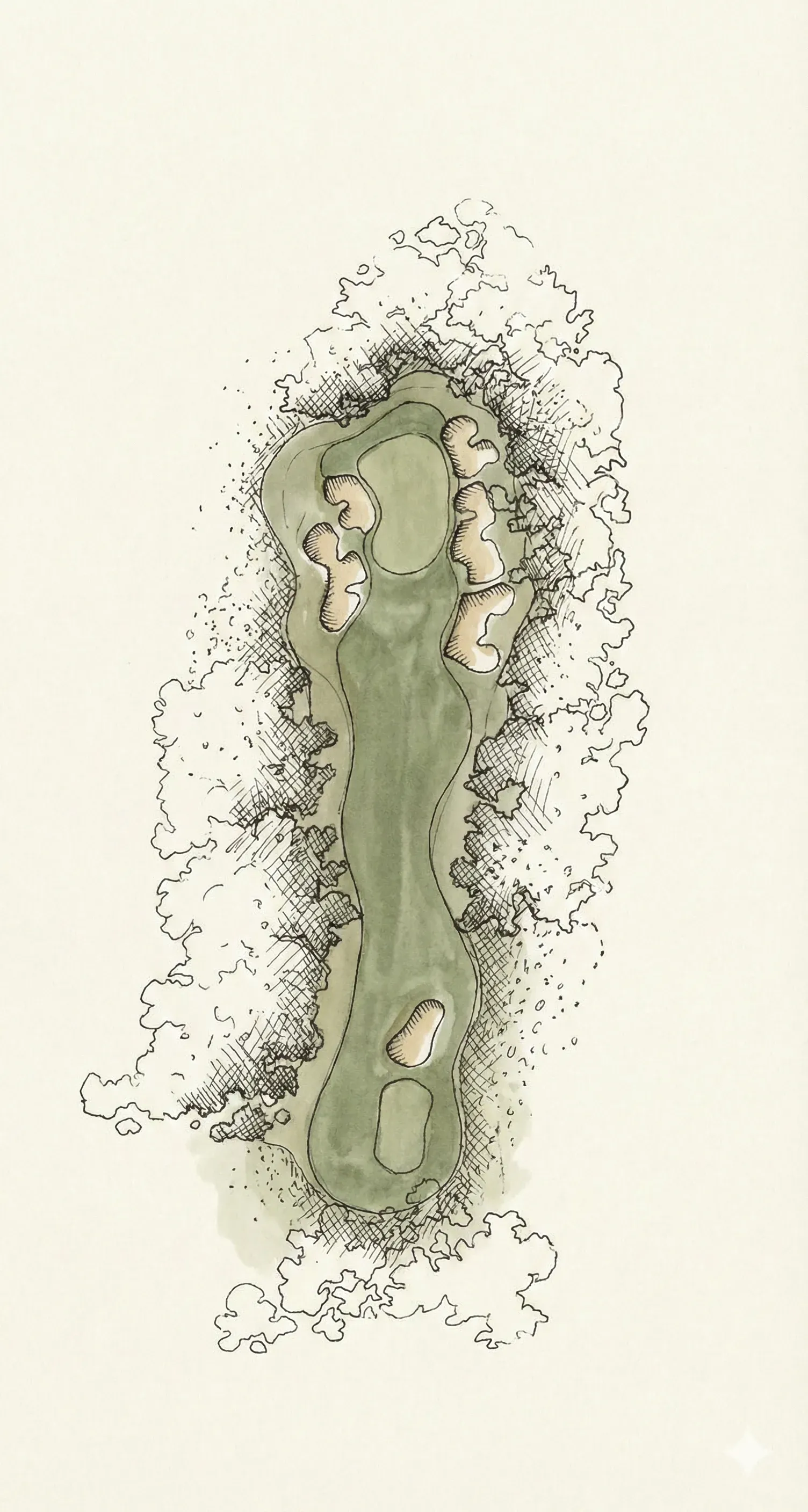
The scorecard suggests a moment of respite—a mere flick of a short iron—but the topography dictates caution. The green complex sits across a subtle valley, defended by a necklace of bunkers cut with steep, sharp lips into the sandy loam. The putting surface lists severely from back to front, a geometric bias that renders the yardage irrelevant. The architecture demands a high, soaring trajectory that lands softly; a flat strike will skid through the firm turf and vanish into the ti-tree scrub beyond.
While Alister MacKenzie routed this brilliance during his brief 1926 visit, it was the hands of construction supervisor Mick Morcom that gave the hole its teeth. It stands as the definitive argument for the Sandbelt ethos: hazards that are visually arresting yet strategically foundational. It relies not on length or water, but on the severe penalty of being on the wrong side of the hole. To be long is to face a chip of impossible delicacy; to be short is to find the sand.
Standing on the tee, with the air smelling of dry grass and eucalyptus, the golfer feels the weight of the decision. The ego begs to hunt the pin tucked near the ridge. The intellect warns that putting from above the hole is a sentence of misery. The ball lands, the spin grabs, and for a moment, gravity and friction negotiate the outcome. It is a short hole that feels, in the moment of execution, incredibly heavy.
Hole Stats
- Par
- 3
- Yardage
- 176
- Architect
- Alister MacKenzie