 Lunchball
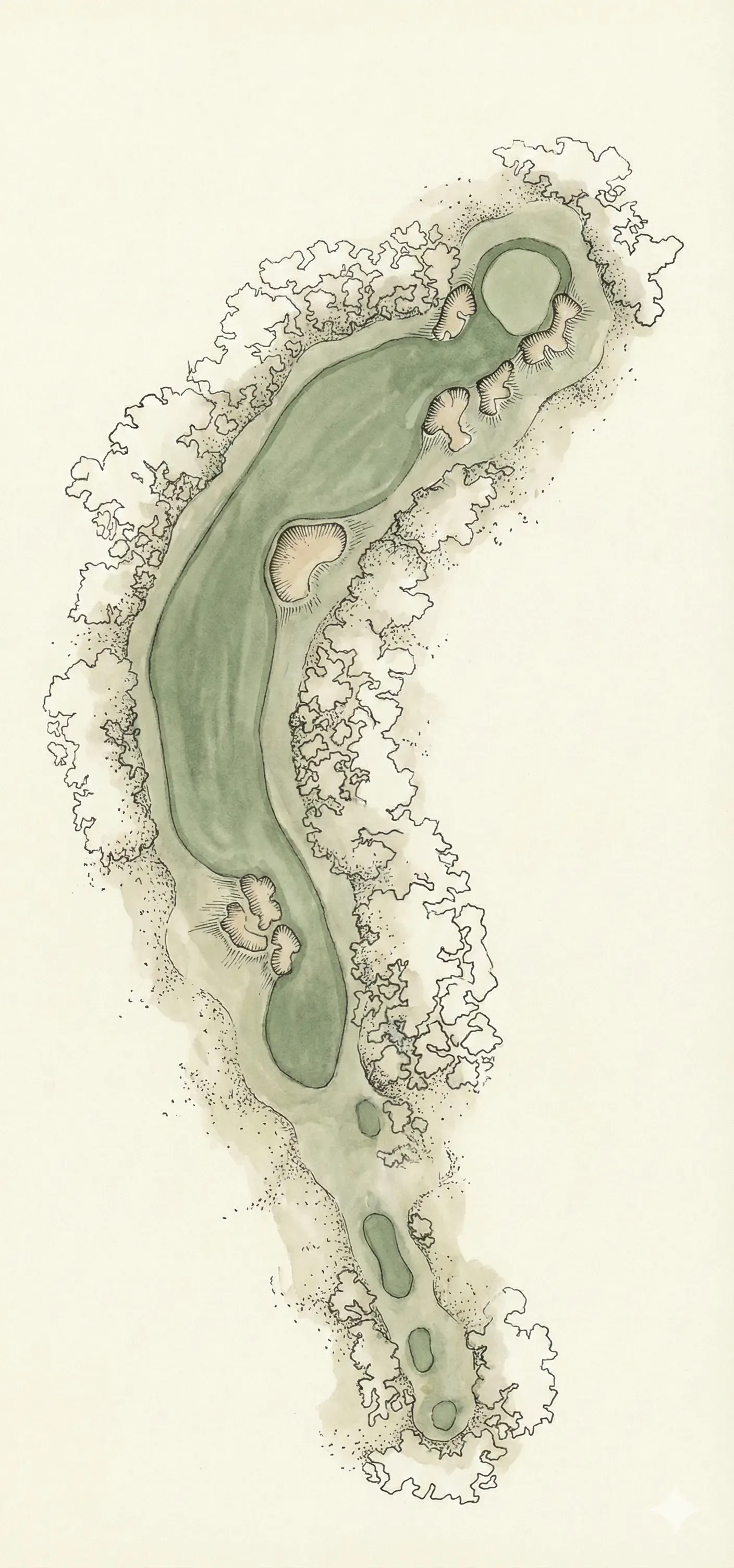
The fourth is a study in blind faith. It is a Par 5 of substantial yardage—some 544 yards of heaving ground—that begins not with a view, but with a wall. The tee shot asks the player to drive into the sky, clearing a formidable dune that rises to obscure the landing zone. It is a shot hit into the ether, trusting that the fairway waits on the other side. Once the ridge is cleared, the land tumbles forward, but the length demands patience. It is a hole that wears down the impetuous, requiring a succession of solid strikes to reach a green that sits quietly in the distance.
This architecture is pure MacKenzie, drafted during his whirlwind 1926 tour. He did not move mountains here; he routed holes through the dunes that were already waiting. The turf remains the primary hazard—firm, tight, and unwilling to suffer poor contact. The ground game dictates terms, repelling indecisive shots and sending them skittering towards the native scrub.
By the time one reaches the sixth, the examination shifts from endurance to angles. This is the iconic dogleg right, a two-shot hole of roughly 430 yards. The strategy is nakedly apparent yet psychologically taxing. The prudent man plays left to the fat of the fairway, accepting a long approach. The ego, warmed by the Melbourne sun, insists on the heroic line over the corner bunkers—that violent flash of sand guarding the turn.
Success over the corner yields a short iron, but the green creates its own gravity. It slopes aggressively from front to back, a surface that runs away from the player. A ball landing softly may still drift inexorably over the back edge, leaving the player to stare at the turf in distinct, silent appreciation of the design’s cruelty.
Hole Stats
- Par
- 5
- Yardage
- 544
- Architect
- Alister MacKenzie