 Lunchball
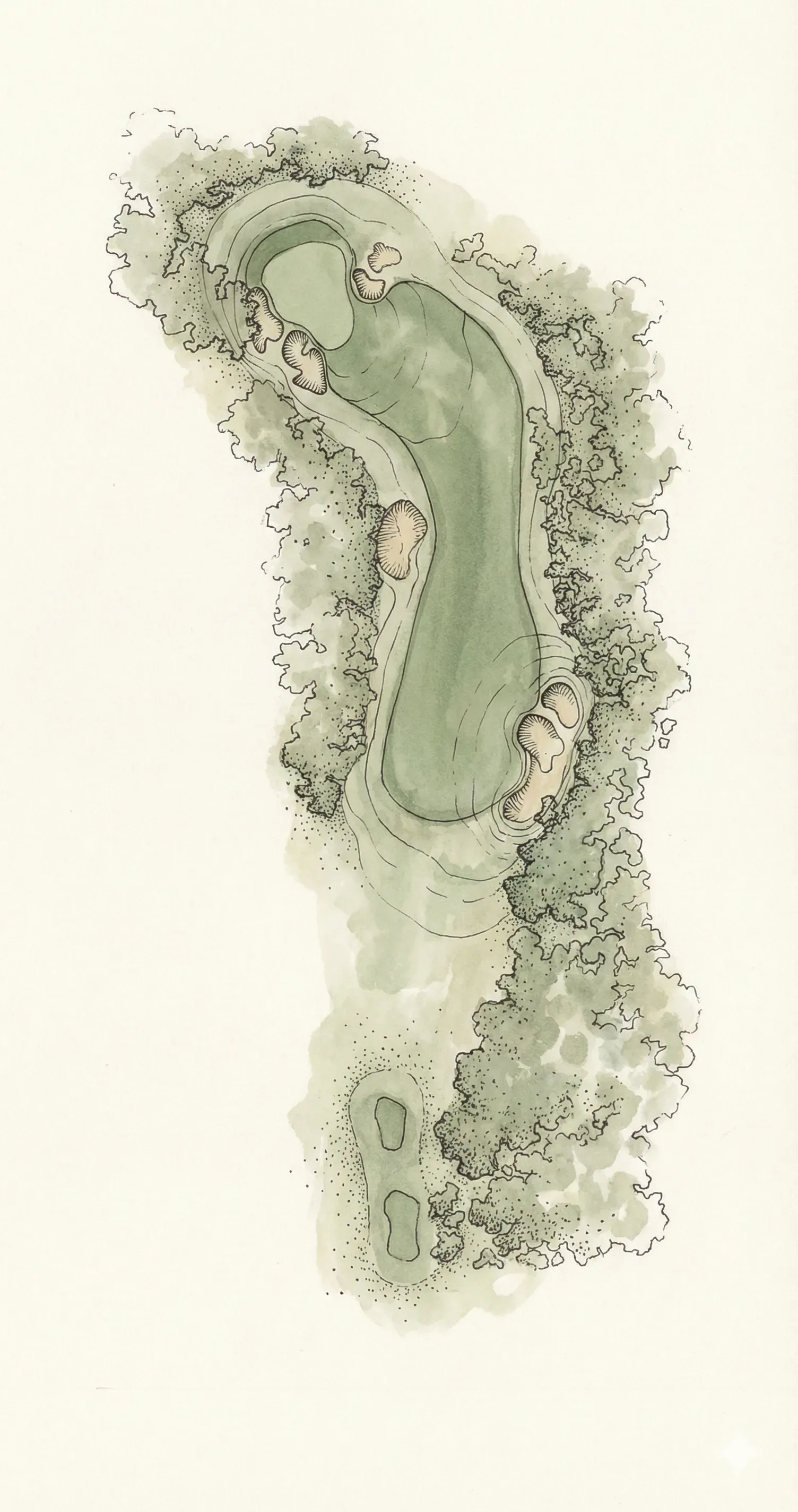
The ground on the third does not rise so much as it swells, presenting a fairway that seems wider than it plays. The question is not one of distance but of geometry. A simple iron from the tee leaves a full wedge into a sliver of green, a narrow shelf tilted sharply from front to back. The brave man, or the foolish one, takes a driver and challenges the deep, flashed-faced bunkers that pinch the landing area, seeking a more favorable angle. The green accepts only one kind of shot—the precise one. Everything else is gathered into sandy hollows or repelled down the closely-mown fall-offs.
This is MacKenzie’s genius distilled into 350 yards. He designed the course in 1926, armed with a contour map and a philosophy that the land should dictate the strategy. The firm, sandy soil of the Melbourne Sandbelt is the true architect here; it allows a ball to run, to bound, to find trouble where none seems apparent. The hole asks the player to think before they swing, to consider the bounce and the roll as much as the flight.
The scorecard suggests a birdie. The ego demands it. The result, after a driver finds the tea-tree scrub or an approach skitters over the back edge, is often a scramble for bogey. It is a quiet lesson in humility, administered without fanfare on a stretch of unassuming ground. One walks to the next tee not angry, but educated, with a quiet appreciation for the cold logic of the land.
Hole Stats
- Par
- 4
- Yardage
- 351
- Architect
- Alister MacKenzie