 Lunchball
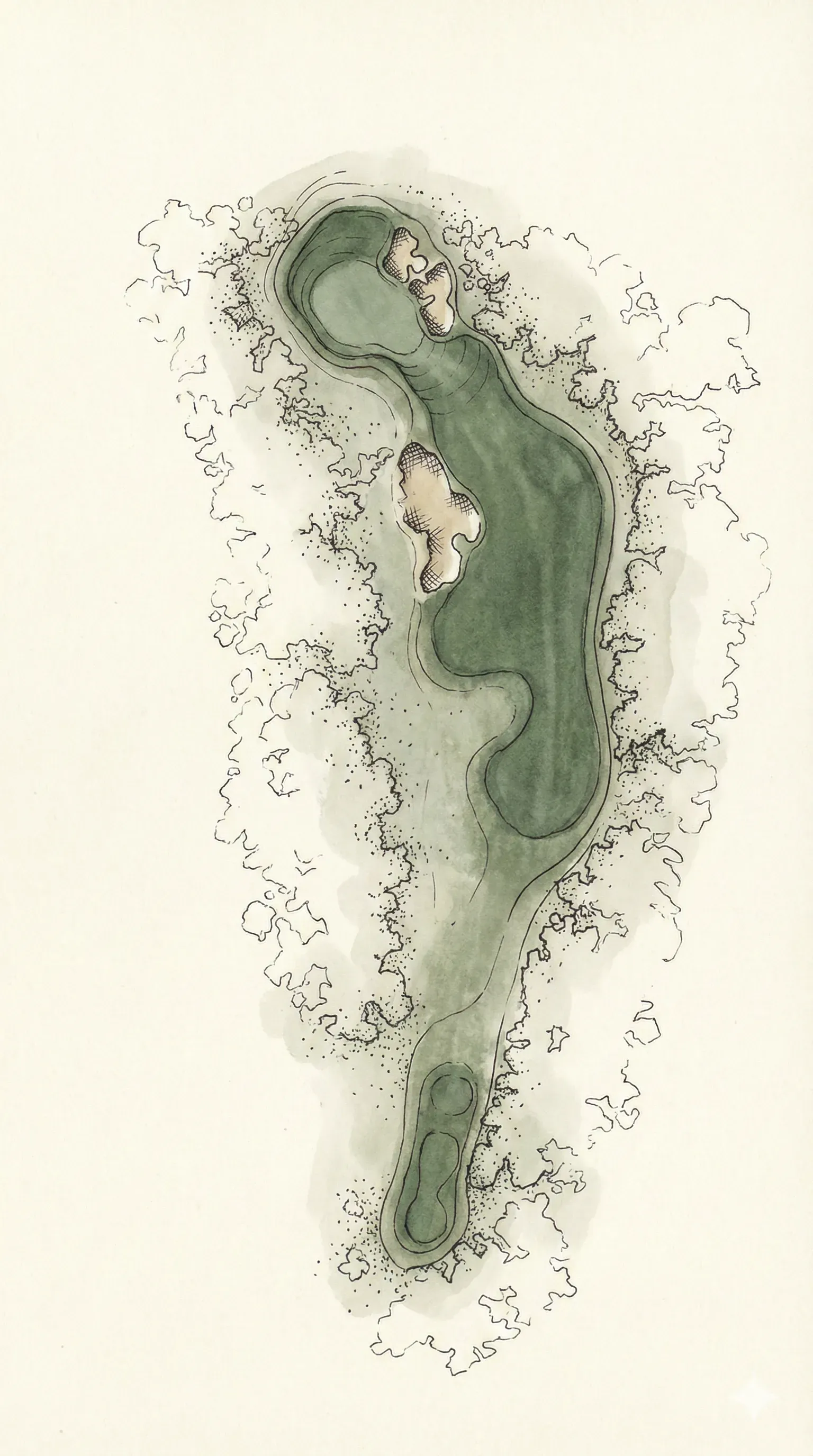
The tenth on the West acts as a Cape hole stripped of water, substituting the liquid grave with a vast, scrub-filled waste area of native ti-tree and sandy loam. The geometry is violent in its simplicity: a sharp dogleg left that taunts the player to bite off more than they can chew. The fairway is wide for the coward who lays up, but the angle into the green from the right demands a shot of surgical precision to a surface that leans away, repelling anything but the crispest spin. To challenge the corner is to flirt with a bunker complex that does not merely penalize, but entombs.
Alister MacKenzie’s arrival in the Sandbelt in 1926 brought a philosophy that length was the clumsiest form of defense. This hole stands as the thesis statement of that belief. The bunkering here is jagged and eaten into the turf, appearing as if wind-sculpted over centuries rather than constructed by hand. It relies on the firmness of the ground—the famous Melbourne bounce—to confuse the distance control of the modern player. It is a strategic puzzle that has remained unsolved by technology, proving that a 300-yard hole can still induce trembling in the hands of a professional.
On the tee, the air smells of dry eucalyptus and baked earth. The view suggests a simple drive and a pitch, yet the psychological weight of the hazard to the left is immense. The ego screams for the driver, envisioning a putter in hand for an eagle attempt. The scorecard, however, is filled with the wreckage of such hubris. The wise play is a stoic iron and a respectful wedge, but the architecture is designed specifically to dismantle wisdom and replace it with greed.
Hole Stats
- Par
- 4
- Yardage
- 309
- Architect
- Alister MacKenzie
- Template
- Cape