Lunchball
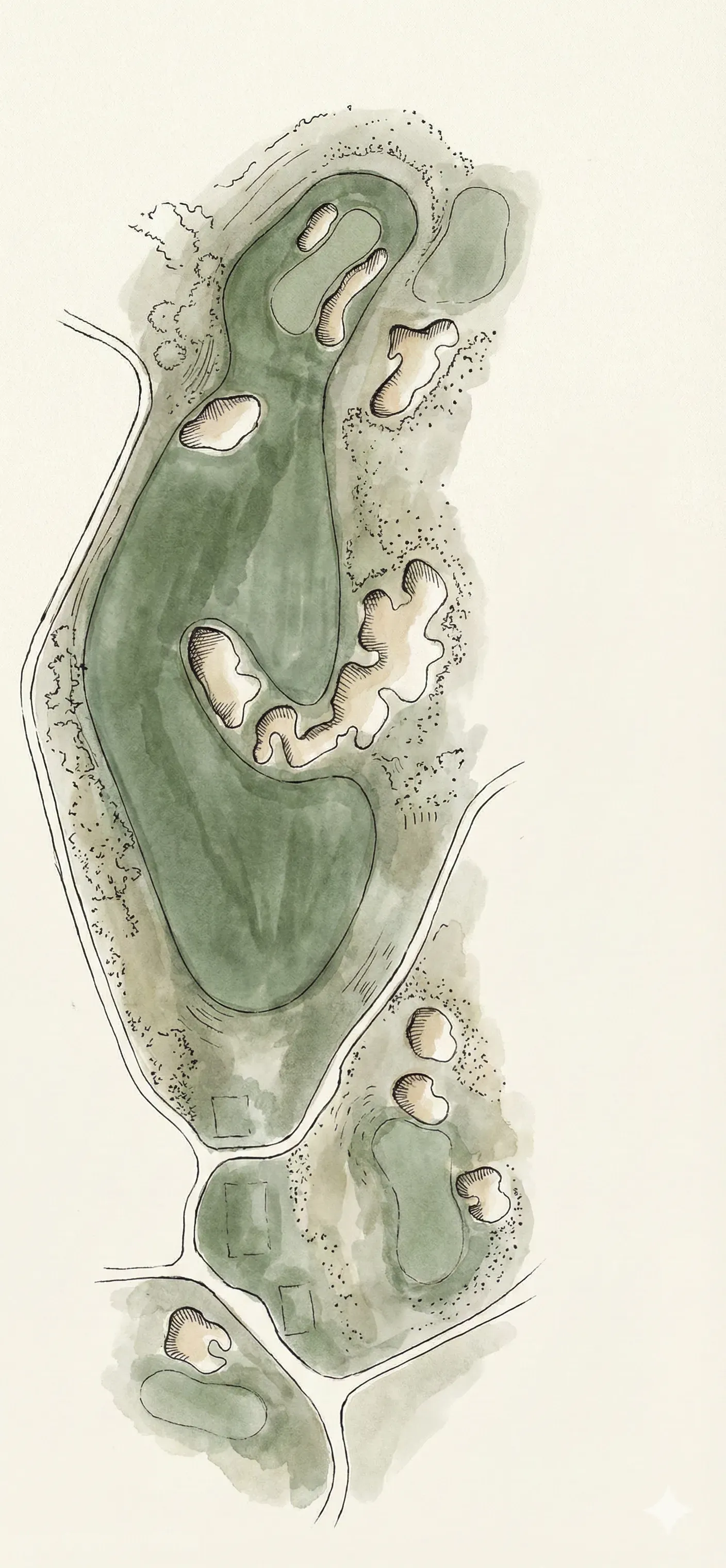
The tenth at Riviera is a study in temptation. George Thomas and Billy Bell constructed a paradox: a hole that offers distance but demands position. The green is a sliver of turf, angled aggressively from right to left, guarded by the sticky grasp of Kikuyu and the looming face of bunkers. To hold the surface requires a high, spinning wedge from the far left; to drive the green requires a fool’s optimism. The flag sits there, naked and inviting, urging the player to abandon strategy for glory. It is a design where the longest club is rarely the correct tool, merely the most seductive one.
For a century, this short patch of ground has undone the disciplined and the reckless alike. The prudent play has always been a long iron and a precision pitch, yet the scorecard rarely reflects such wisdom. Even as titanium faces turn three hundred yards into a casual carry, Thomas’s geometry holds firm. It is proof that a well-placed angle causes more trouble than sheer length ever could. The variance in scoring here is not a product of luck, but of hubris.
Of course, the logic of the layout matters little on the tee box. One does not travel to Pacific Palisades to hit a hybrid. The ego demands the driver; the wind whispers encouragement. The result is almost scriptural: a drive pushed to the front right bunker, a recovery shot sculled over the putting surface, and a return chip tangled in the wiry grass. You walk off with a six, humbled by a hole you could have reached with a throw. It is a tragedy of one’s own making, and the finest entertainment the game affords.
Hole Stats
- Par
- 4
- Yardage
- 315
- Architect
- George Thomas
- Template
- Driveable Par 4