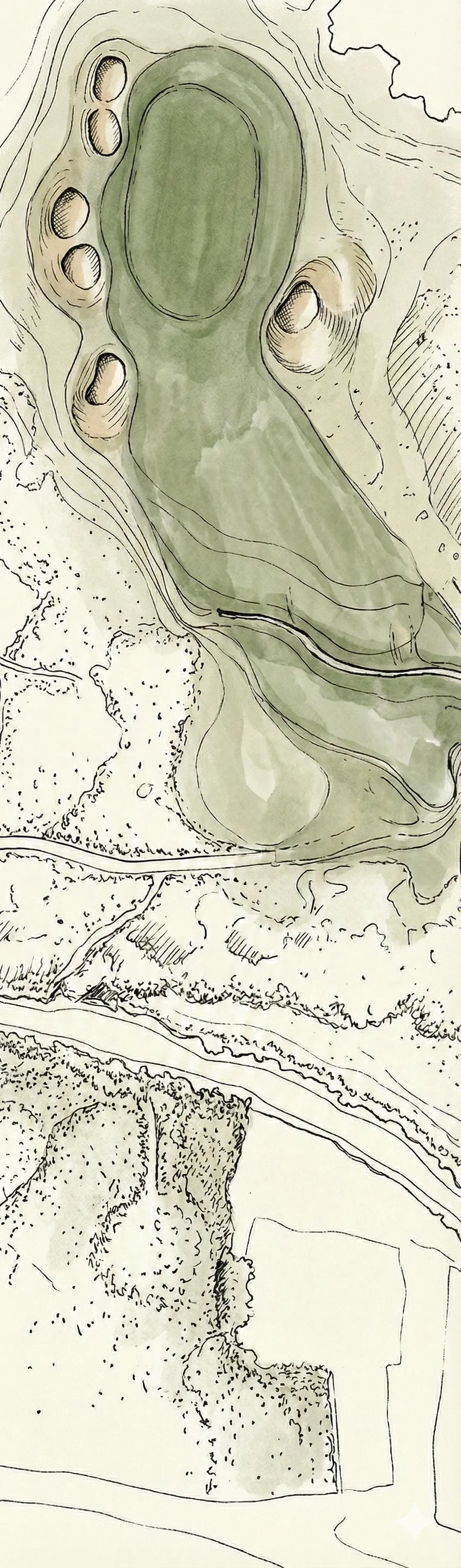
Lunchball
The dune at the fifth rises like a rampart, blocking out the green, the flag, and the horizon. The only visual cue is a white stone perched atop the ridge, a solitary guide in a sea of turf. The architectural demand is delightfully primitive: select a club that can scale the wall, suppress the urge to steer, and strike the ball into the void.
This is the Himalayas. It is a relic from an era before “fairness” infected course design, a stubborn reminder that the game was originally played over the landscape rather than through it. As the ancestor of the blind par-3, it offers a rebuke to the modern obsession with visibility. The hole does not care for the player’s ego; it asks only for faith.
Once the ball clears the summit, gravity becomes the architect. The turf plummets toward a hidden bowl, gathering good shots and rejecting the timid. To slice is to find the gorse; to pull is to find the rough. The ensuing walk up the face of the dune is a distinct psychological experience—a pilgrimage to reveal one’s fate. On the other side waits either the relief of a birdie putt or the cold reality of a pot bunker. The result is often a number on the scorecard that bears no relation to the quality of the swing.
Hole Stats
- Par
- 3
- Yardage
- 206
- Architect
- Old Tom Morris
- Template
- Himalayas