Lunchball
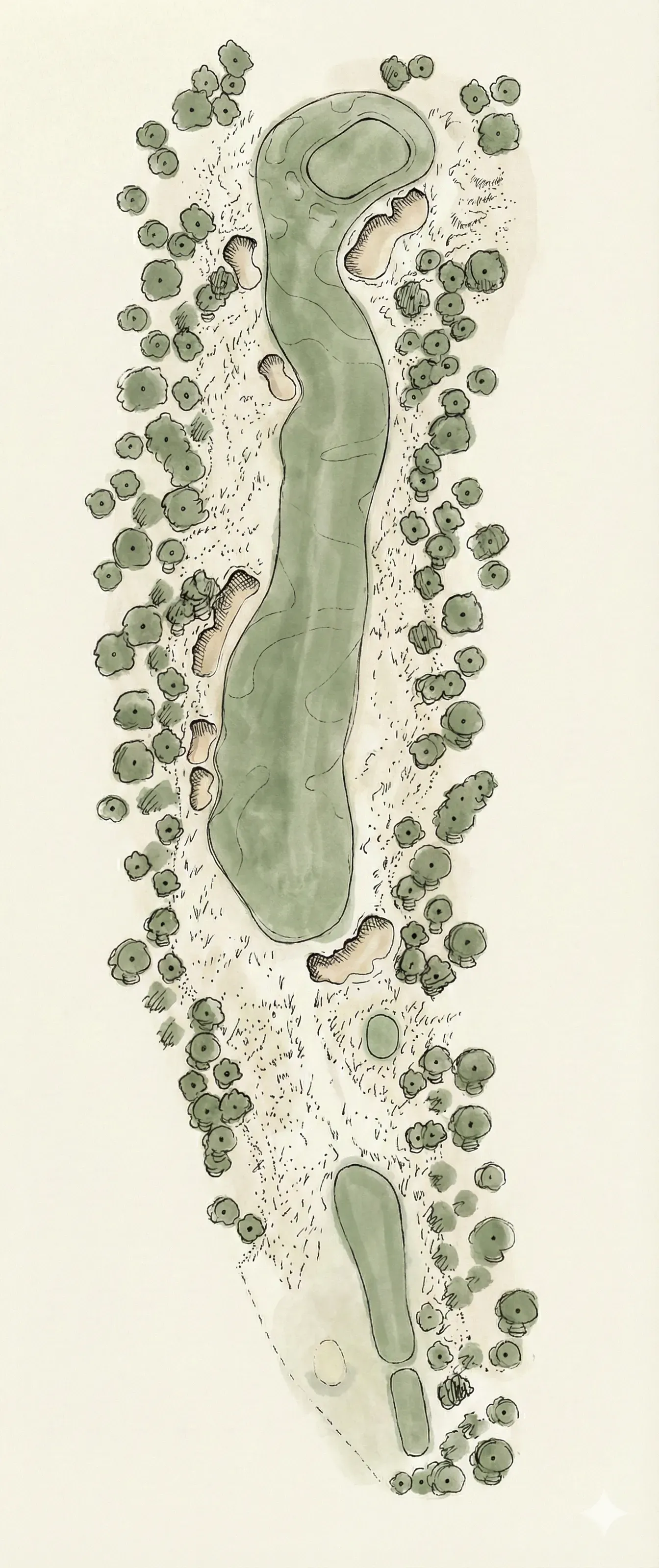
The hole presents a geometry of intimidation. While technically a dogleg right, the tension lies in the ground itself. To unlock the green, one must challenge the sandy scrub hugging the inside corner. To bail out left is to choose comfort off the tee, only to face despair on the approach. From that wide, safe expanse, the player looks at a long iron into a crowned green that sheds the ball with indifference. It is a harsh lesson in the strategic cost of safety: the easy drive yields the impossible second.
The 2010 restoration by Coore & Crenshaw scraped away the manicured rough that had choked the property, returning the wiregrass and sand of Ross’s vision. In tournament trim, the hole stretches beyond 500 yards, a grim start to the round. The width of the fairway is not a kindness; it is a deception, tempting the player away from the only line that matters.
The math suggests aiming away from the trouble, but the architecture punishes timidity. If you steer left to avoid the scrub, you are firing a hybrid at a domed surface that refuses to hold a shot. The result is often a series of chips back and forth across the green, a metronome of errors. One must court disaster on the right. Better to find the wiregrass seeking the proper angle than to find the center of the fairway and accept the inevitable bogey.
Hole Stats
- Par
- 4
- Yardage
- 504
- Architect
- Donald Ross
- Template
- Switchback / Dogleg