 Lunchball
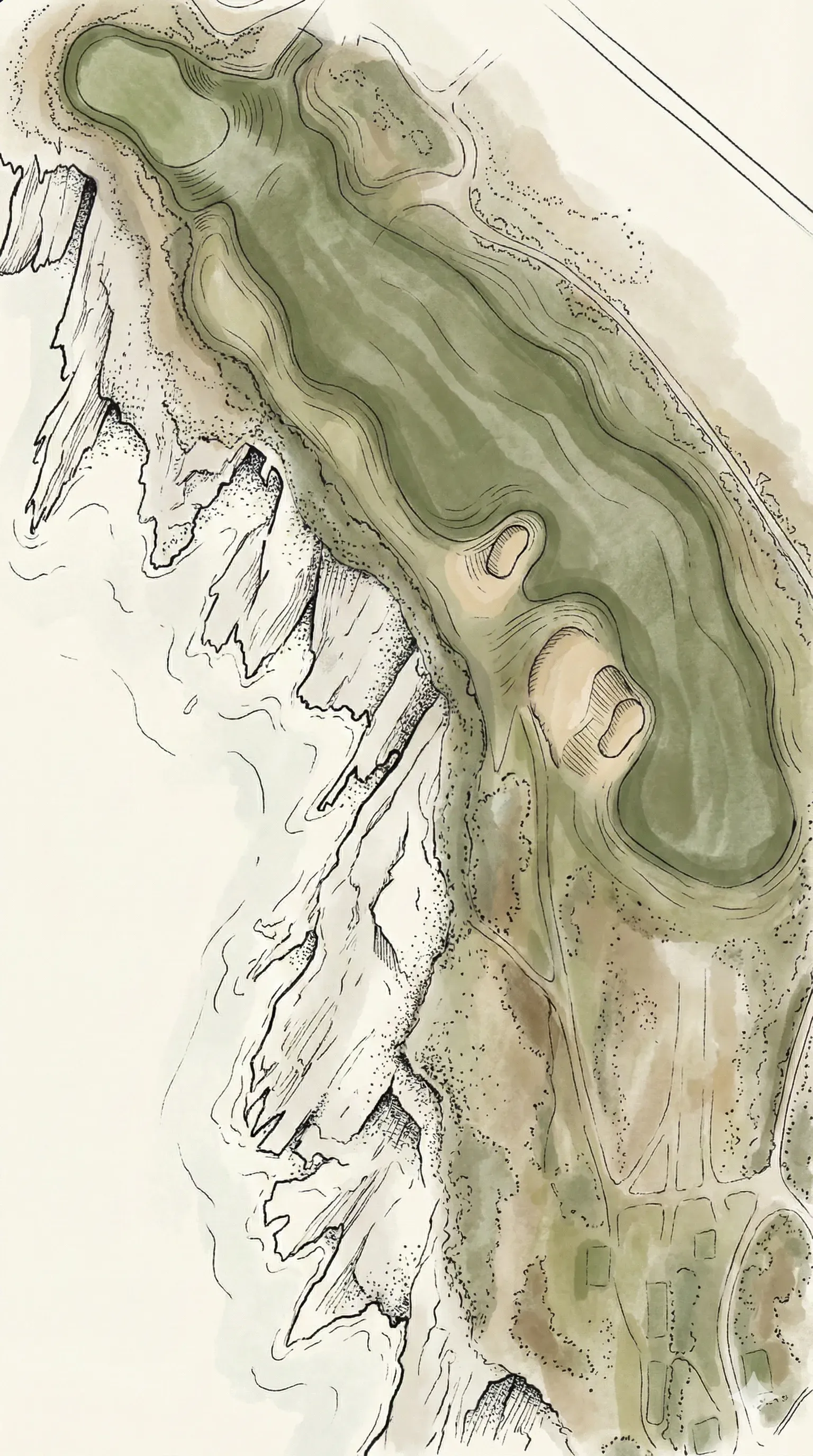
The land terminates abruptly, yielding to the grey churn of the Atlantic three hundred feet below. This is a Cape hole of violent proportion, demanding a drive that challenges the cliff edge to the left. The geometry is simple but severe: one must bite off as much of the void as one’s nerve allows. A timid drive to the right finds safety but lengthens the approach into a green that appears to float on the horizon, exposed to the full weight of the salt spray. The angle of the green rejects a running shot, forcing the player to flight the ball against the inevitable gale.
History here is measured in shipwrecks and stone rather than tournaments won. The Lusitania rests in the deep water visible from the tee, and the black-and-white lighthouse stands as a silent sentinel behind the green. The architecture did not require bulldozers so much as it required the courage to route a fairway where the earth is actively retreating. It is a hole carved by time and erosion, with the design merely suggesting a path along the precipice.
The wind on the Old Head does not merely blow; it assaults. Standing over the ball, the player feels small, a temporary intruder on a rugged promontory. The yardage book suggests a distance, but the heavy air suggests a long iron for a short approach. To walk off with a four is to steal from the gods; to lose a ball to the sea is merely a tax paid to nature.
Hole Stats
- Par
- 4
- Yardage
- 427
- Architect
- Ron Kirby
- Template
- Cape