Lunchball
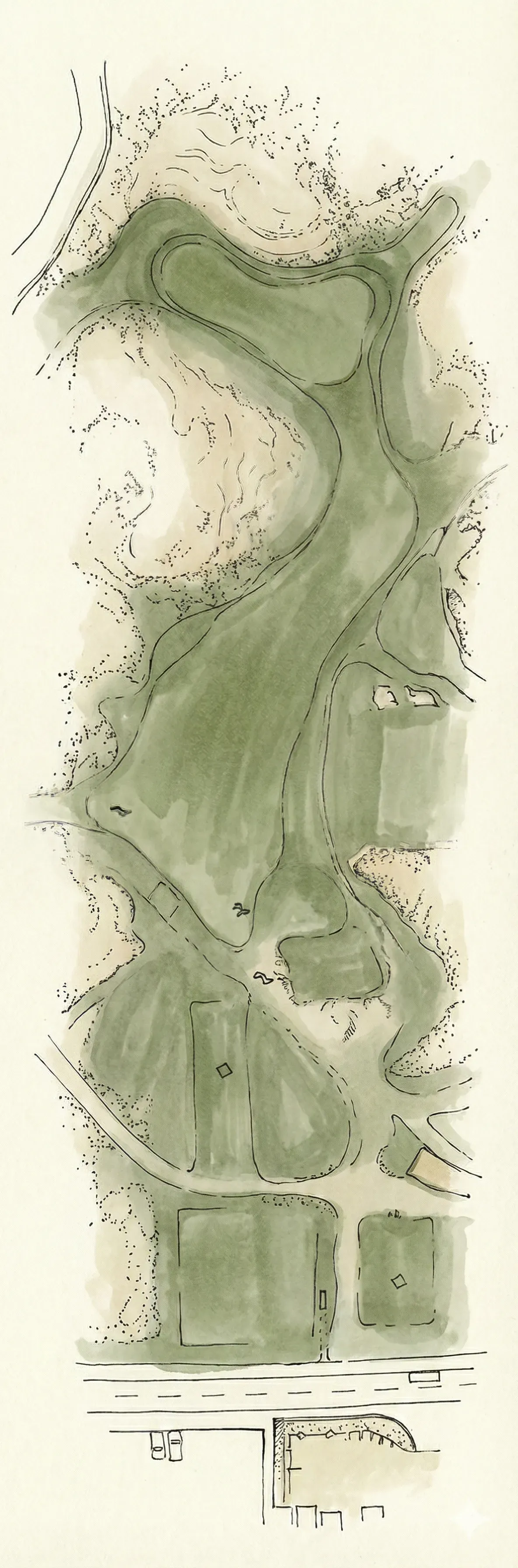
The Dell is an act of blind faith. The architecture is hostile in its simplicity: a short iron must scale a thirty-foot dune that erases the horizon. The only guidance is a white stone, a lonely sentinel perched on the hillside. Beyond the ridge, the green sits in a shallow trough, a ribbon of turf bracketed by massive sandhills. The face of the dune rejects the timid strike, sending the ball back to the player’s feet, while the long miss vanishes into the fescue. It demands a soaring trajectory and a stoic acceptance of the result.
This is Old Tom Morris unrefined, a layout unchanged since 1894. When MacKenzie arrived in 1927, he carried a mandate to modernize, usually viewing the blind shot as a relic to be excised. Yet he stayed his hand here. He recognized that while the hole offended the strict geometry of strategic design, it anchored the soul of the club. It remains a defiant survivor, a 19th-century template that refused to be rationalized for the sake of fairness.
To play it is to participate in a carnival game amidst a serious pursuit. There is a distinct, terrified joy in striking the ball into the abyss and hearing only the wind. The walk up the dune is the most anxious ascent in golf. At the crest, the verdict is rendered: a tap-in birdie or a sandy grave. The logic suggests a poor design; the spirit suggests a masterpiece.
Hole Stats
- Par
- 3
- Yardage
- 154
- Architect
- Old Tom Morris
- Template
- Dell