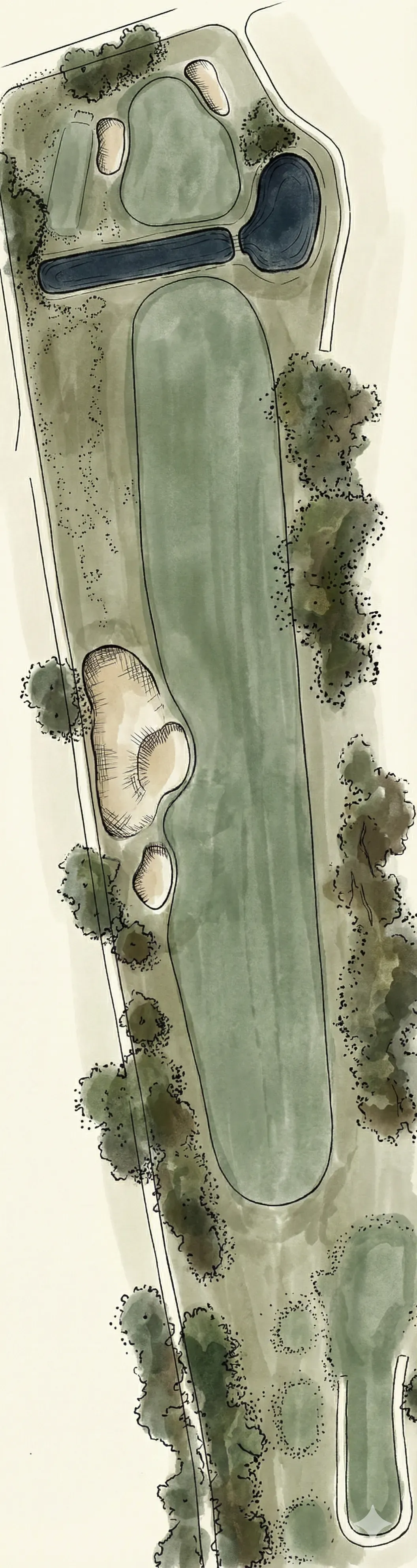
Lunchball
Herbert Strong offered no handshake here. The architecture eschews the intricate riddles of the geometric school in favor of a stark, linear question. The hole demands two strikes of unwavering conviction. The tee shot must find a corridor strangled by rough, for the second requires a carry over the lagoon. The water is not merely a hazard; it is a gatekeeper. To miss the short grass is to accept a layup. The green sits beyond the void, indifferent to hope, demanding flight.
It was upon this soil that Robert Tyre Jones Jr. ceased to be a prodigy and became a champion. The 1923 U.S. Open playoff against Cruickshank found them level at the last. Jones, human after all, hooked his drive into the loose dirt of the rough. What followed was the swing that launched an era: a 2-iron, clean and violent, soaring over the lagoon to rest six feet from the cup. The ghost of the “choker” was exorcised in the flight of that ball. A plaque now marks the earth where the iron struck, a silent reminder of the gap between the great and the merely good.
The approach serves as the final judgment of the day. After four hours leaning against the Atlantic wind, the player stands before the lagoon with the clubhouse veranda serving as a gallery of critics. The shot requires a stillness of mind that the scorecard rarely permits. A pure strike earns a walk up the fairway in the footsteps of Jones. A failure—a chunk into the dark water—suggests a prompt retreat to the bar. There, the gin provides more comfort than the scorecard ever could.
Hole Stats
- Par
- 4
- Yardage
- 433
- Architect
- Herbert Strong
- Template
- N/A