Lunchball
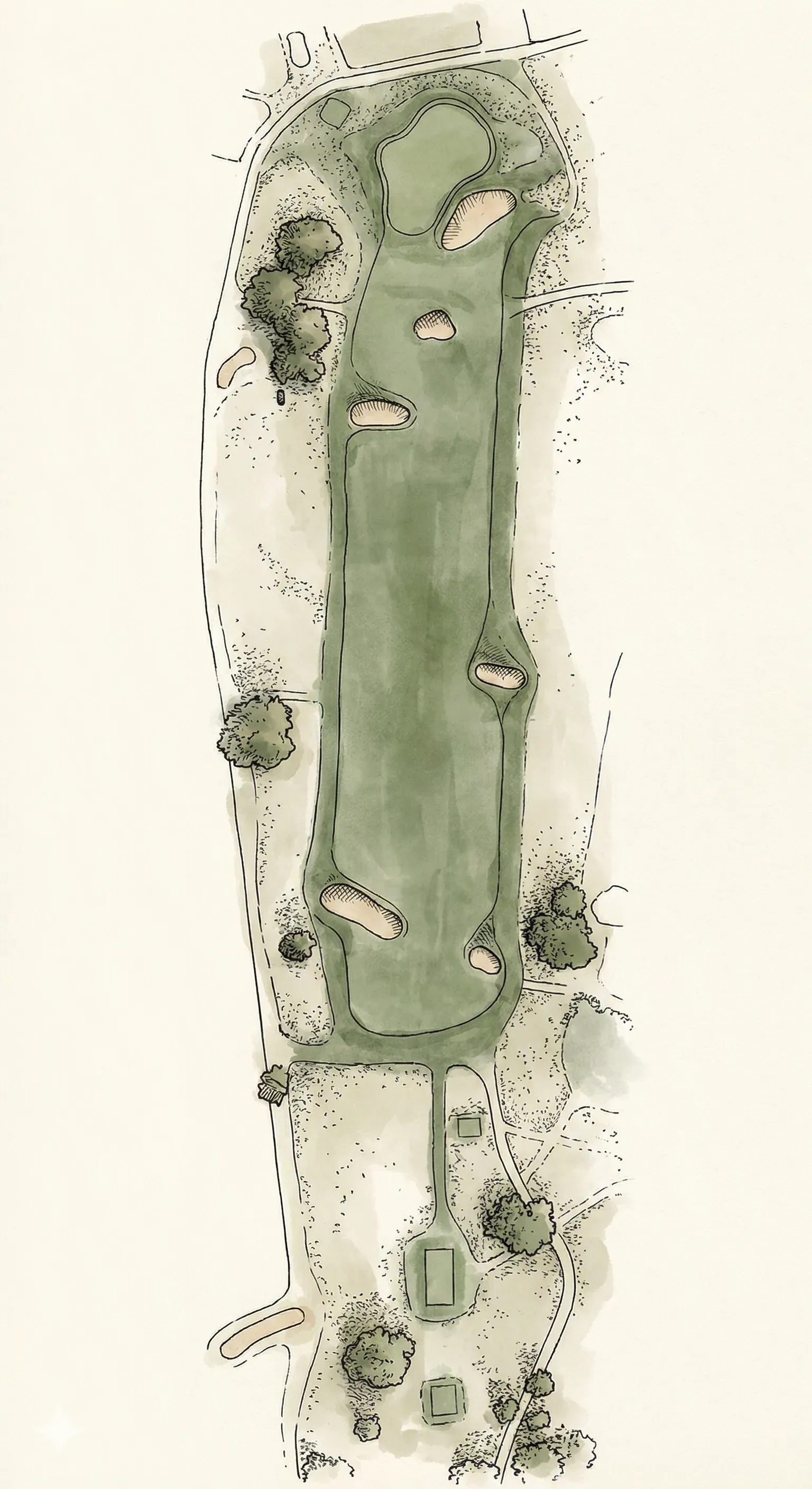
The horizon line on the 12th offers no counsel. A grassy rampart severs the fairway, rising abruptly to block out the target and demanding a shot struck on faith alone. This is C.B. Macdonald’s Punchbowl, executed not with caution, but with absolute conviction. The strategy is stark: drive to the flat, then trust the loft.
Beyond the ridge, the green sits in a sunken hollow, the earth curling inward like a dried leaf. Macdonald imported this geometry from the links of Hoylake, though his work here feels more severe—more containing—than the broader contours found later at National Golf Links. It is a stubborn survivor of the “ideal hole” philosophy, a reminder that golf was once a contest played along the ground rather than an aerial assault. The architecture demands a suspension of disbelief; one must trust that the slopes will act as a backstop rather than a barrier.
The appeal is primitive. There is a distinct, childish joy in launching a ball into the blue void and cresting the hill to find it gathered near the cup by the invisible hand of gravity. The bowl forgives a slice and flatters the fortunate. We walk off the green convinced of our geometric genius, conveniently forgetting that the turf did all the work.
Hole Stats
- Par
- 4
- Yardage
- 420
- Architect
- C.B. Macdonald
- Template
- Punchbowl