 Lunchball
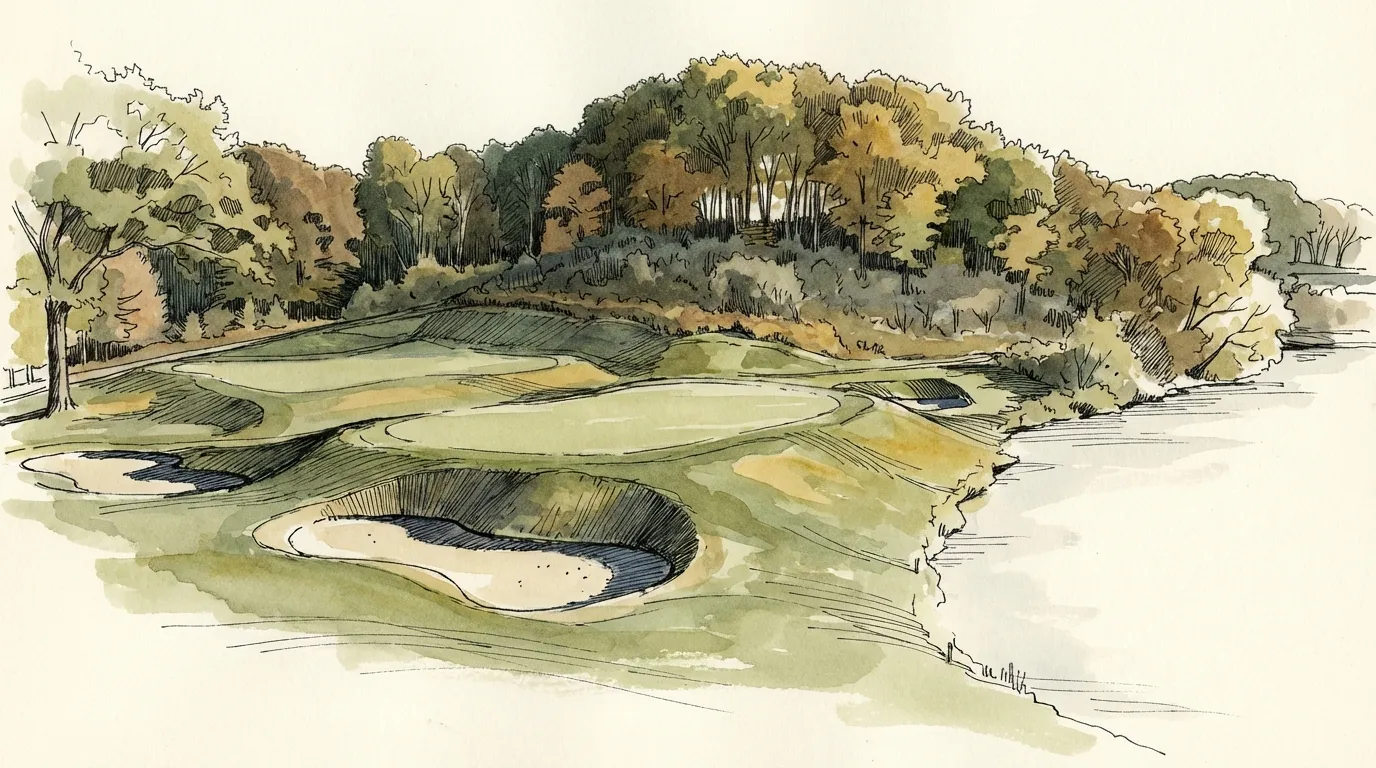
C.B. Macdonald and Seth Raynor didn’t just build a golf course in New Haven; they engaged in terraforming warfare against the Connecticut rock. Opening in 1926 as the most expensive course ever built, Yale is the definition of grandeur and scale. While many Golden Age courses are praised for their subtlety, Yale is about as subtle as a sledgehammer. The bunkers are caverns (some 20 feet deep), the blind shots are frequent, and the template holes are blown up to proportions that make other renditions look like miniatures. It is a masterclass in routing, navigating rugged, rocky topography to create a sequence of holes that feels like an adventure through a untamed wilderness.
From a ‘Lunchball’ perspective, Yale is the spiritual ancestor to modern mega-scale projects like Landmand. It requires a certain level of physical fitness just to survive the walk, let alone the psychological toll of the shot values. The greens are some of the most severe in the country, featuring internal contours that can render a two-putt a miraculous achievement. Whether you are tackling the fortress-like Redan or the uphill battle of the Alps, Yale demands heroic shots. It is unpolished, rugged, and historically significant—a place where the grandeur of the surroundings perfectly matches the boldness of the architecture.
Comparison: 9th (Biarritz)

9th (Biarritz)

The Modern Biarritz
Old Macdonald
Architectural Analysis
While Old Mac offers the modern, pristine tribute, Yale provides the rugged, terrifying original (in America) where the scale of the swale feels geological rather than manufactured.