 Lunchball
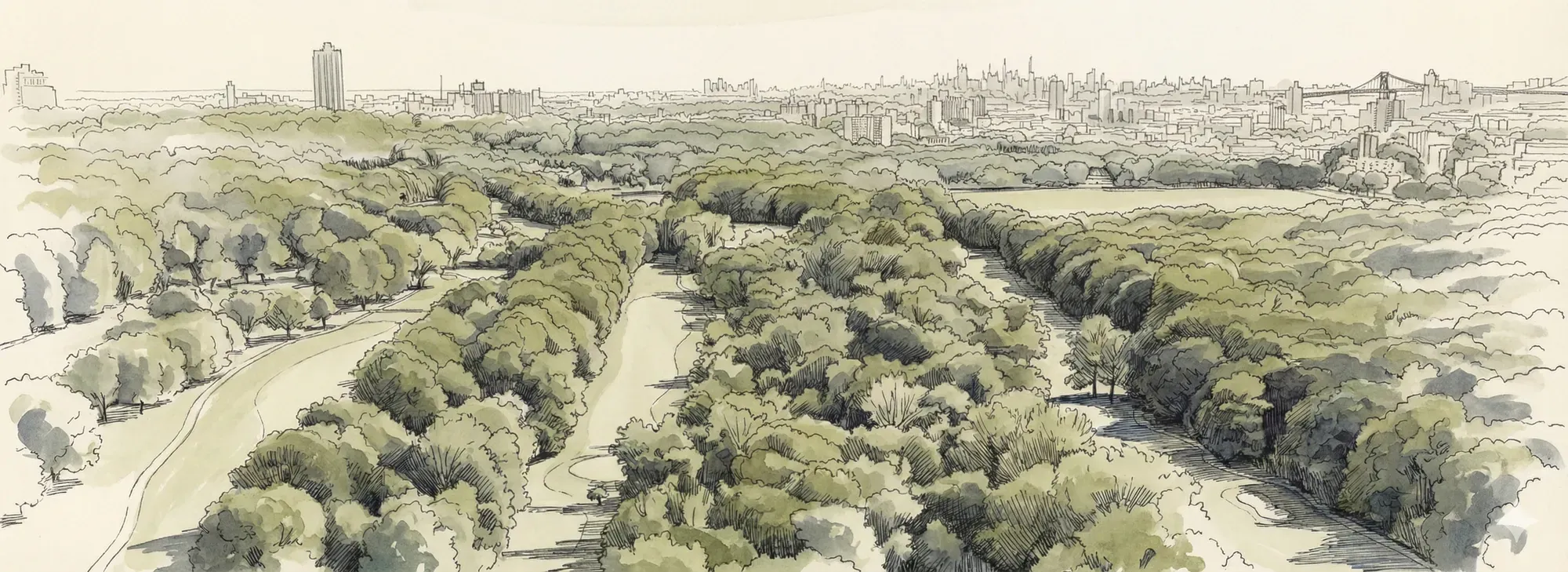
The steel rattle of the 1 train fades into the timber, replaced by the sharper crack of a drive echoing off the gneiss. Van Cortlandt Park does not ask for reverence, though it deserves it. Opened in 1895, this is the oldest public track in the country, yet it wears its history like a heavy work coat—tattered, functional, and devoid of pretense. Tom Bendelow expanded the course to 18 holes in 1899, and while Stephen Kay has smoothed the edges, the land remains stubborn.
This is golf in the vernacular. There is no manicured silence here. The fairways are shared with the noise of the Bronx, the turf is hard-packed by generations of public play, and the topography is surprisingly dramatic. Ridges rupture the landing zones. Blind shots are common currency. It is a landscape that hosted Babe Ruth, who walked these hills not for the conditioning, but for the raw argument of ball against ground. The second hole, a par-5 where Ruth held court, still demands a long carry over scrub to reach a green that rejects the tentative approach.
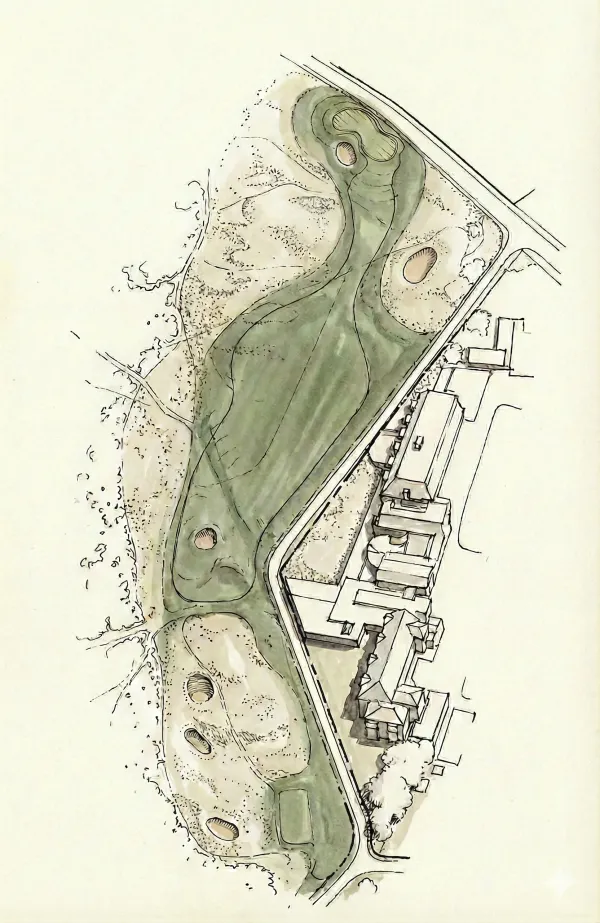
Comparison: 18th

18th
Architectural Analysis
The comparison is spiritual, not agronomic. Both holes require a blind heave over an obstacle toward a backdrop of civilization. Where St Andrews offers the hotel, Van Cortlandt offers the subway terminal. The architectural intent is identical: the final shot must be struck with blind faith into the teeth of the city.