 Lunchball
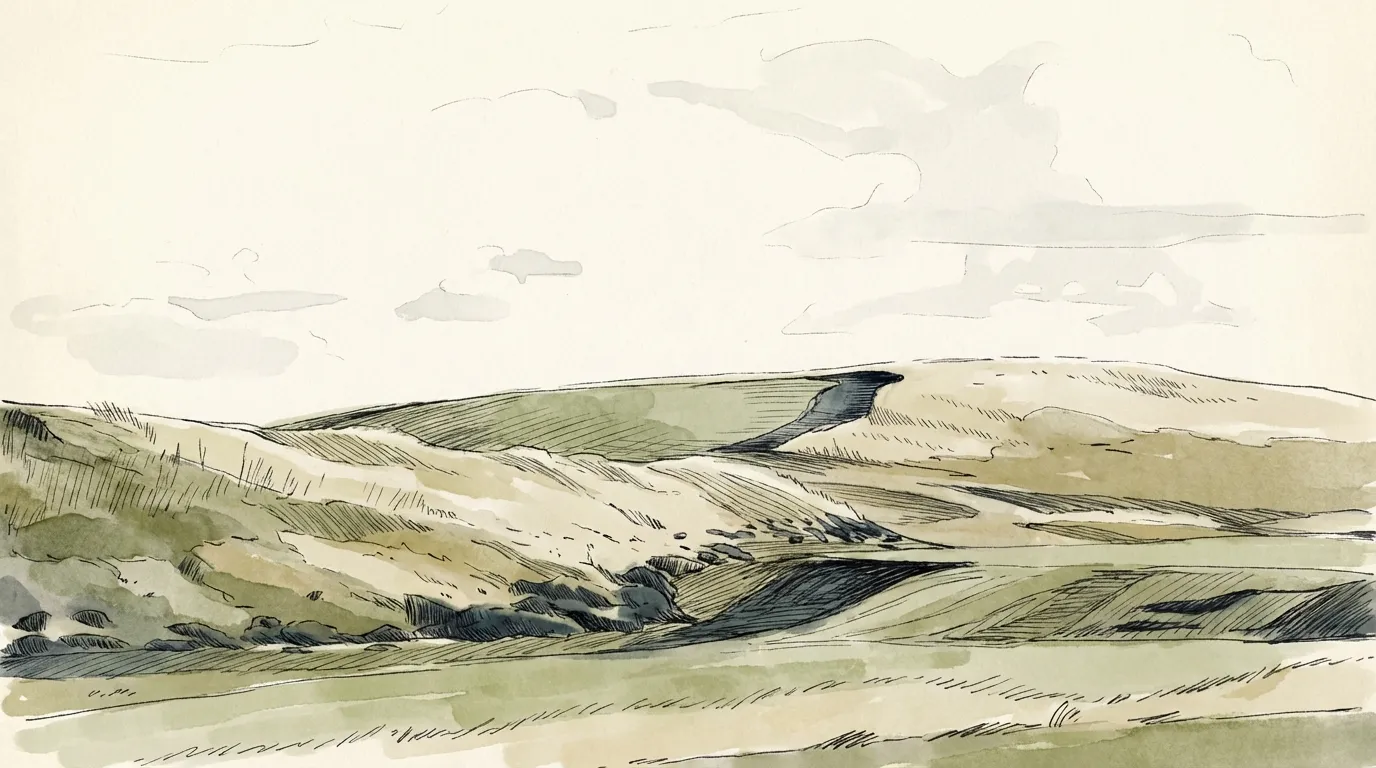
The sand of Central Wisconsin has been shaped to mimic a ghost. For eighty years, The Lido was less a course than a rumor—Macdonald’s lost masterpiece, buried under the asphalt of Long Island by war and progress. It existed only in the stark contrast of black-and-white photography and the wistful thinking of historians. Its return is not merely construction; it is a séance. Through digital archaeology and the movement of a million cubic yards of earth, the lost contours were printed onto this remote basin. It is a resurrection of exacting precision, bringing the dead back to the living world.
The scale of the place unnerves the modern eye. There are no trees to frame the shot, nor vertical aids to judge the wind. Macdonald designed with a heavy hand, favoring immense width and grand geometry. The templates stand against the horizon, stark and unaging. The 4th—The Channel—remains a study in temptation. The safe route curves sensibly to the left, accepting a longer walk. The direct route demands a carry over a vast, sandy emptiness. It is a question of ego versus arithmetic. The course does not care which you choose, only that you execute.
Comparison: 12th (Biarritz)
A clinical reproduction of Macdonald’s original. The swale is deep enough to swallow a man, and the landing area demands a flight that challenges the wind.
Yale’s Biarritz is a brute softened by a century of geology. The Lido’s 12th is the cold, sharp mathematics of the original blueprint.
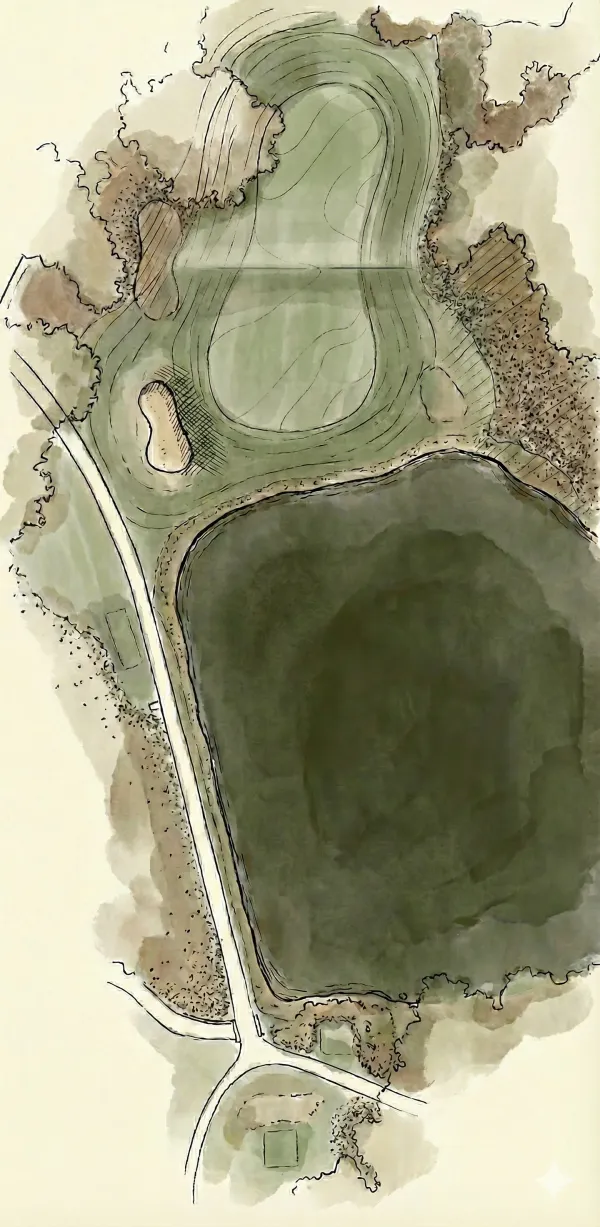
The American Biarritz
Yale Golf Course