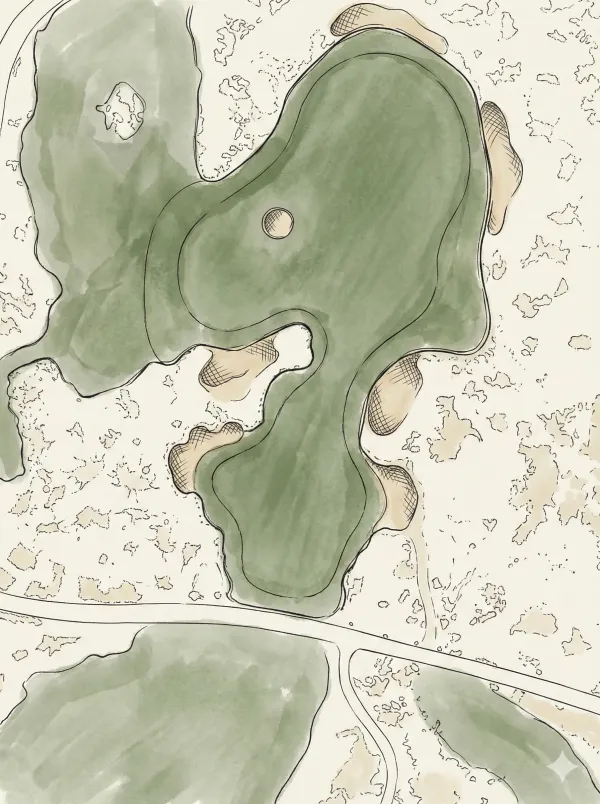
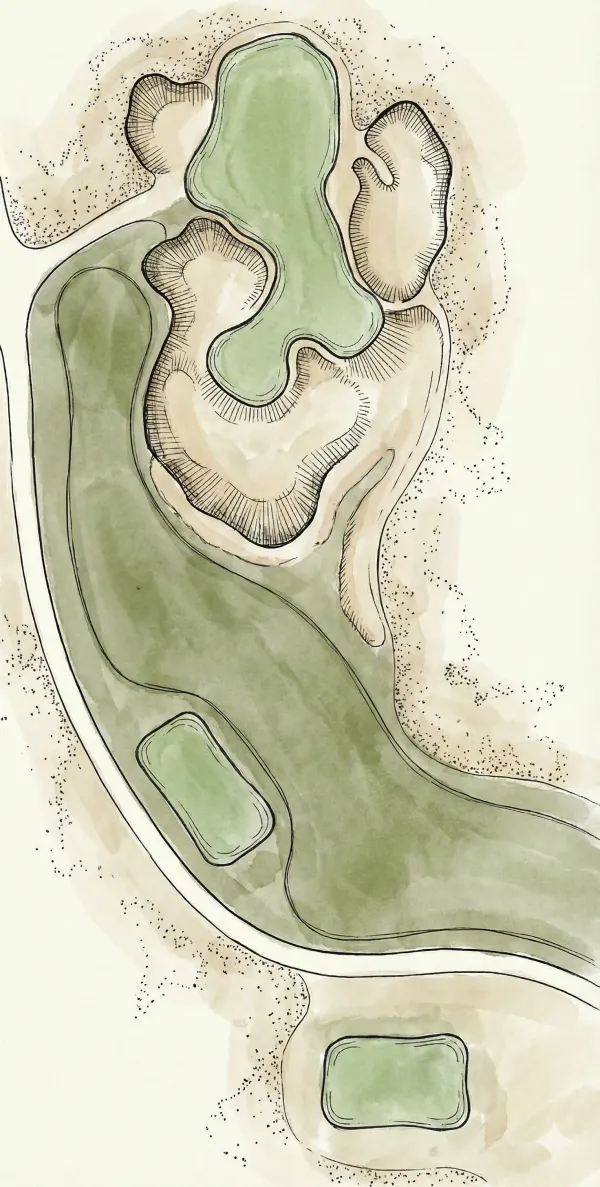
Lunchball
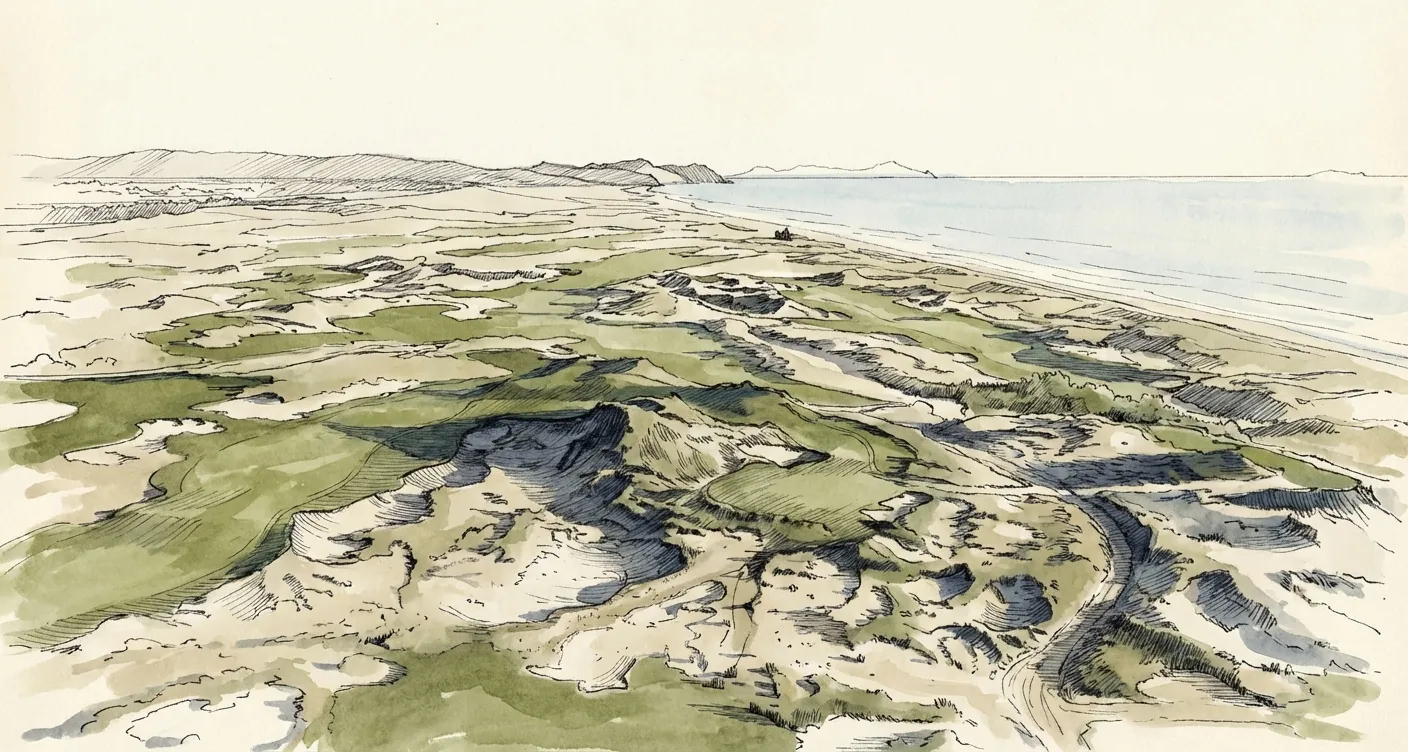
The sand sat beneath the commercial pines for decades, waiting to be exhumed. When Tom Doak finally cleared the heavy timber, he revealed a landscape of restless dunes that required little translation to become a golf course. The distinctions between tee, fairway, and green have been erased here; the turf is a continuous sheet of tight fescue, firm underfoot and ambivalent to the ball’s destination.
With no rough to arrest a wayward shot, waste bunkers bleed seamlessly into the putting surfaces. The architecture demands a suppression of the modern ego. The high, spinning dart is often rejected by the wind or the camber; one must surrender to the ground, using the shoulders and hollows to shepherd the ball toward the hole.
The atmosphere is one of disciplined minimalism. There are no tee markers, only suggested areas of play, reinforcing the illusion that the routing was discovered rather than engineered. It is a quiet place. The palette is elemental—white silica, muted green, and the heavy blue of the Pacific. It does not shout for attention; it simply exists, composed and formidable.