 Lunchball
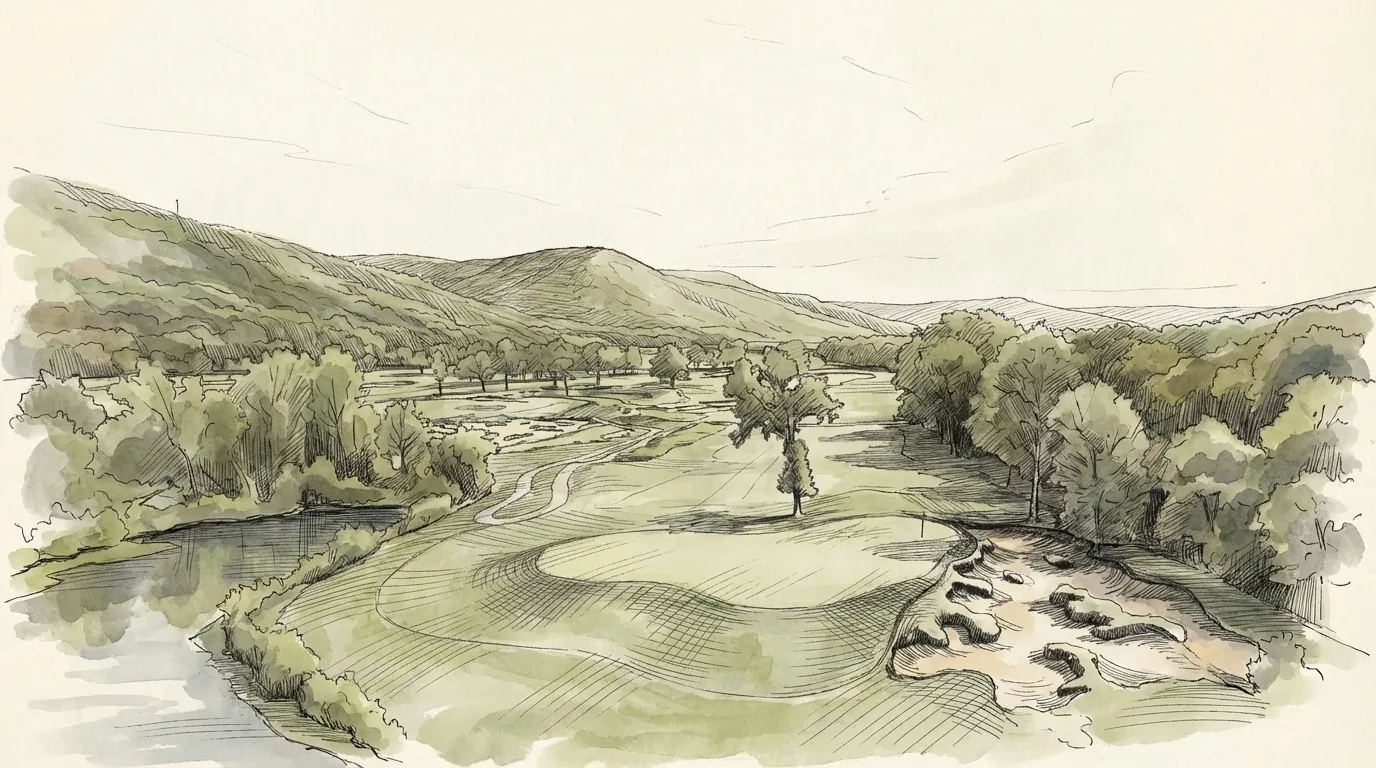
The earth in the Sequatchie Valley was once flat, mute, and prone to drowning. It offered nothing to the golfer. Rob Collins and Tad King arrived not with subtle rakes but with heavy machinery, tearing the valley floor apart to build mountains where there were none. It is an aggressive geometry imposed on a floodplain. The result is a landscape that heaves and rolls, rejecting the high dart in favor of the tumbling runner. It possesses the chaotic spirit of the Old Course, compressed into a dusty, nine-hole box where the contours dictate the strategy and the ground game is the only reliable way home.
There is no clubhouse, only a shed that smells of fertilizer and cheap bourbon. The atmosphere is stripped of country club pretense; it is a place for the walking golfer. The routing acts as a mere suggestion, encouraging cross-country loops as the sun dips below the ridge. The architecture is a gallery of ghosts—the Alps, the Biarritz—resurrected with a distinctly American heaviness. It is not a place for the precious player; it is a theater of bad bounces, blind shots, and the raw, uncomplicated joy of hitting a ball over the landscape.
Comparison: 8th (Biarritz)
A rustic translation of the classic. The green is vast, severed by a swale deep enough to lose a man. It demands a running draw or a prayer.
Yale’s 9th relies on the terror of the water carry and sheer scale. The Sweetens interpretation is a study in ground contour. The swale is not a visual trick; it is the dominant hazard, turning the putt into a question of geography rather than mechanics.
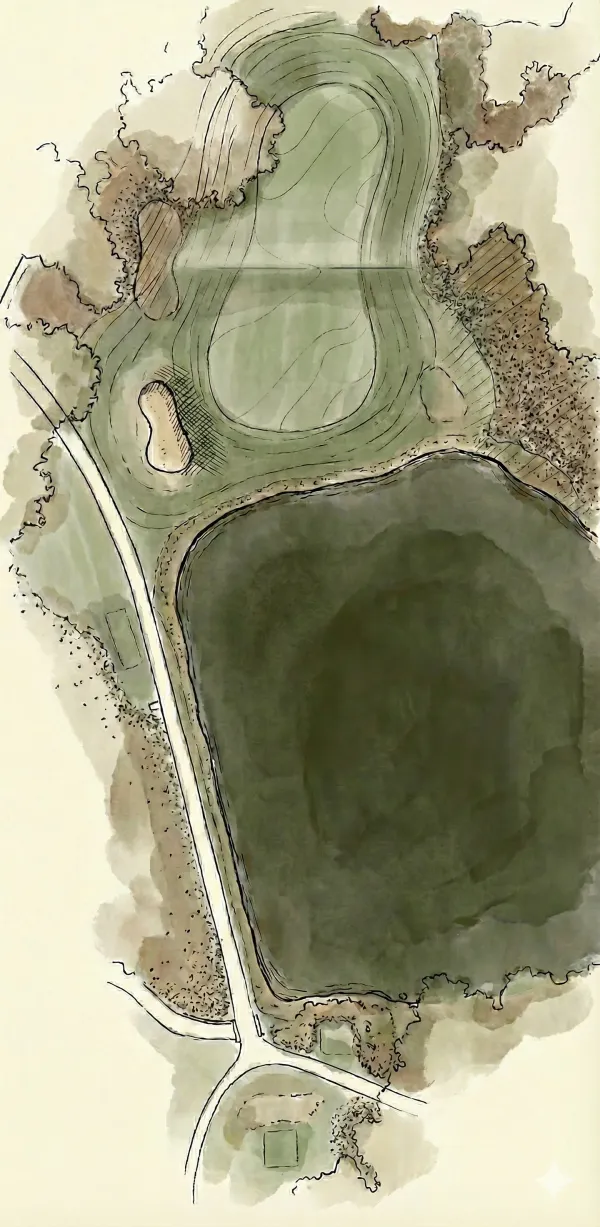
The American Biarritz
Yale Golf Course