 Lunchball
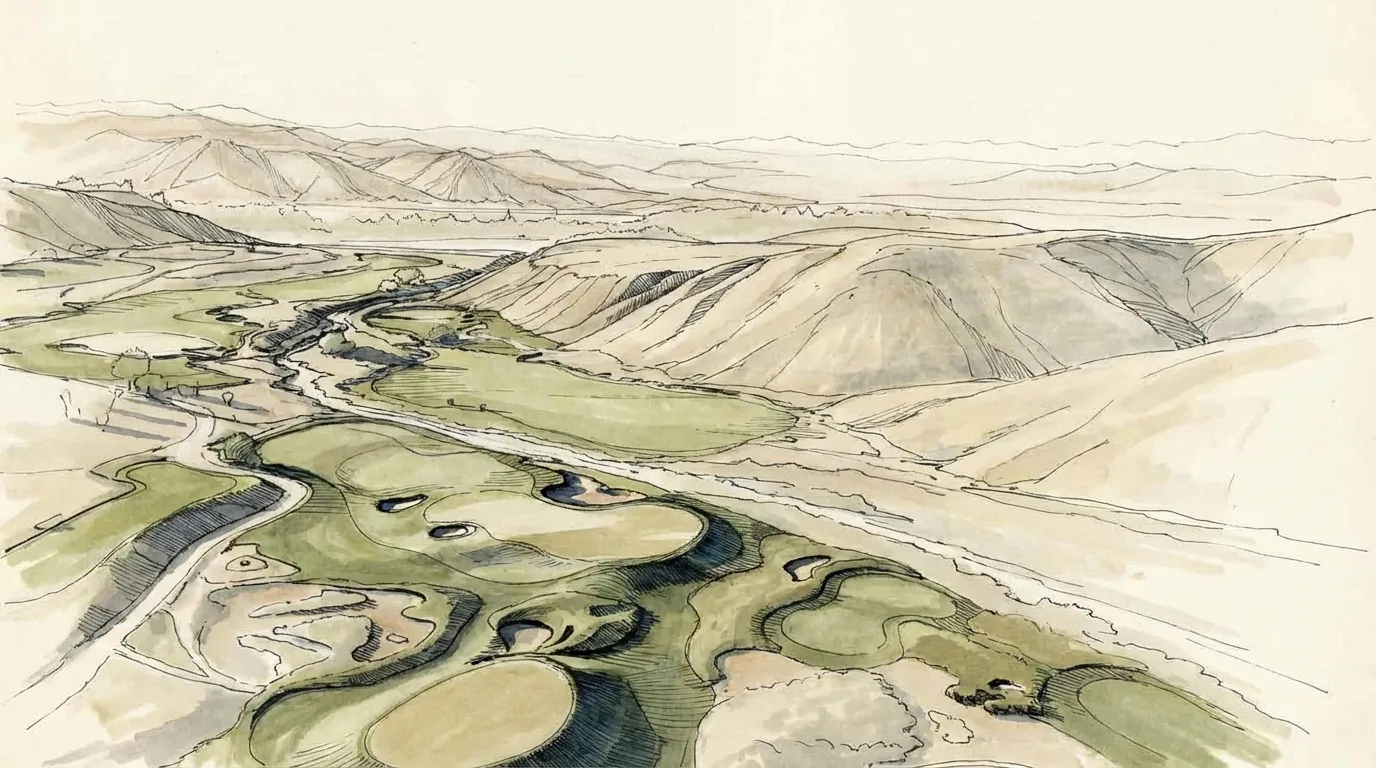
The canyon floor sits low in Moorpark, a dusty seam in the earth that seems less built than excavated. Here, the landscape does not preen. Rustic Canyon is a municipal track in the truest sense—accessible, worn in, and entirely indifferent to the provenance of your equipment. In 2002, Gil Hanse, Jim Wagner, and Geoff Shackelford did not move earth so much as they dusted it off, revealing a routing that wanders through the wash with the natural logic of water finding its way downstream.
The scale of the place is disorienting. The fairways are vast plains of short grass, bordered not by arbitrary rough, but by the jagged scars of the barrancas. The ground is hard. It rejects the high, spinning shot in favor of the running approach, acting as a spiritual cousin to the links of Scotland, only stripped of the ocean and replanted in the chaparral. There is a specific cruelty to this width. It lulls the player into a false sense of security. The tee shot offers comfort, but the second shot presents a riddle.
The greens sit on natural shelves or tuck behind kick-plates, demanding specific angles of attack. To aim away from the trouble is often to ensure a bogey. The defense here is not thick grass or artificial ponds, but the camber of the turf and the angle of the sun. It is a place where the architecture defends par, the ego is checked at the gate, and the walk is unspoiled by the hum of commerce.
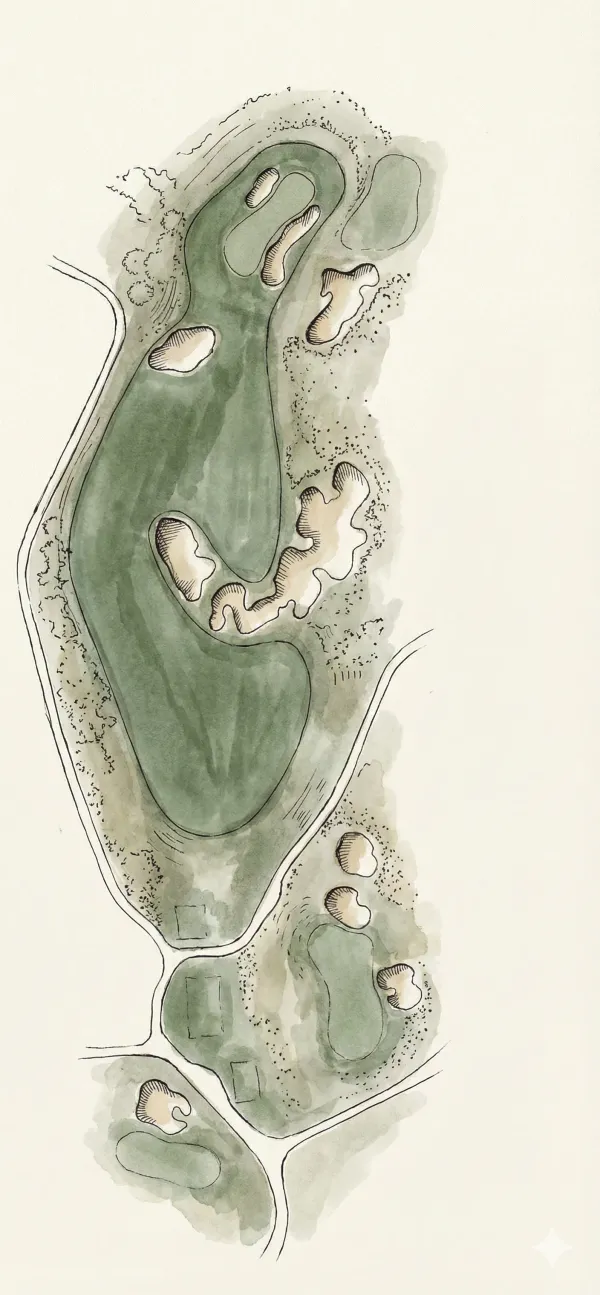
Comparison: 13th (Short Par 4)
A short 4 that preys on greed. The safe play goes left to the fat of the fairway; the hero’s line challenges the scrub. The angle, as always, dictates the score.
Both holes prove that length is the clumsiest defense in golf. Like the 10th at Riviera, Rustic’s 13th baits the driver only to punish the slight mishit with an impossible angle of recovery. It is a psychological exam disguised as a drive-and-pitch.
The Ultimate Risk/Reward
Riviera Country Club