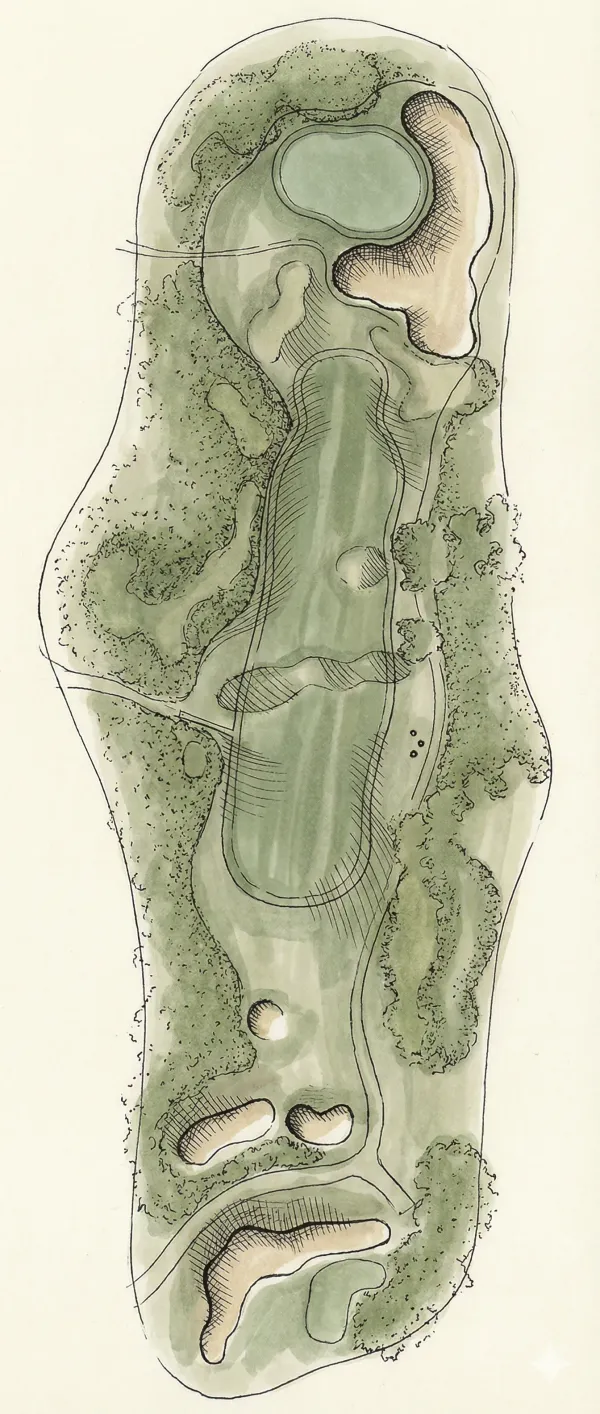
Lunchball
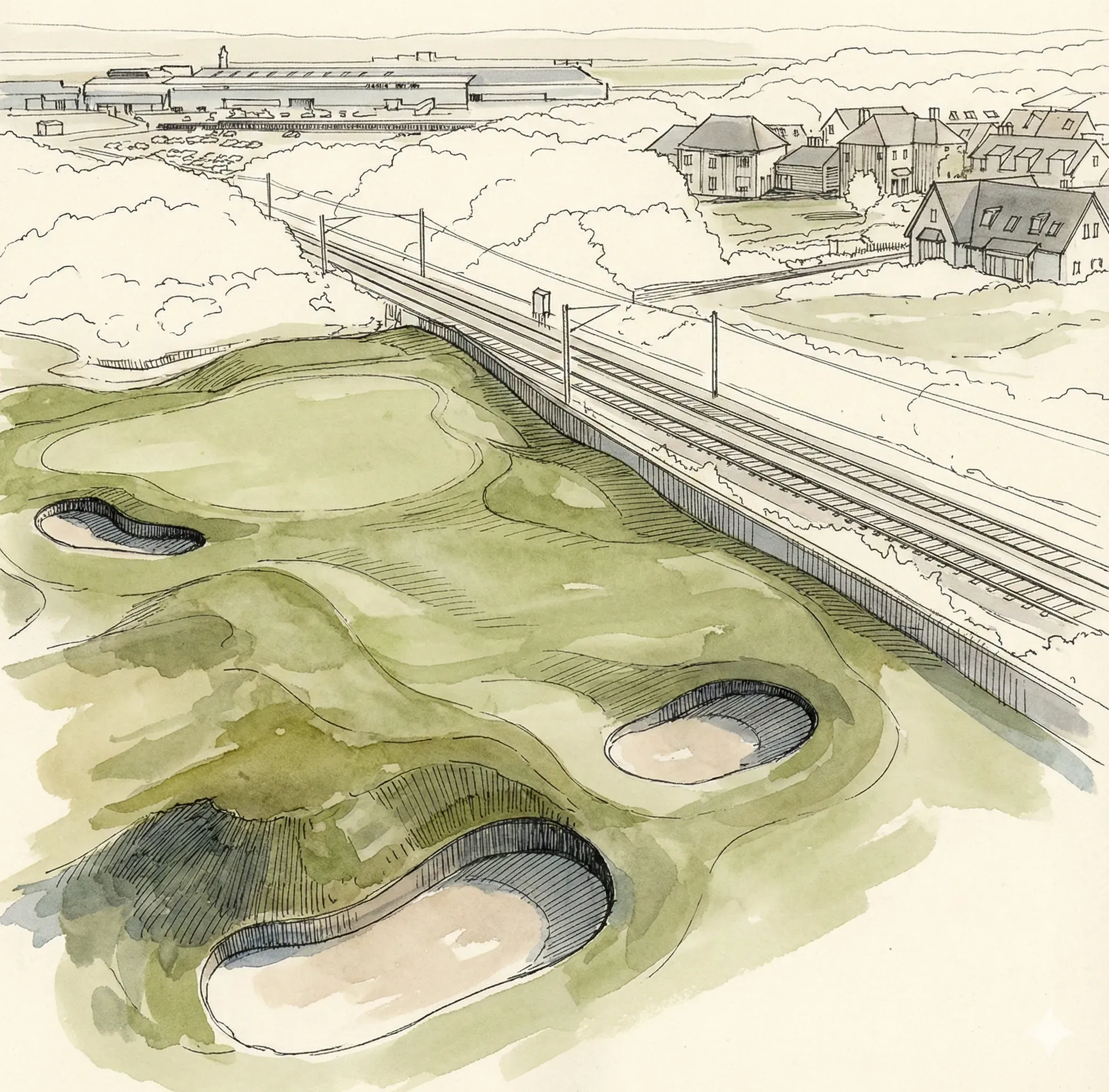
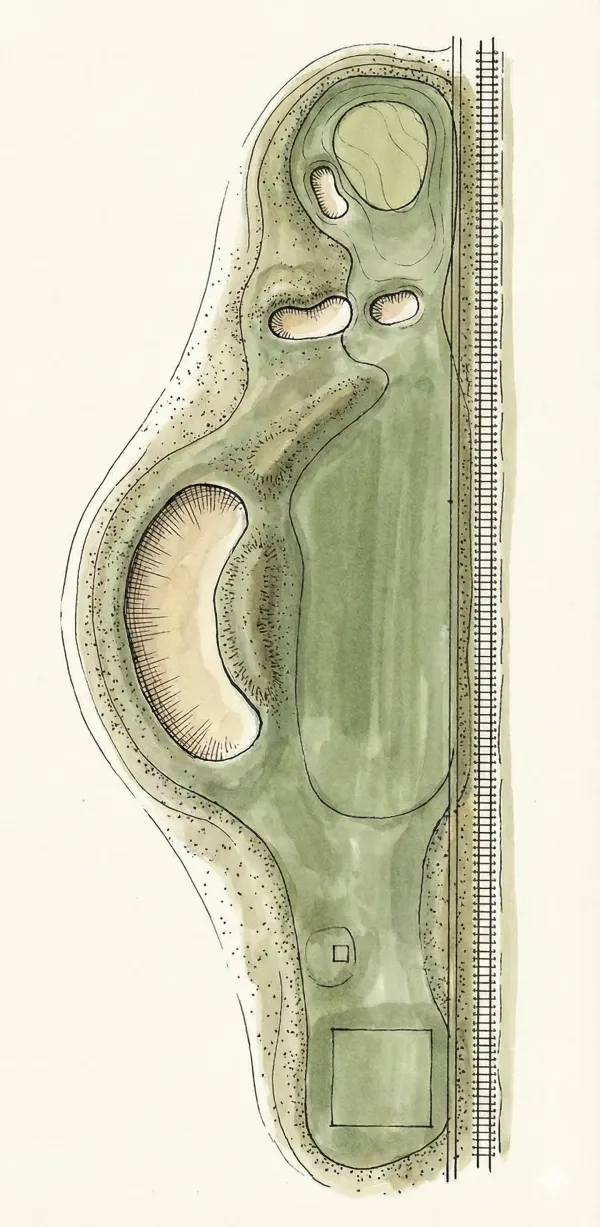
The railway line at Prestwick does not merely border the opening hole; it looms like a threat of industrial violence. The stone wall creates a corridor of anxiety, demanding a strike that is at once bold and terrified. There is no gentle handshake here. This is golf from the era before “fairness” was codified, a landscape where the ground is a riot of humps and hollows indifferent to the perfect strike.
The course unfolds as a series of archaic questions. Massive sleepers hold back the sand in the Cardinal bunker on the third, a black-timbered depression that swallows light and mid-iron approaches alike. Later, the Alps on the 17th obscures the world entirely, requiring a blind heave into the unknown. The fairways cross like tangled fishing lines, and the layout is too cramped for the sterilized modern game. It is a place of blind faith and bad bounces, where the air feels heavy with salt and the ghosts of the Parks and Morrises.