Lunchball
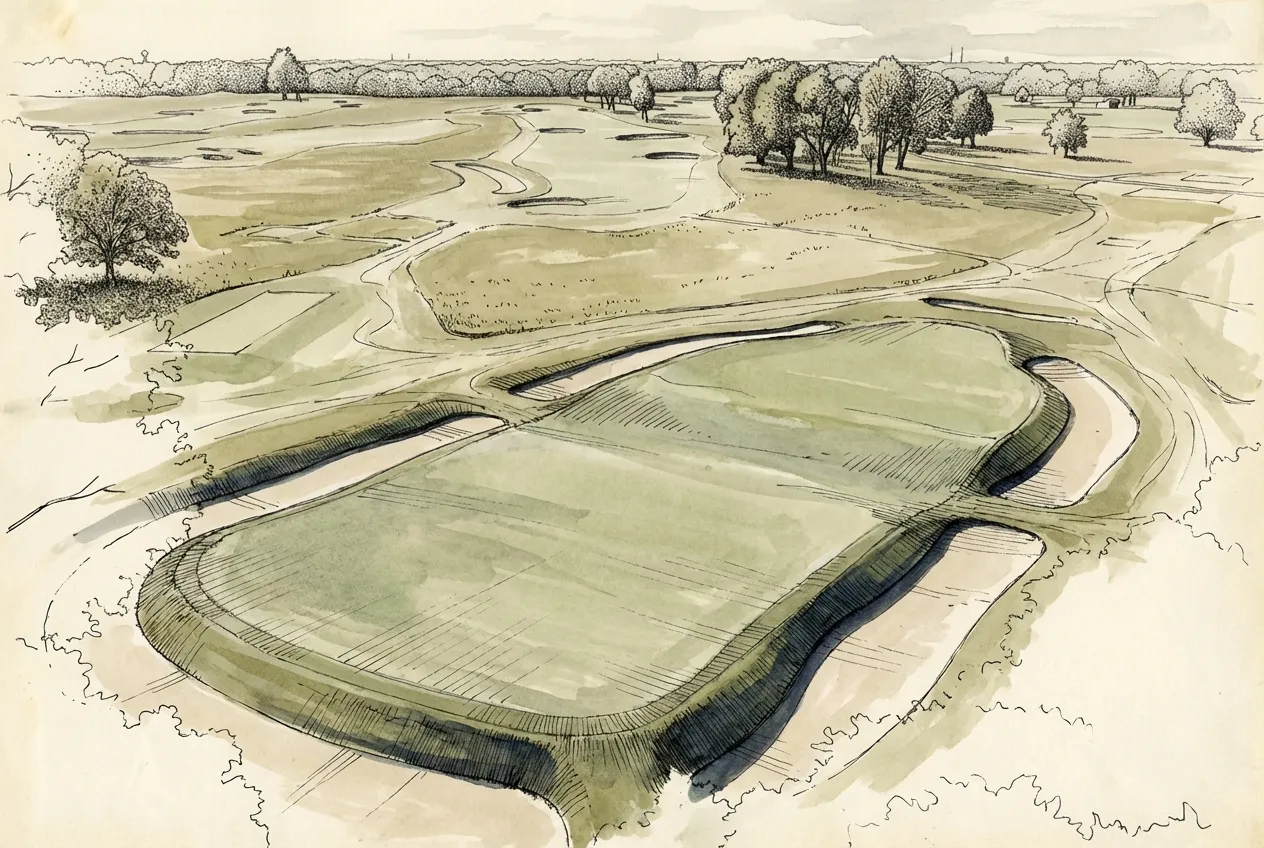
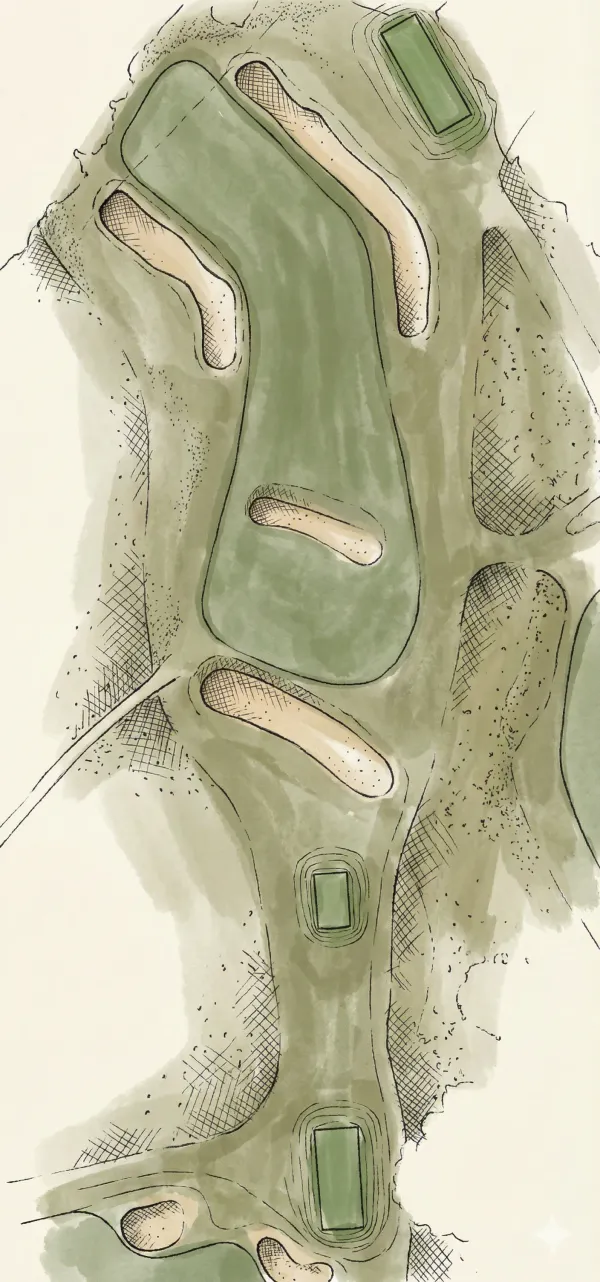
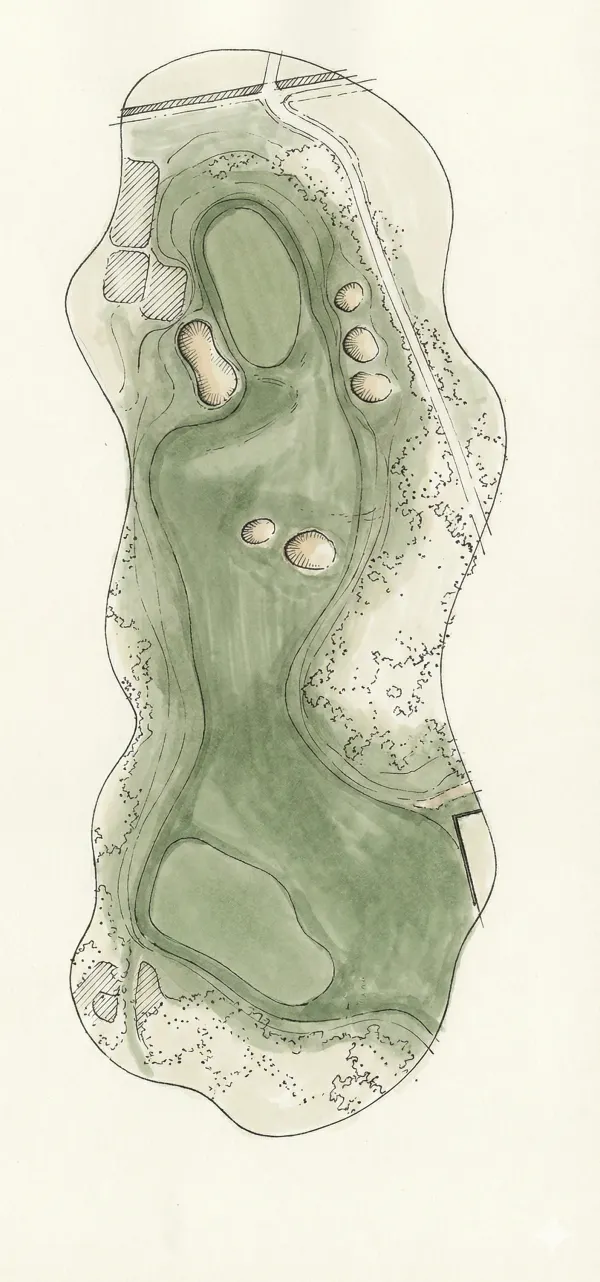
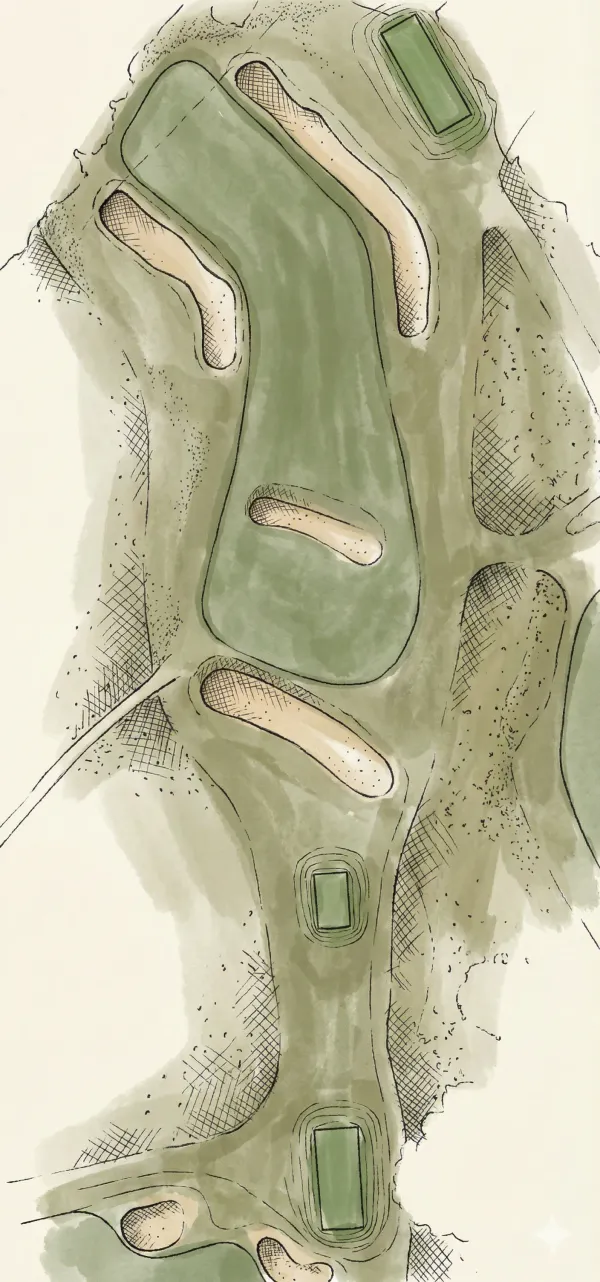
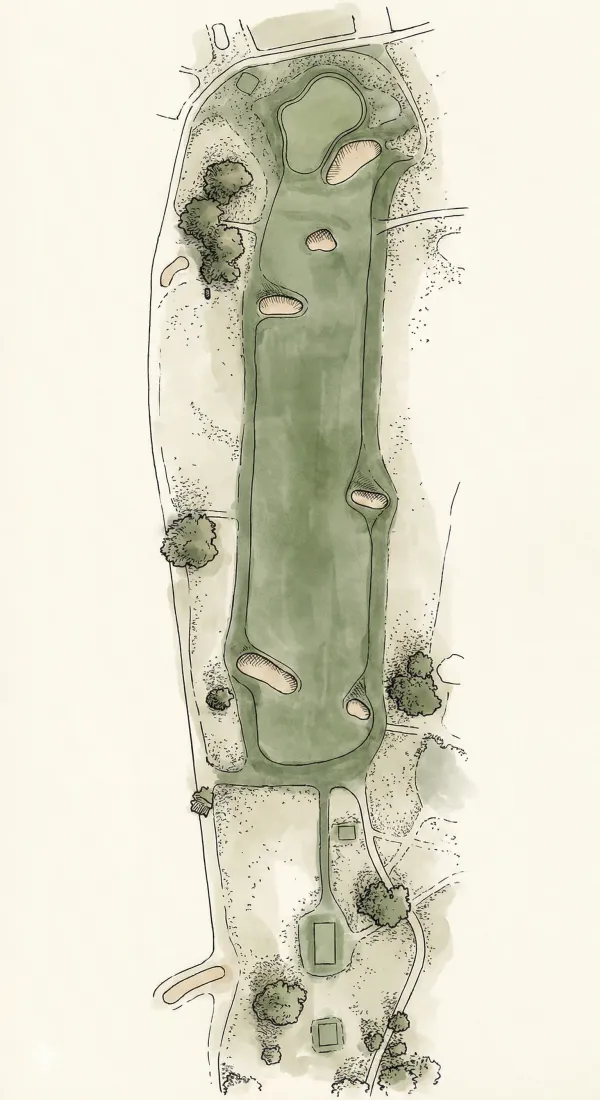
The turf at Wheaton does not roll; it marches in straight lines. C.B. Macdonald, a man whose ego was matched only by his vision, did not carve these grounds to flatter nature, but to conquer it. Here, the ‘rectangular’ aesthetic of early engineering reigns. The berms are sharp ridges, steep and unforgiving. The bunkers are not sandy hollows but flat-bottomed pits, excavated with military precision. It stands as the oldest eighteen-hole rout in North America, a stark testament to the Macdonald philosophy in its most unadulterated, geometric form.
There is a quiet intensity to the topography. The fairways sit upon raised pads—elevated like sacrificial altars. A drive slightly askew does not merely find the rough; it tumbles down embankments into oblivion. The architecture demands a stoic acceptance of geometry over geography. Whether navigating the blind approach into the Punchbowl on the twelfth or trembling before the seventh, the player is engaged in a math problem where the penalty for miscalculation is severe. It is a place that prefers precision to power, and respects only the well-struck iron.